Citrine vs Heat-Treated Amethyst: Most 'Citrine' Is Cooked
Identifying crystals · 6 min read · 13 August 2026
You are not silly for buying it. It is real quartz that spent an afternoon in a kiln. Here is how to read the base and the tips before you pay again.
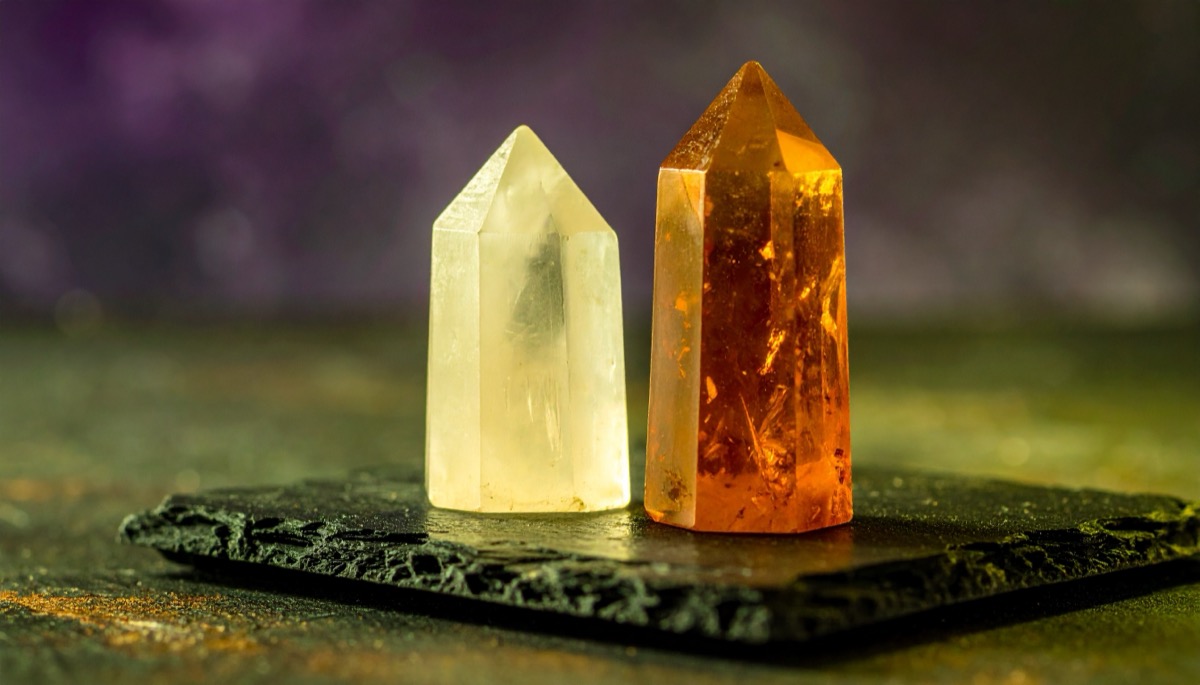
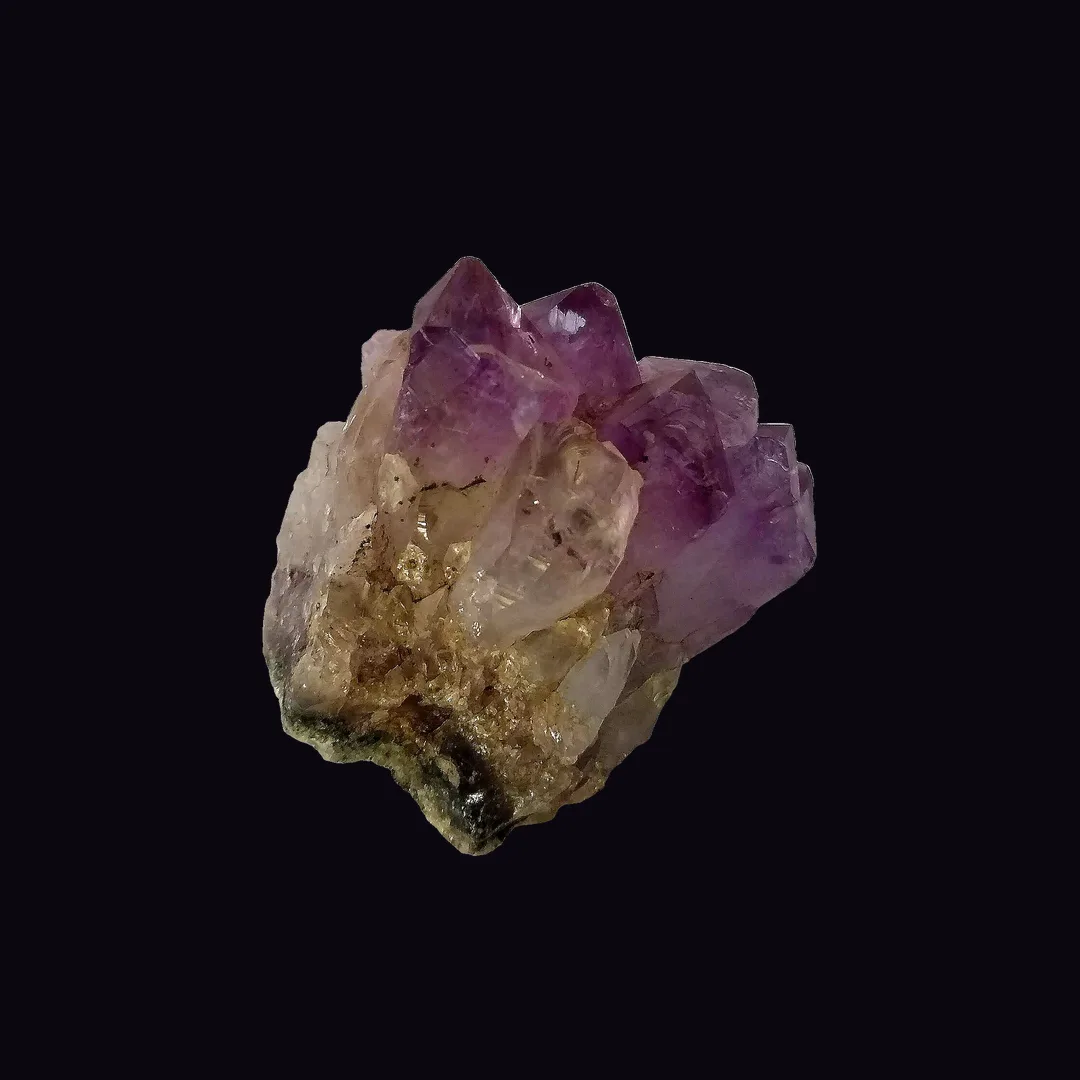
Amethyst gets its purple from a trace of iron and the slow natural radiation of the rock around it. That takes longer than anything you will ever wait for.
A kiln undoes it in an afternoon. The purple burns off, the orange comes up, and the crystal never goes back.
That orange gets sold as citrine at citrine prices. The word heated almost never makes it onto the tag.
You are not silly for buying it. It is real quartz, cut well, and it looked like exactly what you wanted. You only want to know what you are holding, and nobody at the till would tell you.
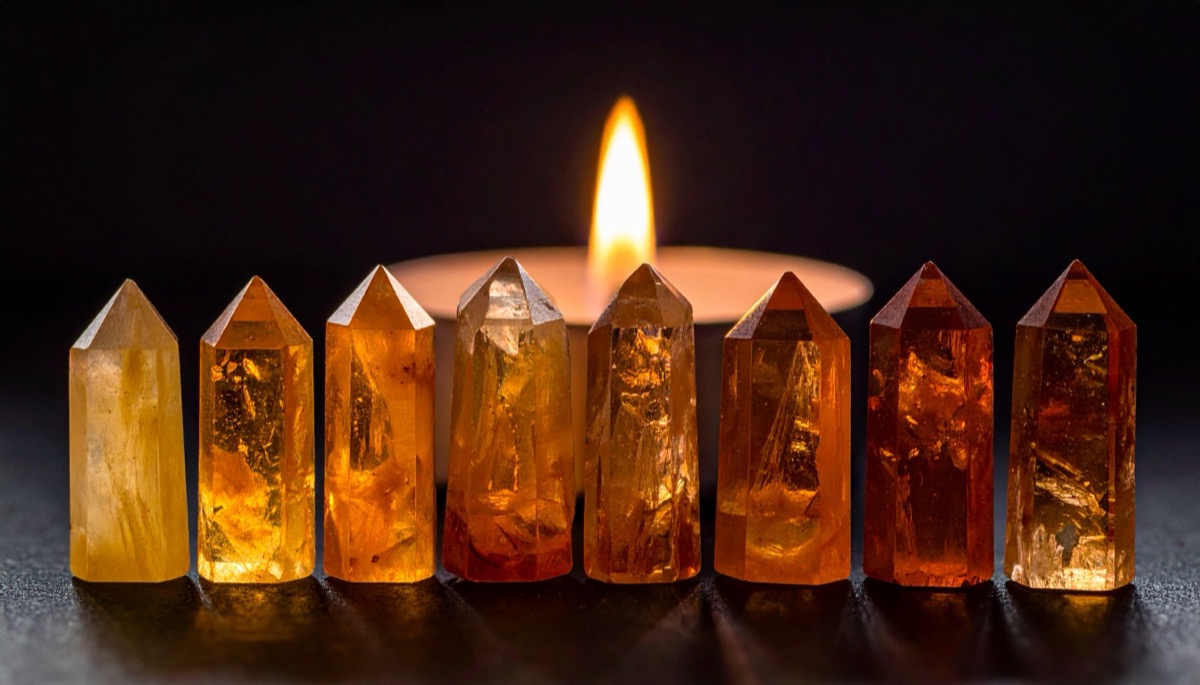
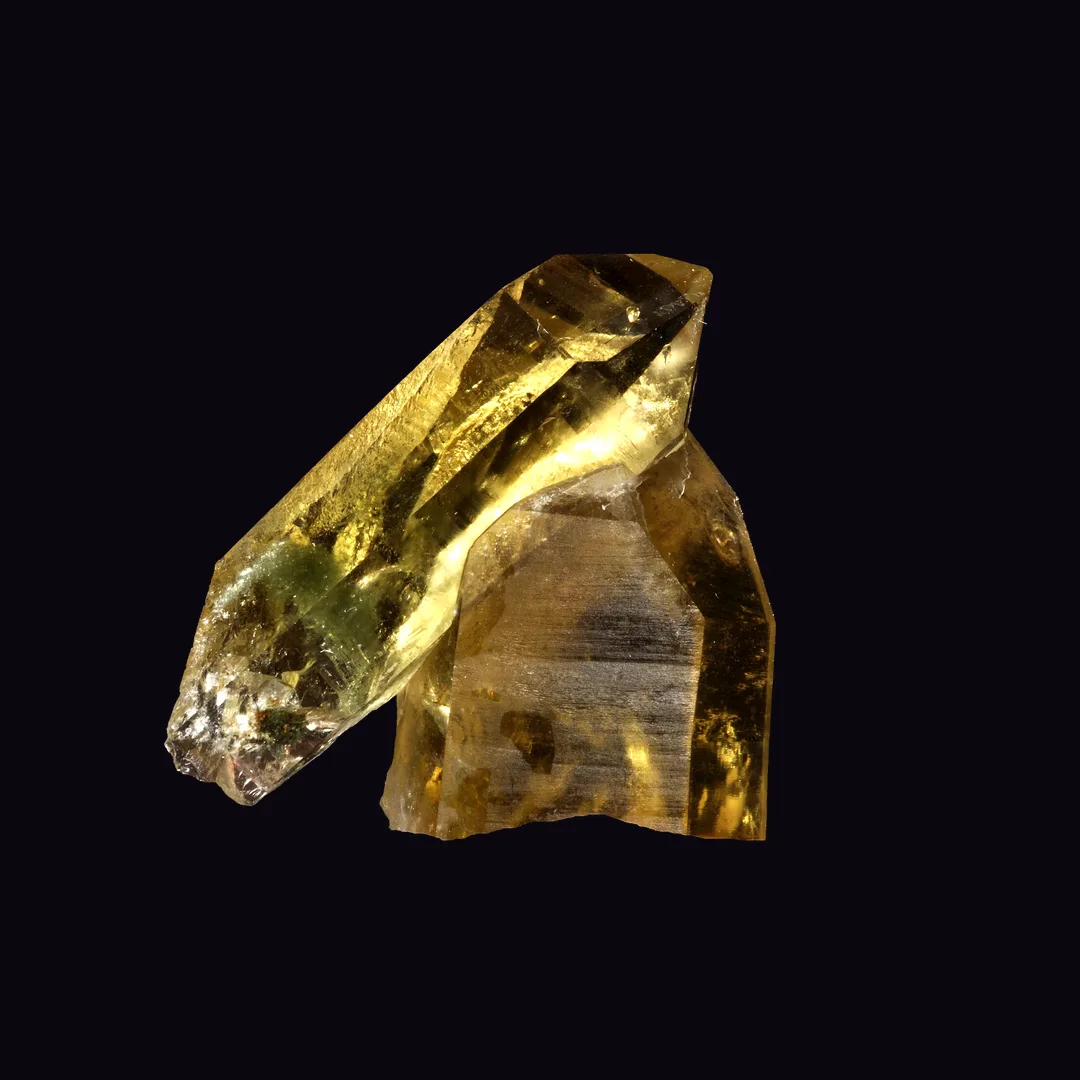
Citrine and heat-treated amethyst are both quartz, but they got their color two different ways. Natural citrine grew yellow in the ground and is genuinely scarce. Most "citrine" you'll see is amethyst roasted until it turns orange-brown. The tell is the base and tips: soft even yellow means natural, a white base with sharp orange tips means cooked.
TL;DR: Both are SiO2 quartz. Soft weak-tea yellow through the whole crystal equals natural citrine. Chalky white base plus sharp burnt-orange tips equals heat-treated amethyst, which is most of what's sold.
Same mineral, different origin
Here's the thing that makes this confusing: neither one is a fake. They're both real quartz, and heated amethyst isn't dyed or coated or glass. It's amethyst that got roasted at roughly 400 to 550 degrees Celsius, which converts the iron colour centres from violet to orange. The colour is permanent and won't fade or wash out. So this isn't a real-versus-fake fight like glass or dyed howlite. It's natural-versus-treated, and the difference shows up in price and disclosure, not in whether the stone is "real."
The problem is just that heated amethyst gets sold as plain "citrine" with no mention of the kiln, at prices that borrow from how rare true citrine is. Natural citrine is scarce enough that if a shop has a bin of bright orange points for a few dollars each, they're almost certainly cooked. That's not a scandal. It's just worth knowing what you're paying for.
Citrine vs heat-treated amethyst side by side
The colour distribution does all the work. This table is what to look at.
| Attribute | Natural Citrine | Heat-Treated Amethyst |
|---|---|---|
| Mineral | Quartz (SiO2) | Quartz (SiO2) |
| How it got its colour | Grew yellow in the ground | Amethyst roasted at ~400-550°C |
| Base colour | Yellow continues or fades gently at base | Chalky opaque white base |
| Tip colour | Soft, even weak-tea yellow | Saturated burnt orange-brown |
| Colour transition | Gradual, gentle zoning | Hard, sharp line from white to orange |
| Overall tone | Pale yellow, sometimes faint smoky-grey | Deep orange, too red for natural |
| Hardness (Mohs) | 7 | 7 |
| Rarity | Genuinely scarce | Mass-produced |
Read the base first
If you only learn one move, make it this one: look at where the crystal was attached to the matrix, the base.
Natural citrine's colour runs through the whole crystal or fades softly toward the base. There's no dramatic boundary. The yellow is soft and slightly murky, more like weak tea than orange soda, and it often carries a faint grey or smoky cast because natural citrine sits right next to smoky quartz on the colour spectrum. Even, gentle, understated.
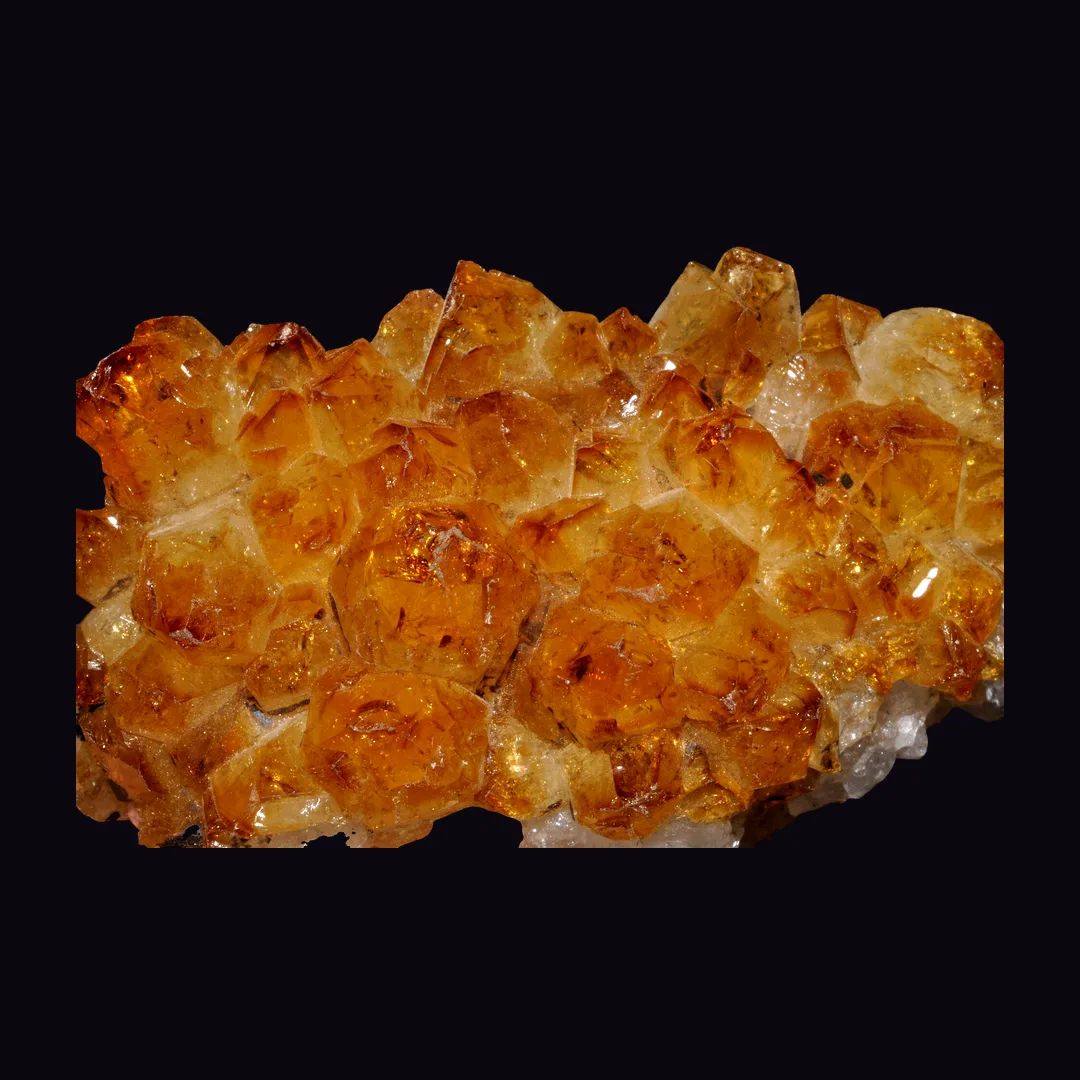
Heat-treated amethyst does the opposite. The base goes chalky, opaque, milky white, and then breaks abruptly into a saturated orange-brown at the tips. That hard colour line is the giveaway, because nature doesn't usually paint a sharp boundary like that. On a geode, you'll see short stubby points that are all the same burnt orange, sitting on a bleached white zone. Sometimes there's fine surface crazing from the thermal shock of roasting.
The tips help too. Natural citrine tips stay soft yellow. Heated tips are deep, saturated, and honestly too red-orange to be natural. If the orange looks like it belongs on a bag of chips, it was cooked.
Why hardness won't save you here
Both stones are quartz at Mohs 7, so the scratch test that separates quartz from softer lookalikes like clear quartz versus calcite or fluorite does nothing to tell citrine from heated amethyst. They're the same mineral. Confirm it's quartz first if you like, with a glass scratch, but after that the only thing that separates natural from treated is the colour distribution described above. There's no consumer test, no light, no loupe trick that detects the heat itself. Read the colour or don't know.
That's the honest limit here. Even labs sometimes need instruments to be fully certain on treated quartz. For a shopper, the white-base-and-orange-tips pattern gets you most of the way, and it's right the large majority of the time.
Watch out for the other yellow lookalikes
While you're checking, a couple of other stones get sold as citrine and neither is quartz. Yellow fluorite is softer, Mohs 4, so it won't scratch glass the way real citrine or clear quartz will, and it often shows flat internal cleavage faces that flash like tiny mirrors. Do a quick glass scratch first: if it doesn't scratch, it isn't quartz and it isn't citrine of either kind. Yellow glass is the other one, and it gives itself away with perfectly round trapped bubbles and a stone that warms fast in your hand instead of staying cool.
Smoky quartz is the trickier neighbor, because natural citrine actually sits right next to it on the colour spectrum and genuine citrine often carries a faint smoky-grey cast. That overlap is real and it's part of why soft, slightly murky yellow is the honest signature of natural material, while the too-red, too-saturated orange belongs to the kiln. If a stone is a clean deep gold with a bright white base, you're not looking at smoky quartz or natural citrine, you're looking at cooked amethyst.
Amethyst goes green in the kiln too
Orange is not the only colour an oven pulls out of amethyst. Push it to roughly 500 degrees and the same purple quartz comes out a pale mint green. That stone is prasiolite, and most of it is sold as green amethyst, which is a name for a thing that does not really exist. Nearly all of it on the market is heated, most of it from Montezuma in Brazil. Natural prasiolite is real and very rare. The tell is the tell you already learned. The colour is too even. Pale, clear and evenly mint, like a bottle held up to a window, means a kiln did it.
Does it matter which one you have?
Depends what you want. If you love the stone and the deep orange makes you happy, heated amethyst is stable, permanent, and completely fine to own. Nobody needs to feel scammed for owning it. The only real issue is money: don't pay a scarce-natural-citrine price for a roasted stone, and be a little skeptical of any shop selling deep-orange "citrine" by the bucket without mentioning heat.
If you specifically want natural, unheated citrine for collecting or resale, hunt for the soft even yellow with no white base and no hard colour line, and expect to pay for it and to see paperwork.
Either way, the base tells the truth. If yours is a borderline case, or the lighting in the shop made everything look golden, scan it and compare the base-and-tip pattern before you decide what it is. The tests get you eighty percent there. A clear photo of the base settles the rest.
The stones in this piece
Questions people ask
Is heat-treated amethyst still real citrine?
It's real quartz and the orange colour is permanent and stable, but purists don't call it true citrine. True citrine is quartz that grew yellow in the ground. Heat-treated amethyst is amethyst roasted at around 400 to 550 degrees Celsius until the iron shifts from violet to orange-brown. Same mineral, different origin story, and it should be disclosed as treated. Most shops don't disclose it.
How do I tell natural citrine from heated amethyst?
Read the colour distribution. Natural citrine is a soft, even, weak-tea yellow, sometimes with a faint smoky-grey cast, and the colour continues through or fades gently at the base. Heat-treated amethyst has a chalky white base that breaks into a sharp, saturated orange-brown at the tips, a hard colour line rather than a gradient. Hardness won't help since both are quartz at Mohs 7.
Is natural citrine worth more than heat-treated?
Yes, usually a lot more, because genuine unheated citrine is scarce while heated amethyst is mass-produced. Both are stable, both are real quartz, and heated material is perfectly nice to own. The issue is only paying a natural-citrine price for a roasted stone. If it's a deep orange geode cave for a low price, it's cooked amethyst, and that's fine at the right price.