Clear Quartz vs Glass: The Cold Test That Settles It
Identifying crystals · 6 min read · 12 August 2026
Sand poured into a mould and quartz grown in the ground look identical on a shelf. Your lip settles it in four seconds, and a glass bottle confirms it.
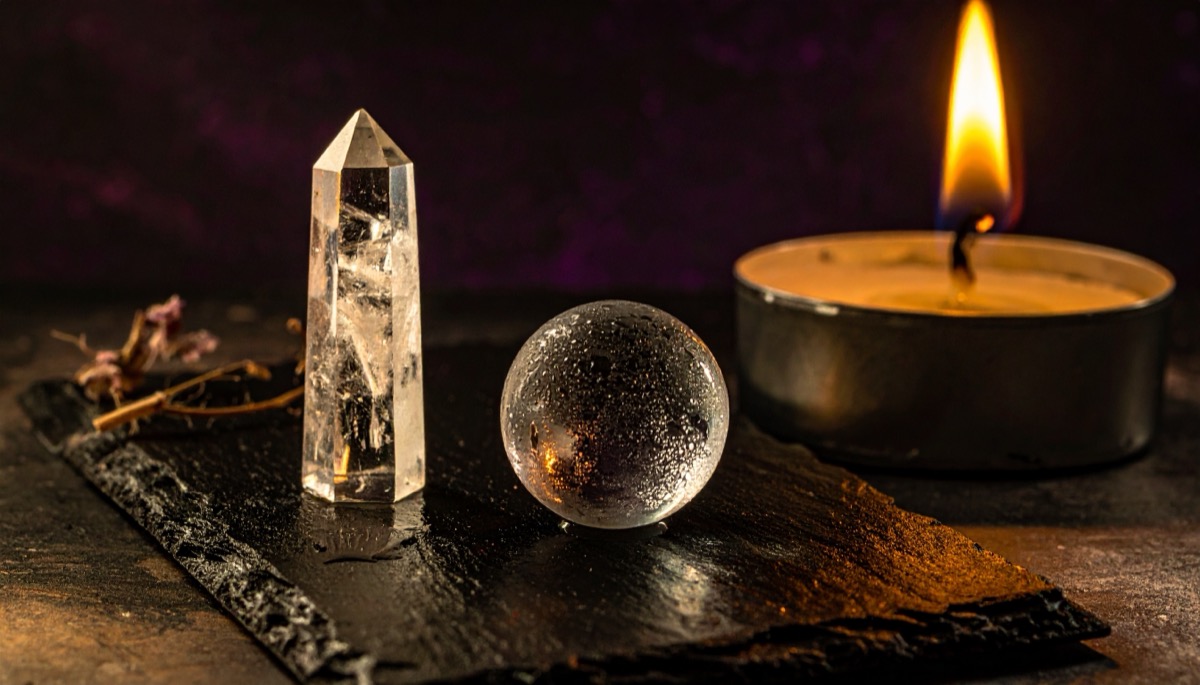
Beach sand is mostly ground-up quartz. Melt it and it becomes glass.
So the real thing and the copy start from the same stuff. What separates them is what happened next.
One grew in the ground over an age. The other was poured into a mould on a Tuesday.
That is why every honest test here is physical, not visual. Your eyes cannot see time.
You have been holding it up to the window all week without asking anybody. Somebody made you feel small for a question like this once. The stone will answer you itself, and it takes about four seconds.
Clear quartz and glass fool a lot of people because a polished quartz sphere and a glass one look identical on a shelf. The difference is physical. Quartz stays cold against your skin, scratches a glass bottle, and traps irregular inclusions. Glass warms fast, won't scratch itself, and holds perfectly round bubbles. Any one of these settles it.
TL;DR: Quartz is Mohs 7, stays cold on your lip, and has irregular flat inclusions. Glass is softer, warms fast, and traps perfectly round bubbles. The cold test is the quickest tell.
Why this even happens
Glass is cheap, clear, and easy to mold into spheres, points, and "crystal" anything. It's sold as clear quartz constantly, sometimes honestly as "quartz glass" and sometimes not. The good news is that quartz and glass are genuinely different materials with different physical properties, so you don't have to guess. You just have to run one of a handful of tests, and most of them need nothing but your own body and a bottle.
Worth naming the honest limit up front: there's also lab-grown synthetic quartz, which is real quartz chemically and near-impossible to tell from natural by eye. That's a different problem, and it's rare in the metaphysical market because natural quartz is cheaper than growing it. This article is about the common case, real quartz versus plain glass.
Clear quartz vs glass side by side
| Attribute | Clear Quartz | Glass |
|---|---|---|
| Material | Mineral (SiO2), crystalline | Amorphous manufactured solid |
| Temperature | Stays cold several seconds | Warms fast to your touch |
| Hardness (Mohs) | 7, scratches a glass bottle | ~5.5, won't scratch itself |
| Inclusions | Irregular, flat, veils, phantoms | Perfectly round air bubbles |
| Shape | Six-sided prism, horizontal striations | Molded, seams, no natural faces |
| Fracture | Conchoidal, no cleavage | Conchoidal, often mold seams |
| Double refraction | Weak, present | None |
The cold test
This is the one to start with because it needs zero equipment. Touch the stone to your lip or the sensitive skin on your cheek. Quartz conducts heat away from your skin, so it feels noticeably cold and stays cold for several seconds before it warms up. Glass warms almost instantly and never has that lingering chill. Plastic is even worse, warming the moment you touch it.
It sounds too simple to be real, but it works, and dealers actually use it. Hold a piece of quartz and a piece of glass and the difference in how long they stay cold is obvious once you've felt it once. This is your fast first pass.
The scratch test
Quartz is Mohs 7. Ordinary glass is around 5.5. That gap means quartz scratches glass, but glass cannot scratch quartz. Take the suspect piece and drag an edge firmly across a glass bottle or a jar you don't care about. If it leaves a clean scratch in the bottle, you're holding something at least as hard as quartz. If the suspect stone gets scratched instead, or a steel knife marks it easily, it's glass.
Do this carefully on a hidden spot, and make sure you're scratching the glass, not just leaving a smear of powder that wipes off. A real scratch you can feel with a fingernail is the signal.
One caution: this separates quartz from glass, but it won't separate quartz from other hard clear stones. It will, however, instantly out soft imposters. Selenite, for example, is a Mohs 2 and your fingernail scratches it, so if a "quartz" point scratches with a nail, it's not quartz at all.
The bubble and inclusion test
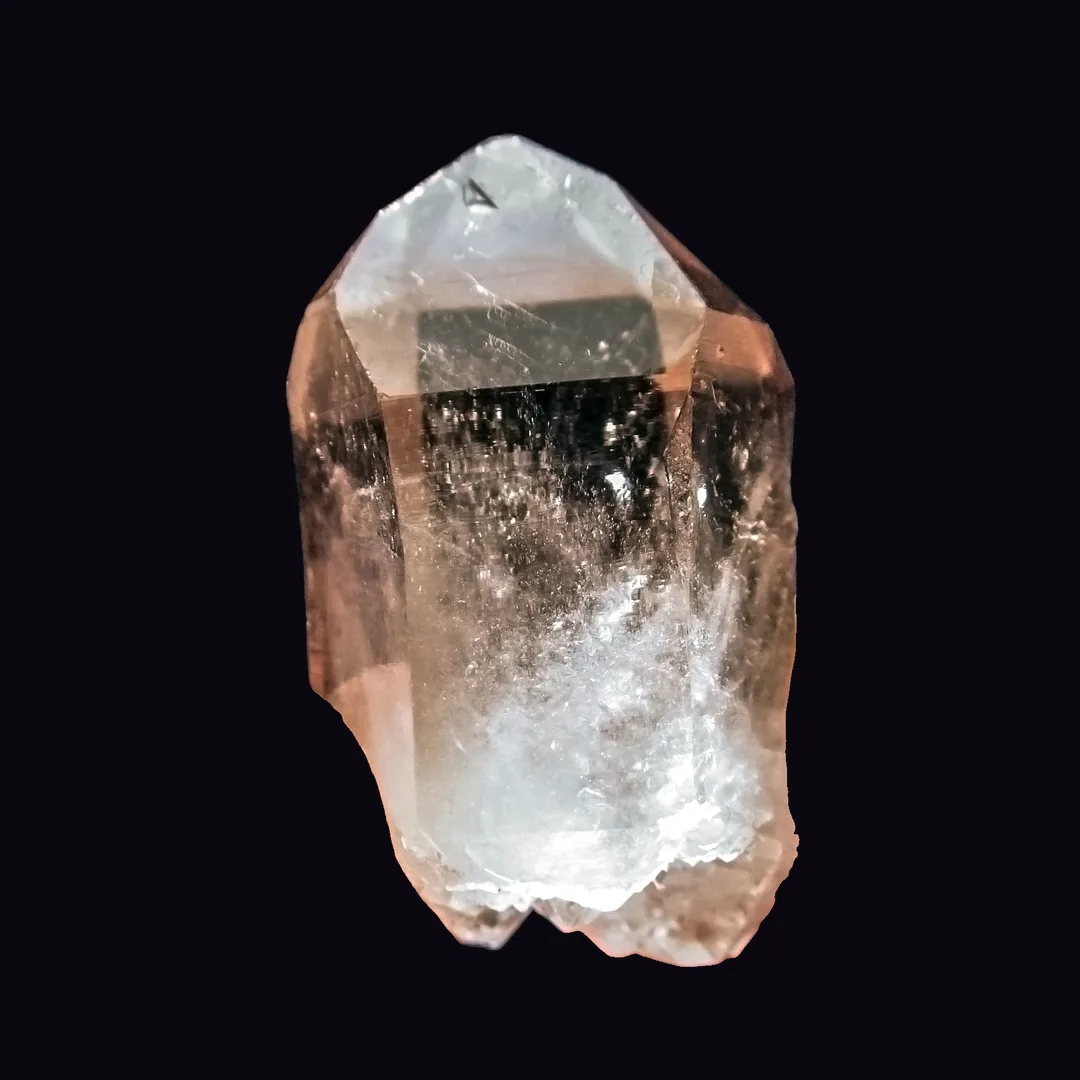
Get a 10x loupe or just your phone's macro mode and look inside. This is often the most fun tell. Glass, poured molten, traps gas as perfectly round bubbles, little clean spheres. Quartz almost never does that. Natural quartz shows irregular, flat, or elongated gas and liquid inclusions, plus veils, internal fractures that throw a rainbow sheen, phantoms, and sometimes needle inclusions. If you see tiny perfect spheres, stop, it's glass. If you see messy, irregular, flat internal features, that's quartz being quartz.
Absolute glassy perfection is itself a red flag. Real quartz usually has some internal character. Flawless, bubble-free, dead-clear material in a cheap piece leans glass.
Shape, seams, and double refraction
If your piece is a raw point rather than a polished sphere, shape decides it fast. Natural quartz grows as a six-sided prism ending in a six-faced pyramid, with horizontal striations running across the prism faces, never lengthwise. Molded glass has none of that. Instead it may show a mold seam, a rounded fake "point," or a flat pontil mark where it was cut from the rod.
For a last confirmation, double refraction: look through a clean, clear part of the stone at a thin line, like the edge of text. Quartz doubles the line very slightly because it's birefringent. Glass shows a single crisp line because it isn't. The quartz effect is weak, so this is a tiebreaker, not a headline test.
Why the weight and the temperature line up
If you want to understand why the cold test works, it's density and conductivity. Quartz is denser than most glass, so a quartz sphere feels a touch heavier than a same-size glass one, and it pulls heat from your skin more efficiently, which is what you feel as that lingering cold. Glass insulates a little better, so it warms to your hand quickly and never gives you that few-second chill. You don't need to measure anything, but holding a known piece of clear quartz in one hand and a glass paperweight in the other for a minute teaches your hands the difference better than any description.
This is also why plastic is the easiest imposter of all to catch. Plastic is light and warms the instant you touch it, so a "crystal" sphere that feels weightless and body-warm on contact isn't quartz or even glass. Cheap dyed "amethyst" and "rose quartz" tumbles are sometimes resin, and the same weight-and-warmth check outs them fast, the same way the angular colour zoning check outs dyed glass posing as amethyst.
What glass can never grow
Glass is poured. It has no inside story. Quartz does, and it wears that story where you can see it.
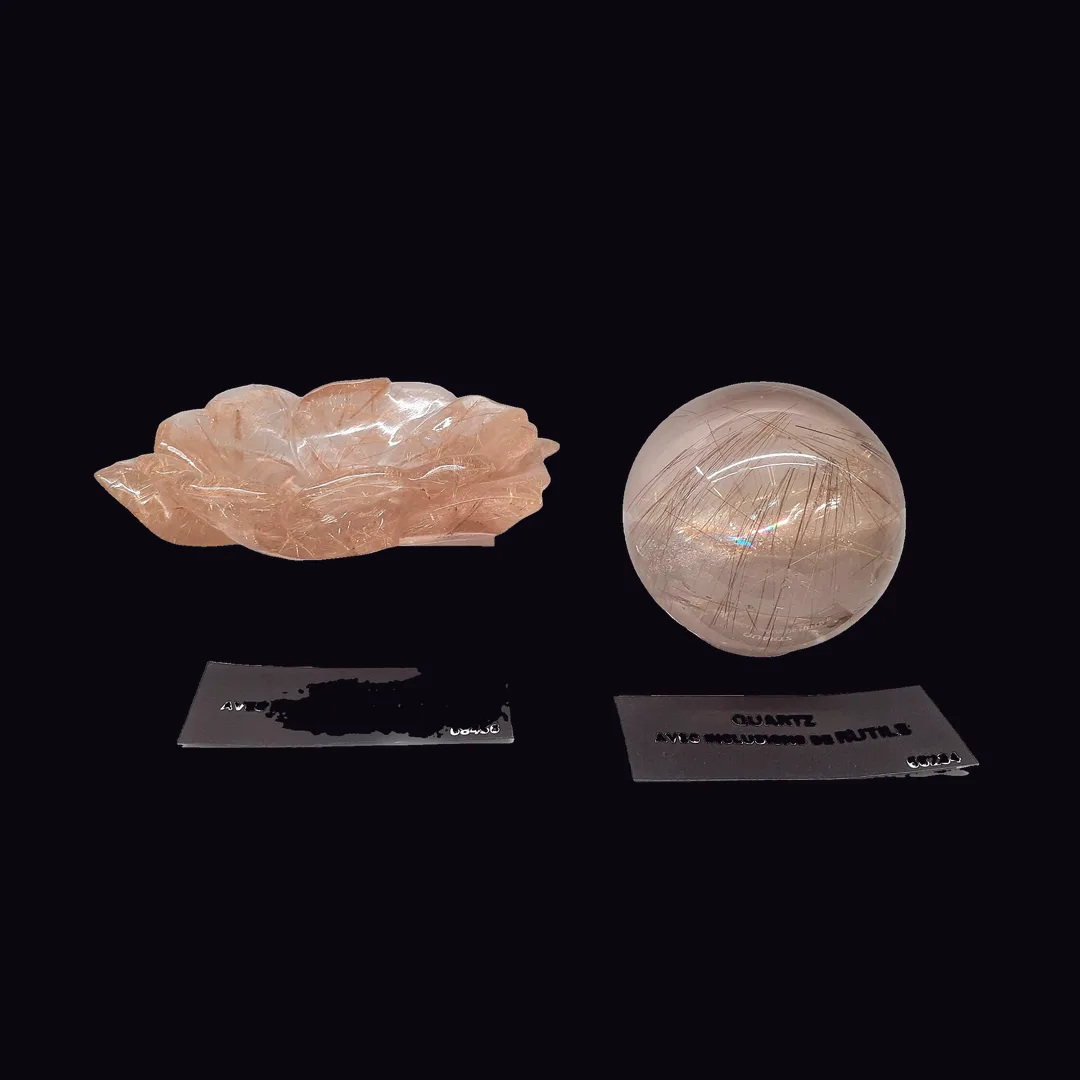
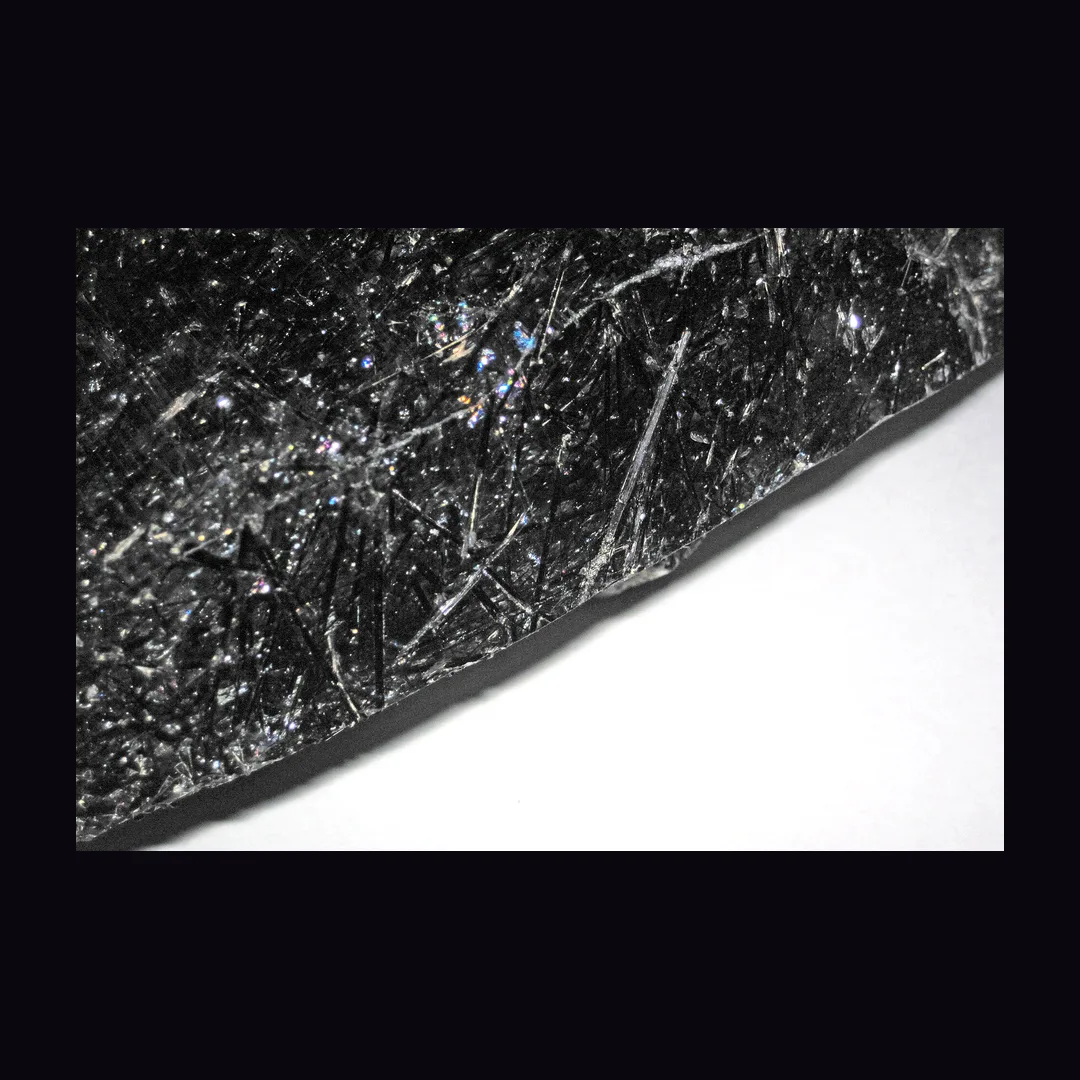
Phantom quartz holds a smaller crystal inside the big one, hard-edged, repeating the outer shape. Nothing poured into a mould makes that. Rutilated quartz carries straight stiff golden rutile needles that never curve or fray. Goldstone, the glass copy, sparkles with a dense cloud of identical tiny flecks and shows bubbles under a loupe. Tourmalinated quartz does the same trick in matte black rods with a triangular cross-section.
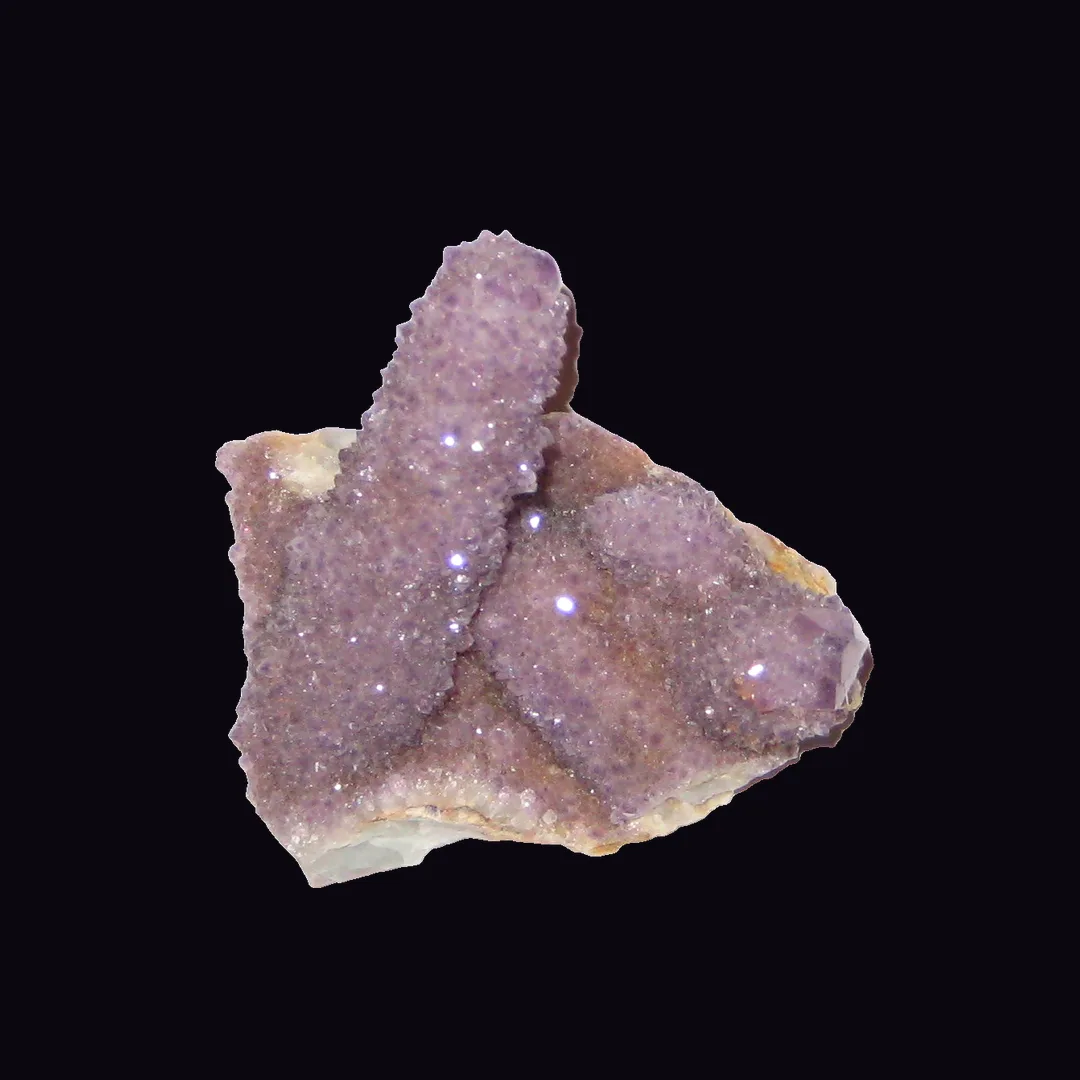
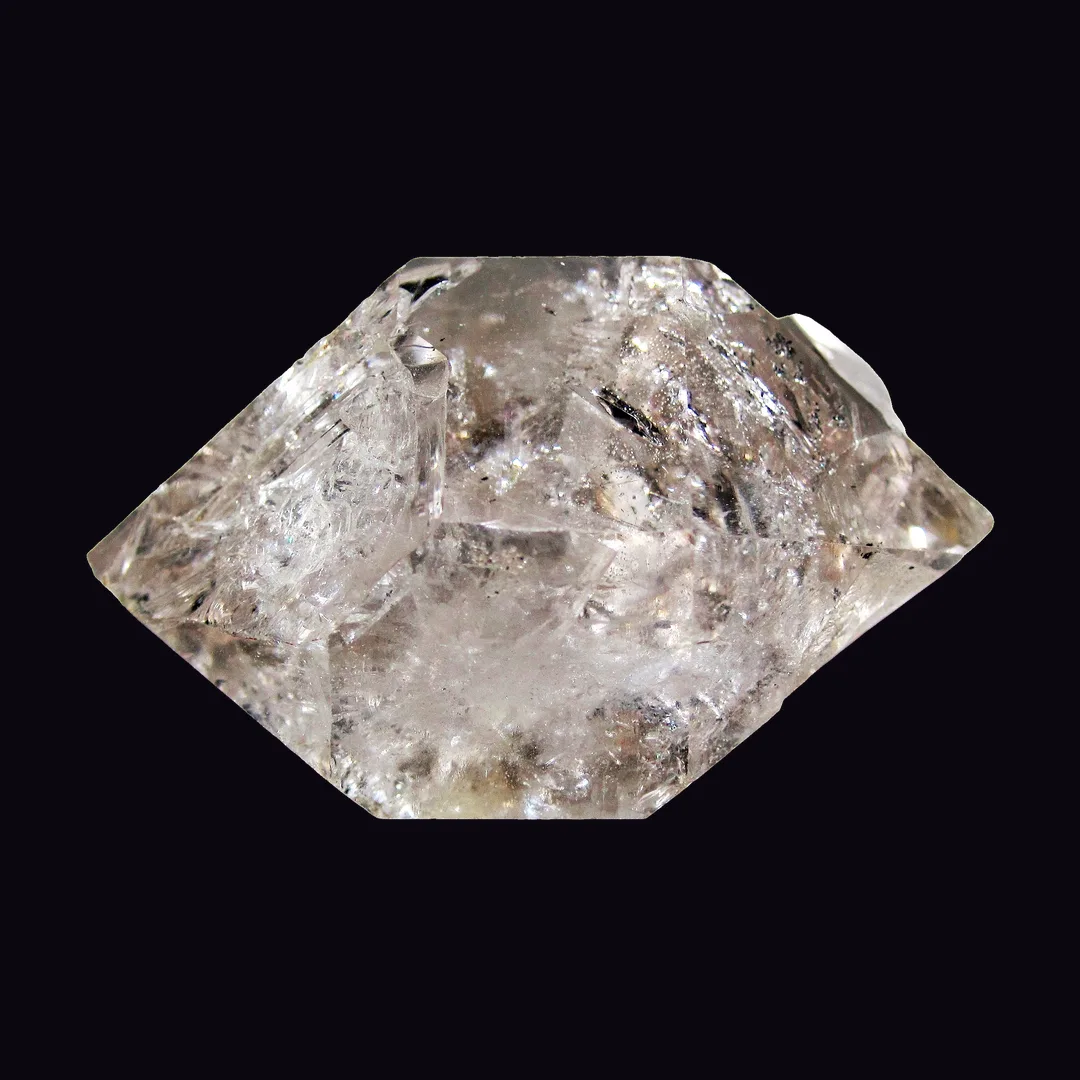
Spirit quartz crusts one central prism with hundreds of tiny crystals pointing every way at once. Herkimer diamond grew loose in a pocket, so it has a point at each end and mirror-flat faces nobody cut.
Putting it together
Run them in order and you'll rarely need all four. Cold on the lip, scratches a bottle, irregular inclusions, six sides with horizontal striations, all point to quartz. Warms fast, won't scratch glass, round bubbles, mold seams, all point to glass. The same logic separates amethyst from purple glass, by the way, with the added tell that real amethyst shows angular colour zoning that dyed or coloured glass can't fake.
These home tests get you most of the way, honestly around eighty percent on a clear-cut piece. The one case they won't crack is lab-grown quartz posing as natural, which needs a gemologist. If your piece is borderline or you just want a second opinion, scan it to be sure before you buy.
The stones in this piece
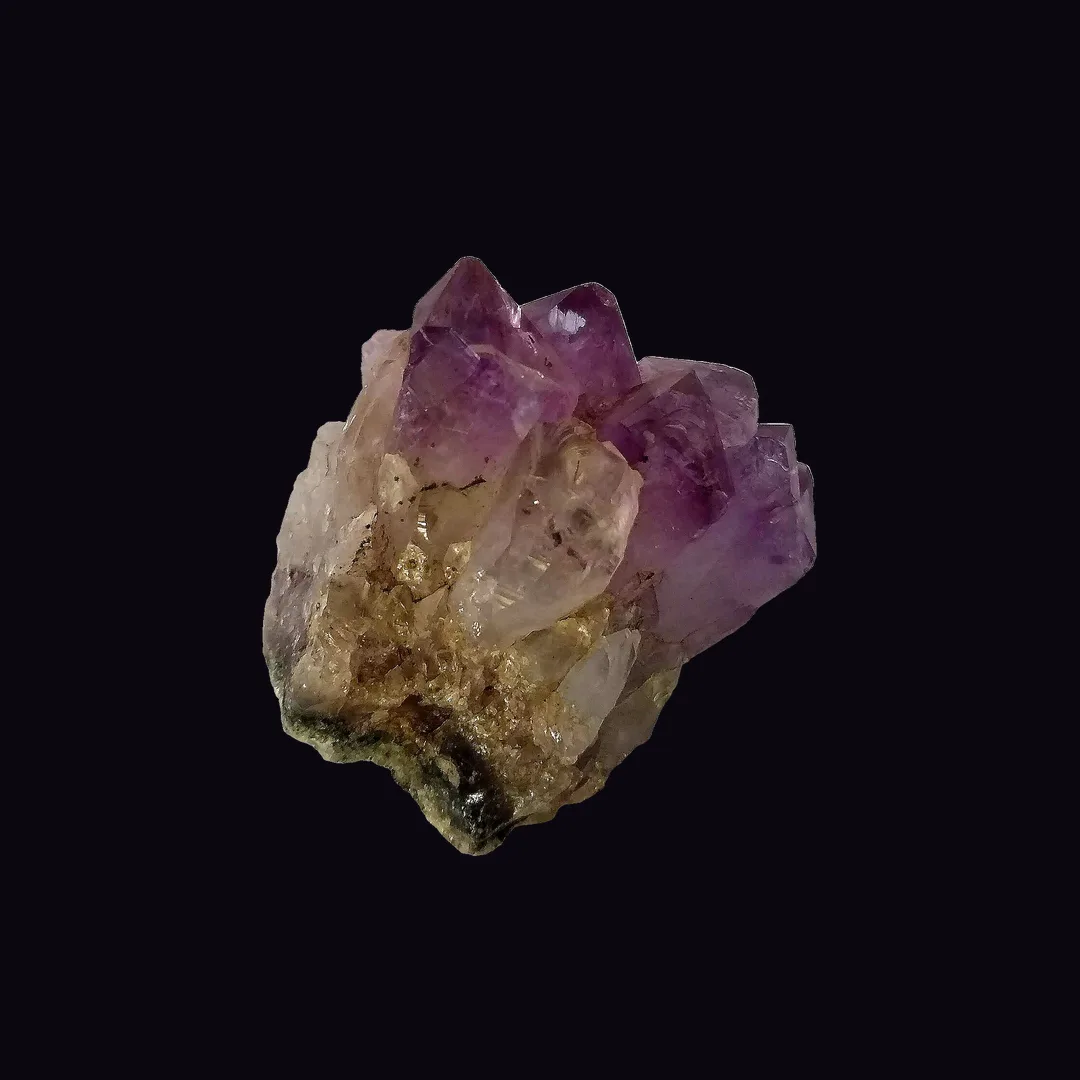
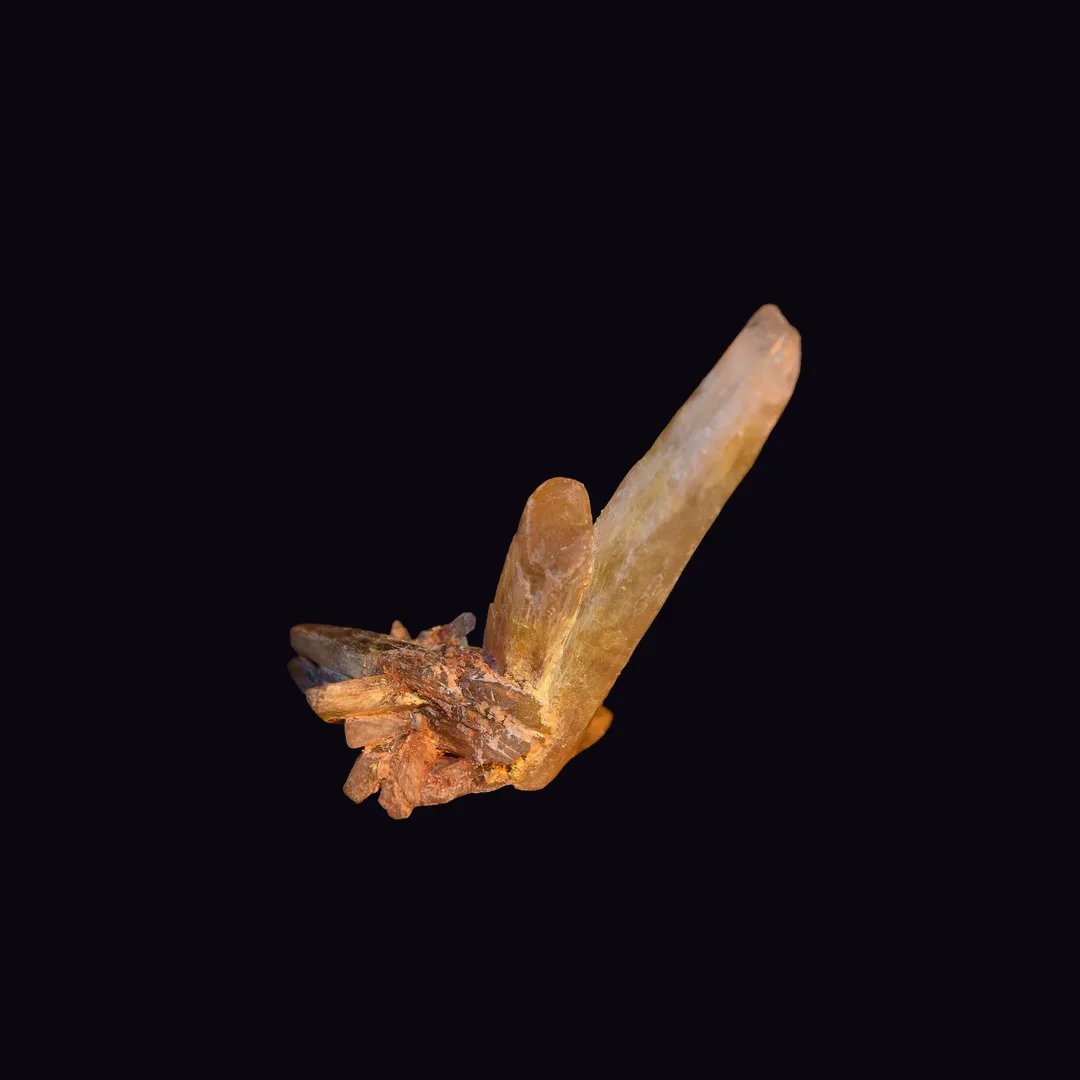
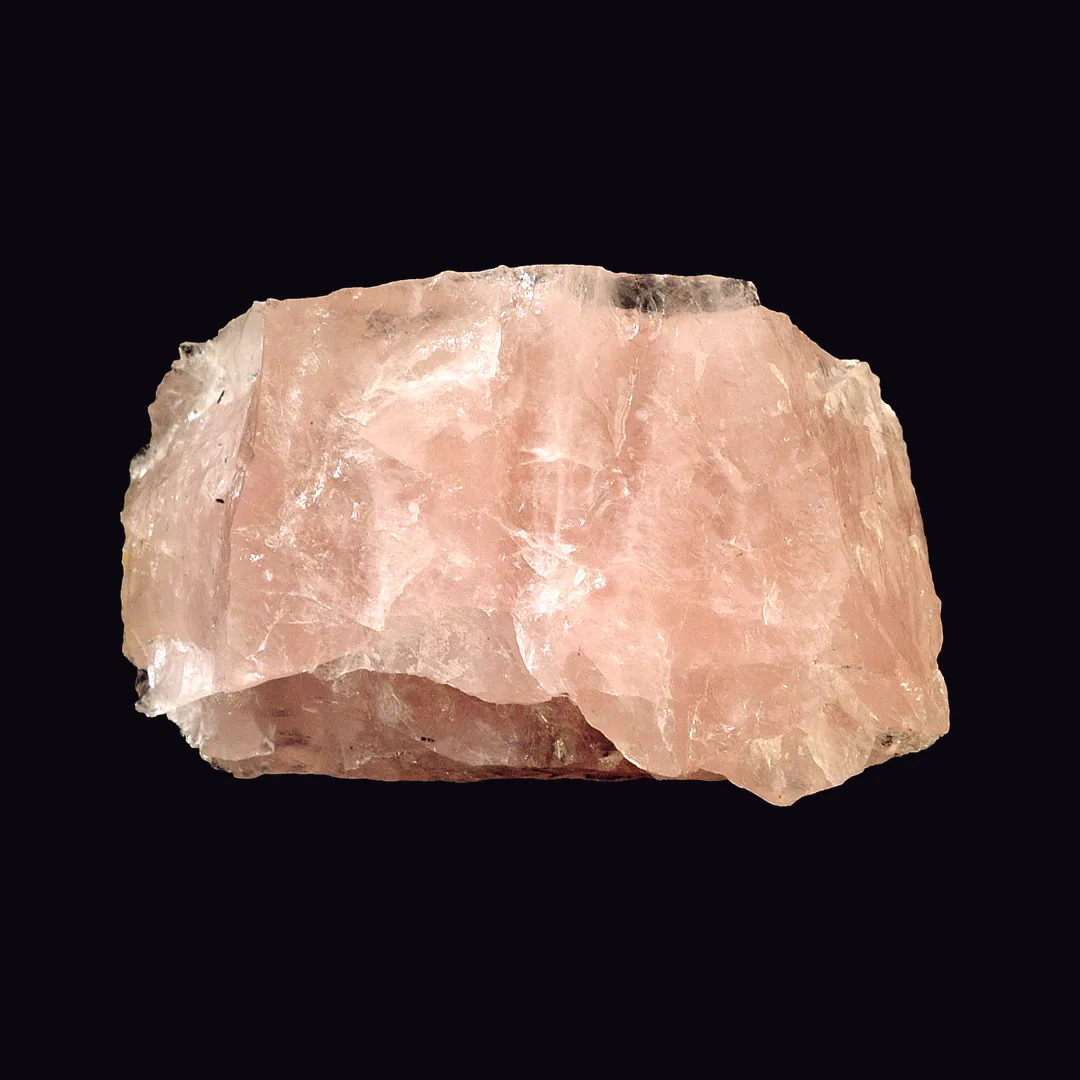
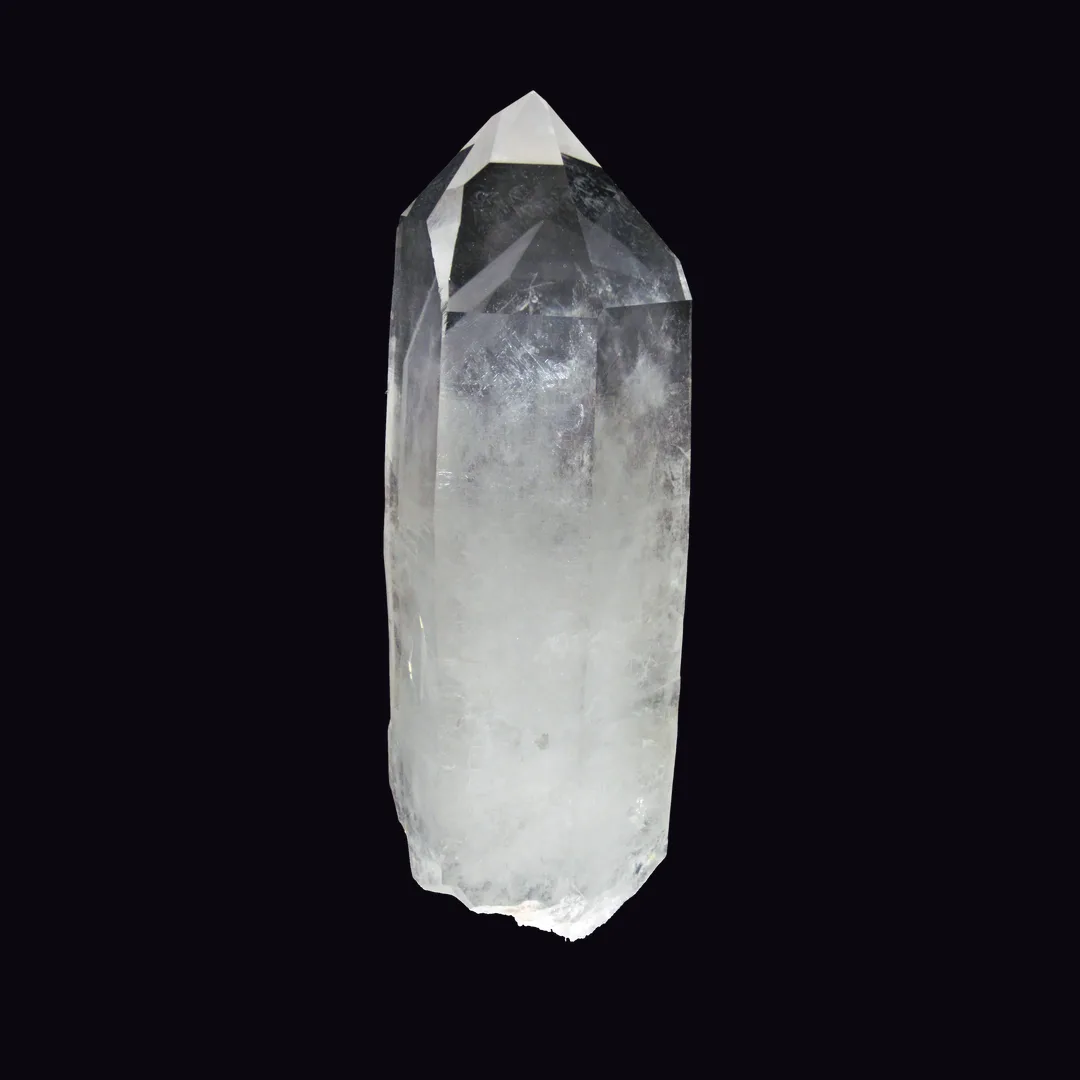
Questions people ask
How can I tell clear quartz from glass?
Four quick checks. Quartz stays noticeably cold against your lip for several seconds while glass warms fast. Quartz is Mohs 7 and scratches a glass bottle. Glass won't scratch itself. Quartz traps irregular, flat, or veil-like inclusions, while glass traps perfectly round air bubbles. And a natural quartz point has six sides with horizontal striations, which molded glass never has.
Do real crystals have bubbles in them?
Not round air bubbles. Perfectly spherical bubbles are the single clearest sign of glass, because molten glass traps gas as neat spheres. Natural quartz can contain gas and liquid inclusions, but they're irregular and flat, not round, and it more often shows veils, internal fractures with rainbow sheen, phantoms, or needle inclusions. If you see tiny perfect spheres under a loupe, it's glass.
Does clear quartz scratch glass?
Yes. Quartz is Mohs 7 and ordinary glass is about 5.5, so a quartz point will scratch a glass bottle while the glass won't scratch the quartz back. Drag an edge of the suspect stone across a glass surface you don't mind marking. A clean scratch in the glass points to quartz or something harder. No scratch, and easy scratching by a steel knife, points to glass.