Real vs Fake Amethyst: 7 Ways to Spot a Dyed One in Seconds
Identifying crystals · 6 min read · 7 August 2026
Real amethyst is purple in patches, never one flat shade. Dyed quartz is flat, and the colour pools in the cracks. Here is how to catch it before you pay.
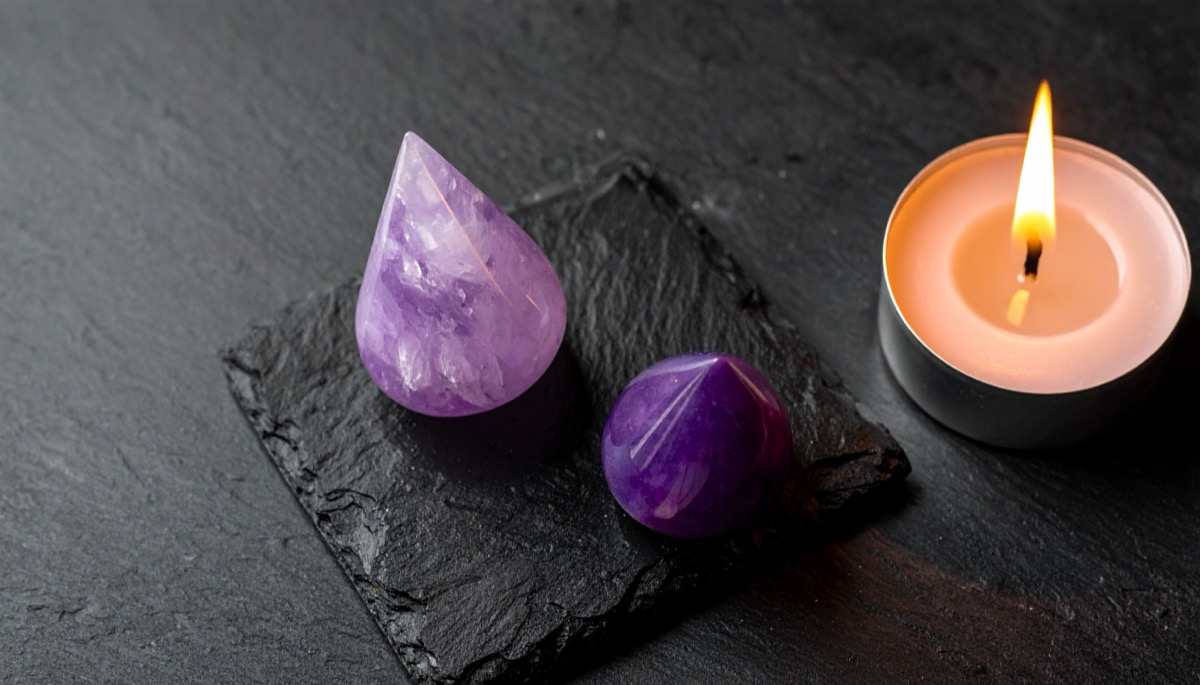
Real amethyst grew its purple unevenly. The colour sits in bands and patches, darker at the tip, thin near the base. Nobody could make it that way on purpose.
So somebody made it even instead. Pale quartz goes into a dye bath and comes out one flat shade, with the colour pooled in every crack.
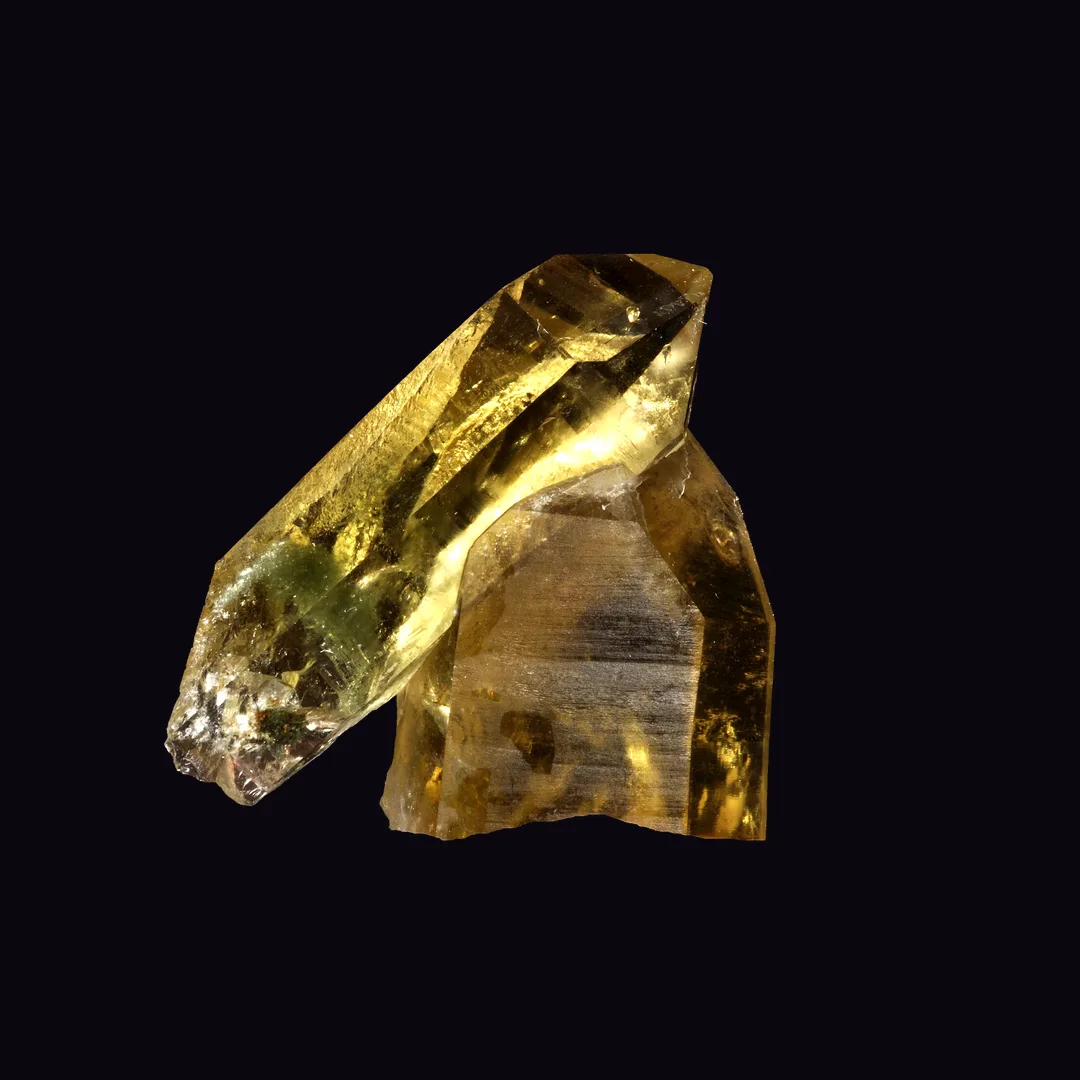
The same trade bakes amethyst in an oven and sells it as citrine. Most of the orange citrine in a shop window started out purple.
You are looking at a perfect stone that cost almost nothing, and your gut has already done the sums. Your gut has a better record here than the seller did.
Real amethyst shows uneven purple color zoning, feels cool to the touch, and has no internal bubbles. Fakes are usually dyed quartz with color pooling in the cracks, or glass, which warms up fast in your hand and traps tiny round bubbles. If the color is a perfect even purple and the price is too good, be suspicious.
One note before the tests. Dyed quartz is still real quartz, so the scratch test does nothing here. These seven tells are the ones that work.
1. Colour zoning (the big one)
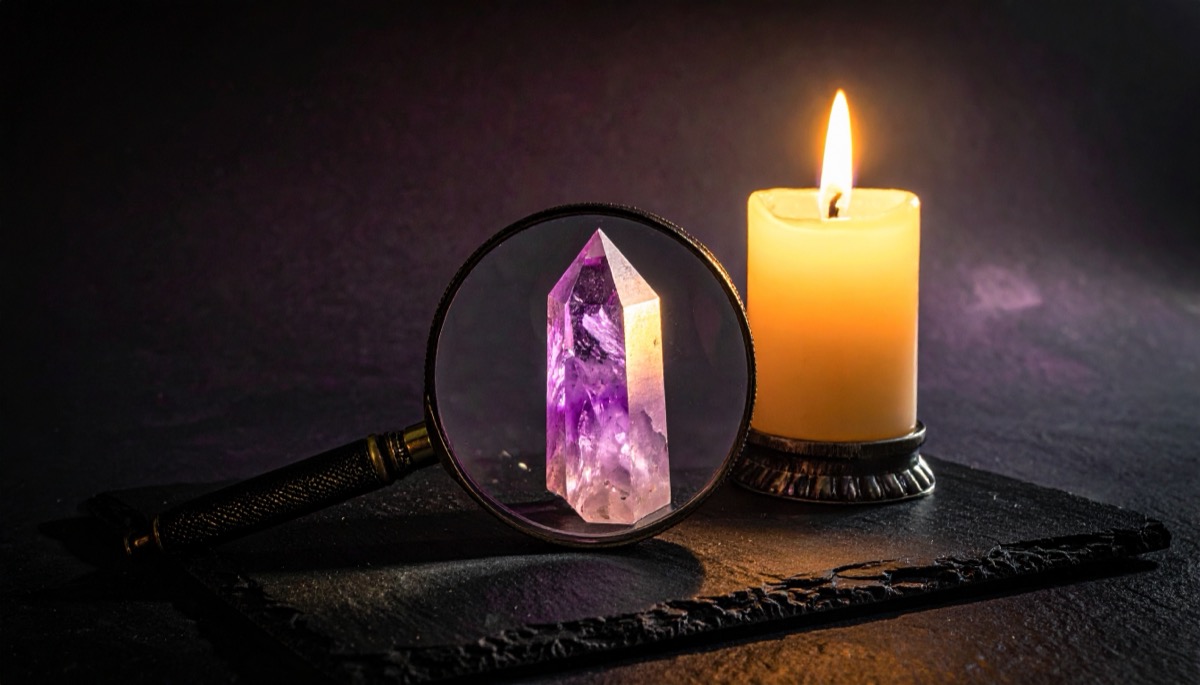
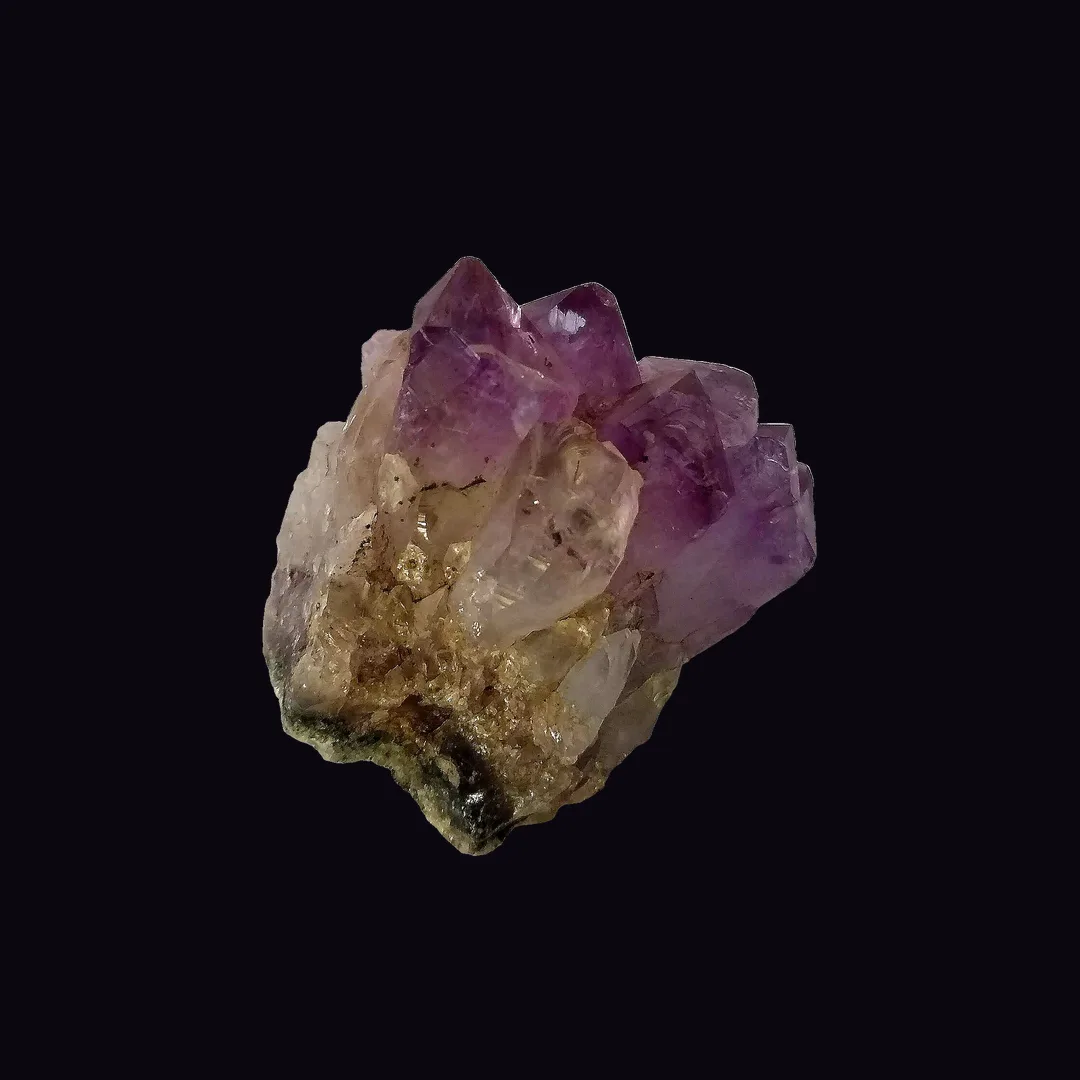
Natural amethyst grows unevenly. Hold a real point to the light and you'll see the purple pool near the tip and fade toward the base, often in patches or angular bands. That unevenness is the fingerprint of a real crystal.
Dyed stone tends to be too consistent, a flat, all-over grape purple with no variation, or the opposite: colour concentrated in cracks and crevices where the dye soaked in. If the purple looks painted on rather than grown in, trust that instinct.
2. Temperature
Quartz is a natural mineral and stays cool. Pick up a real amethyst and it feels cold, and it takes a few seconds to warm to your skin. Glass warms up almost instantly and feels lighter and warmer overall. This is the fastest test you can do at a market table without any tools.
3. Bubbles
Look inside with a phone light or a loupe. Glass fakes trap tiny round air bubbles when they're poured. Natural quartz never has perfectly round bubbles, its inclusions are wispy, angular, or veil-like. Round bubbles are a dead giveaway you're holding glass, not stone.
4. Dye in the cracks
On dyed pieces, colour collects where dye can pool: fractures, pits, and the seams between crystals. If you see purple that's noticeably darker inside every little crack while the flat faces are paler, that's dye, not natural growth. Rubbing a fake with a little acetone (nail polish remover) on a cloth can sometimes lift colour, though not always.
5. Too perfect, too cheap
A giant, flawless, deep-purple amethyst tower for a few dollars is not a deal, it's a warning. Deep even colour at a low price usually means dyed. Real high-saturation amethyst costs money. If the specimen looks like candy and the tag looks like clearance, those two facts are related.
6. Hardness (with a catch)
Amethyst is quartz, Mohs 7, so it scratches glass and won't be scratched by a steel knife. That test catches glass fakes fast. It does nothing for dyed quartz, because dyed quartz is real quartz and passes the hardness test easily. Use hardness to rule out glass, not to prove authenticity.
7. The sun-fade test
Genuine amethyst slowly fades toward clear or grayish with long, direct sun. Some dyes fade faster and blotchier, and some cheap dyes don't fade at all. It's a slow test, days to weeks, so it's a confirmation, not a checkout-counter check. Related tell: overheated amethyst turns yellow-orange, which is how most "citrine" and prasiolite on the market are actually made from amethyst.
Real vs fake at a glance
| Tell | Real amethyst | Dyed quartz | Glass |
|---|---|---|---|
| Colour | Uneven, zoned, fades to base | Too even, or pooled in cracks | Flat, uniform |
| Temperature | Cool, warms slowly | Cool (it's real quartz) | Warm fast, feels light |
| Bubbles | Wispy, angular inclusions | None obvious | Round trapped bubbles |
| Cracks | Clear | Darker dye inside cracks | Molded seams |
| Hardness (Mohs 7) | Scratches glass | Scratches glass | Scratched easily |
| Price | Real colour costs money | Cheap for the saturation | Very cheap |
The honest limit
Stack these tells and you'll catch glass almost every time and most dye jobs too. The one that gets people is well-done dyed quartz: the base is genuine, it feels cold, it passes the scratch test, and the dye is subtle. In a market with bad lighting, even people who do this a lot get fooled.
Where the fakes actually come from
Most dyed amethyst starts as cheap, colourless, or pale quartz and agate that's worth almost nothing on its own. Dyeing it purple is what makes it sellable, which is exactly why the fakes cluster at the low-price, high-colour end of the table. The glass fakes are even further down the chain: molded in bulk, sold in mixed lots, and dropped into tourist shops and cheap jewellery. Knowing the economics helps, because it tells you where to be suspicious. A pricey specimen from a specialist dealer is rarely dyed. A five-dollar "amethyst" cluster from a bin at a fair very well might be. Match your suspicion to the setting.
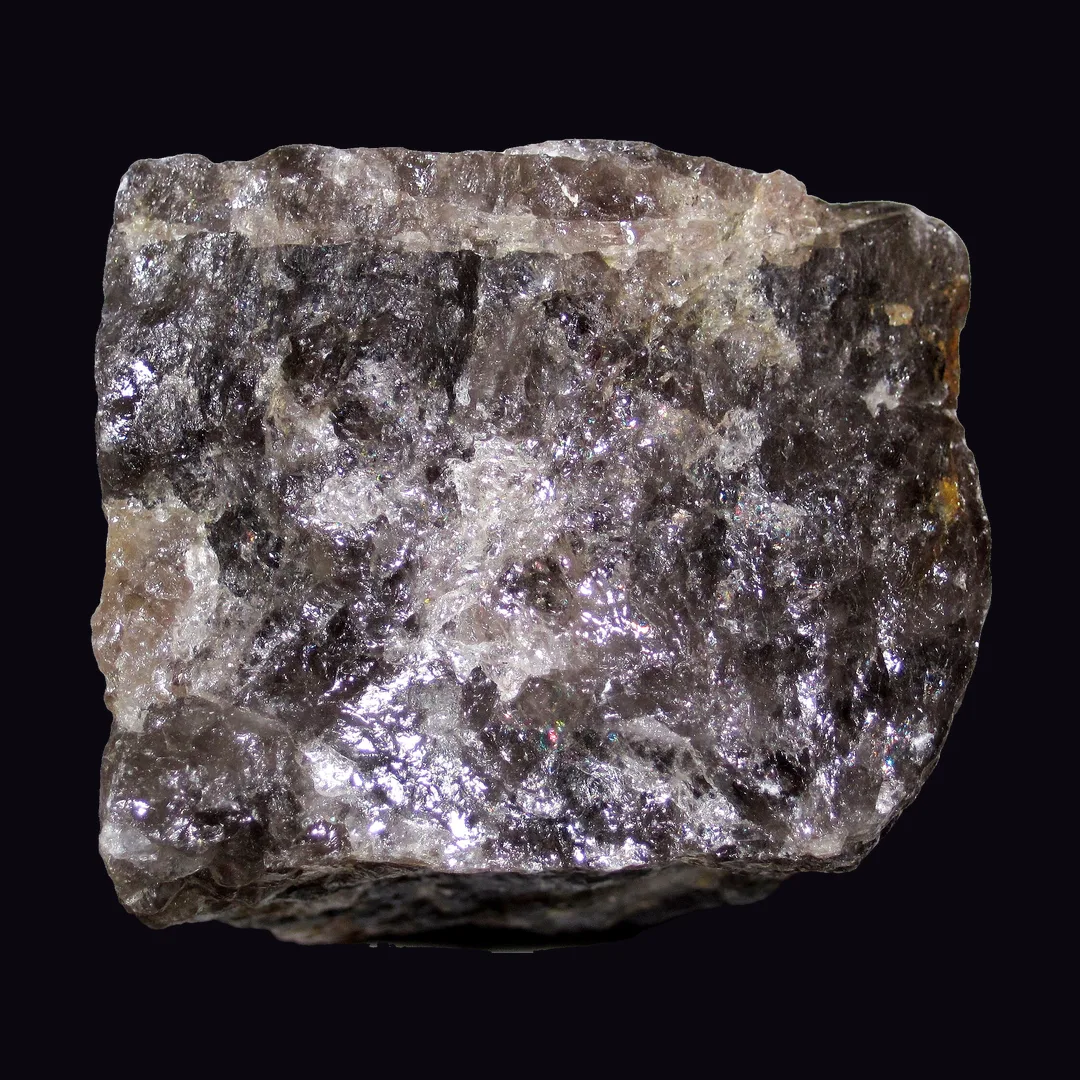
That's the gap the app closes. Compare your piece against clear quartz, ametrine, and smoky-quartz reference specimens and you'll see the difference in zoning fast. When you're not sure, take the photo. The scan reads colour distribution, luster, and inclusions together and gives you a straight answer, which beats squinting at a crack under phone light and hoping.
The stones in this piece
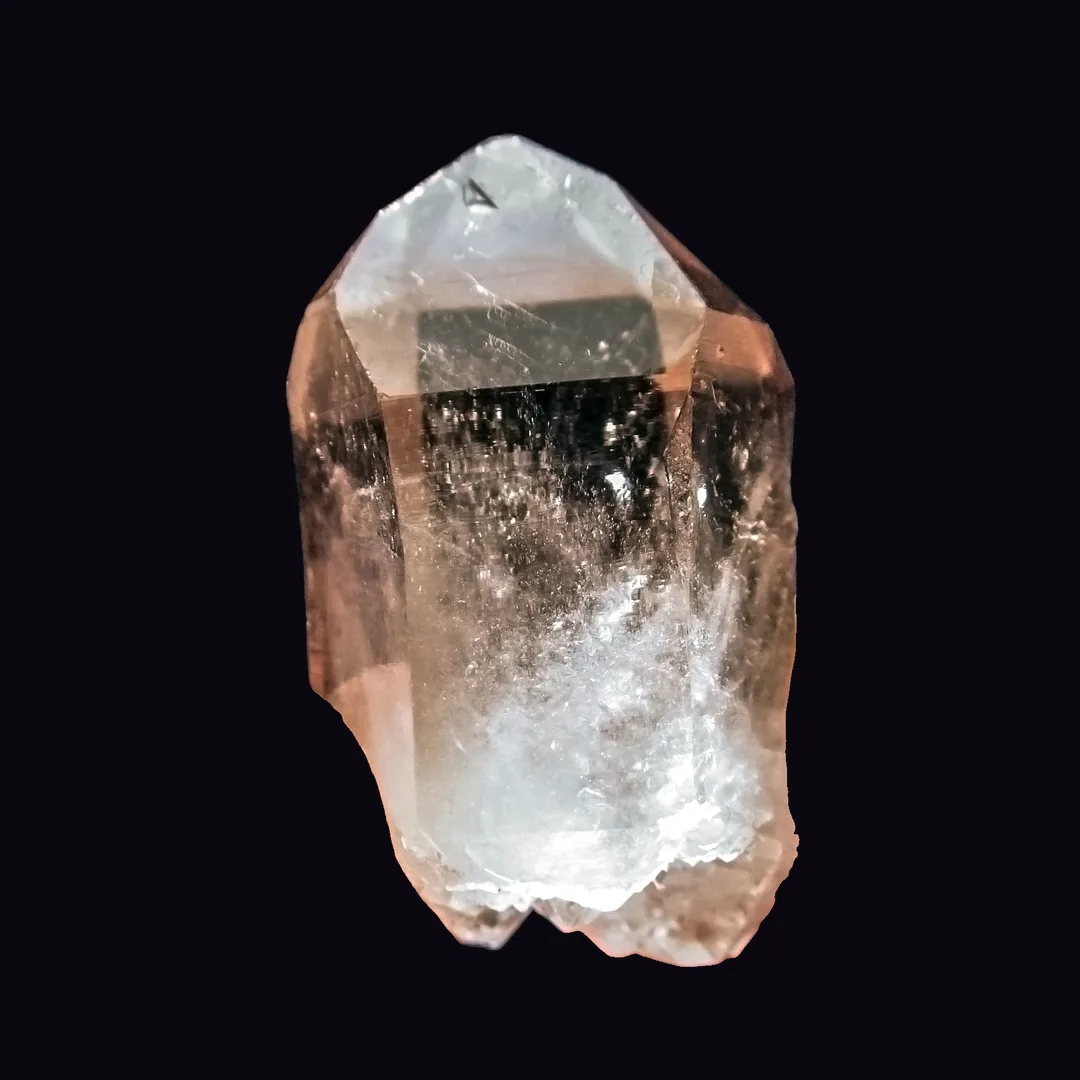
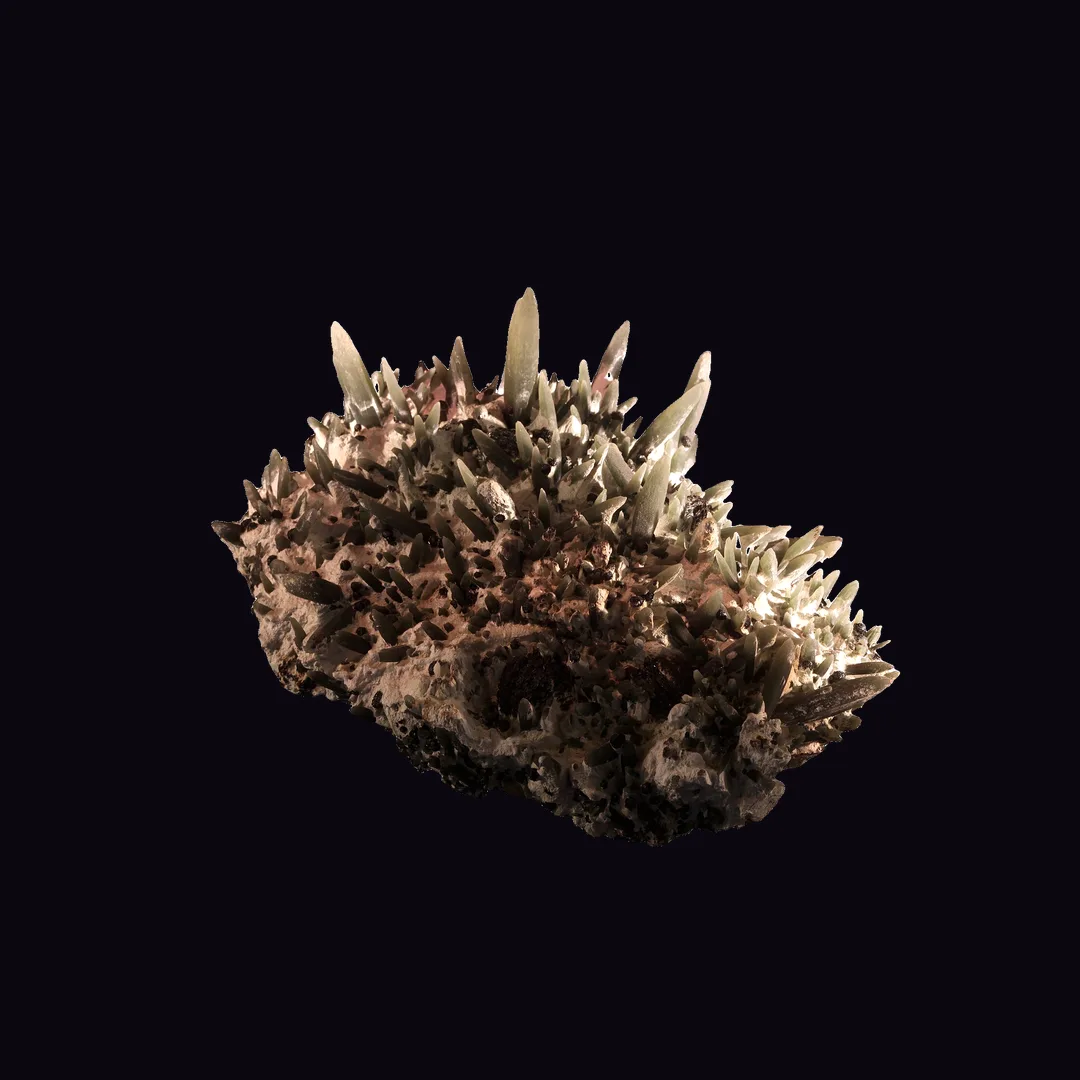
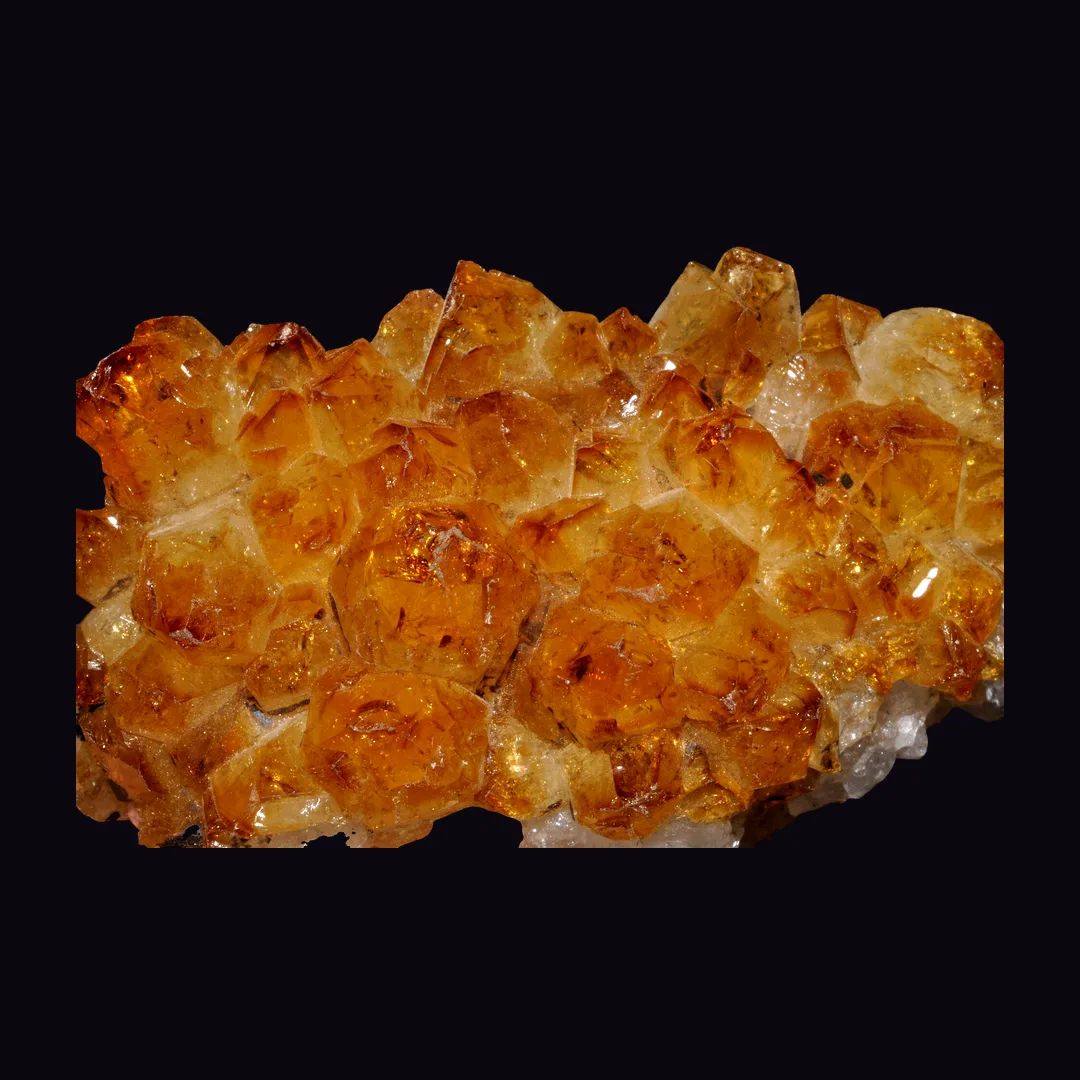
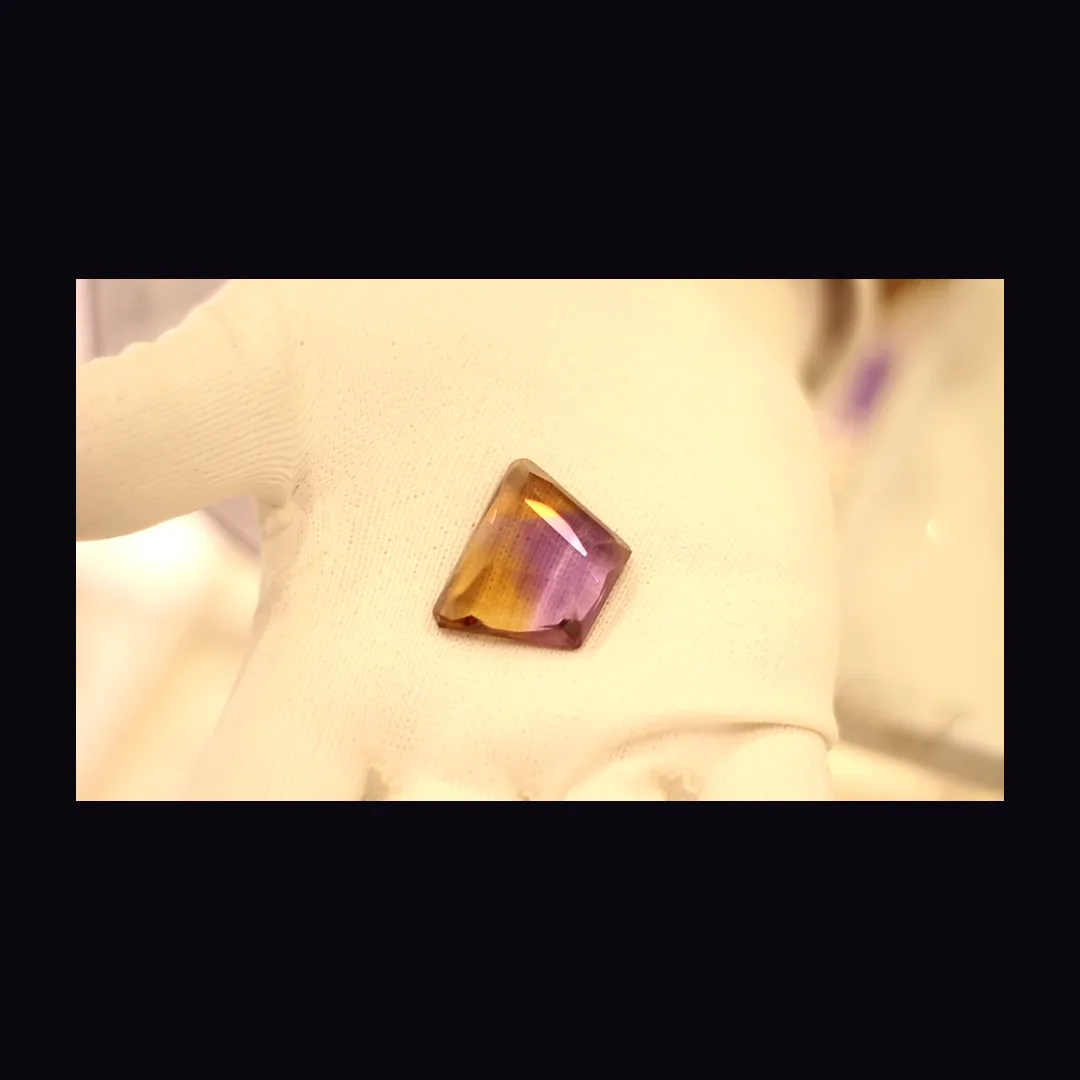
Questions people ask
What is fake amethyst usually made of?
Two things. Dyed quartz or agate, where clear or white stone is soaked in purple dye, and glass, which is molded to look faceted. Dyed pieces are the sneakier fake because the base really is quartz, so a hardness test won't catch them.
Does real amethyst fade in sunlight?
Yes, and it's a useful tell. Genuine amethyst slowly fades toward clear or grey with long sun exposure. Some dyes fade faster and blotchier, and some fade not at all. It's a slow test, not a checkout-counter one, so use the quick checks first.
Can I tell real amethyst from fake with my phone?
The visual tells get you most of the way: colour zoning, temperature, bubbles, dye in the cracks. A photo scan is the fastest way to combine those into one answer, especially with dyed quartz, where the base stone is genuine and the usual tests come up clean.