Real vs Fake Moldavite: Why Most on eBay Are Glass
Identifying crystals · 6 min read · 7 August 2026
Real moldavite is splashed-out rock from a meteorite strike, and its skin is wrinkled. Smooth and cheap means bottle glass. Here is the texture test.
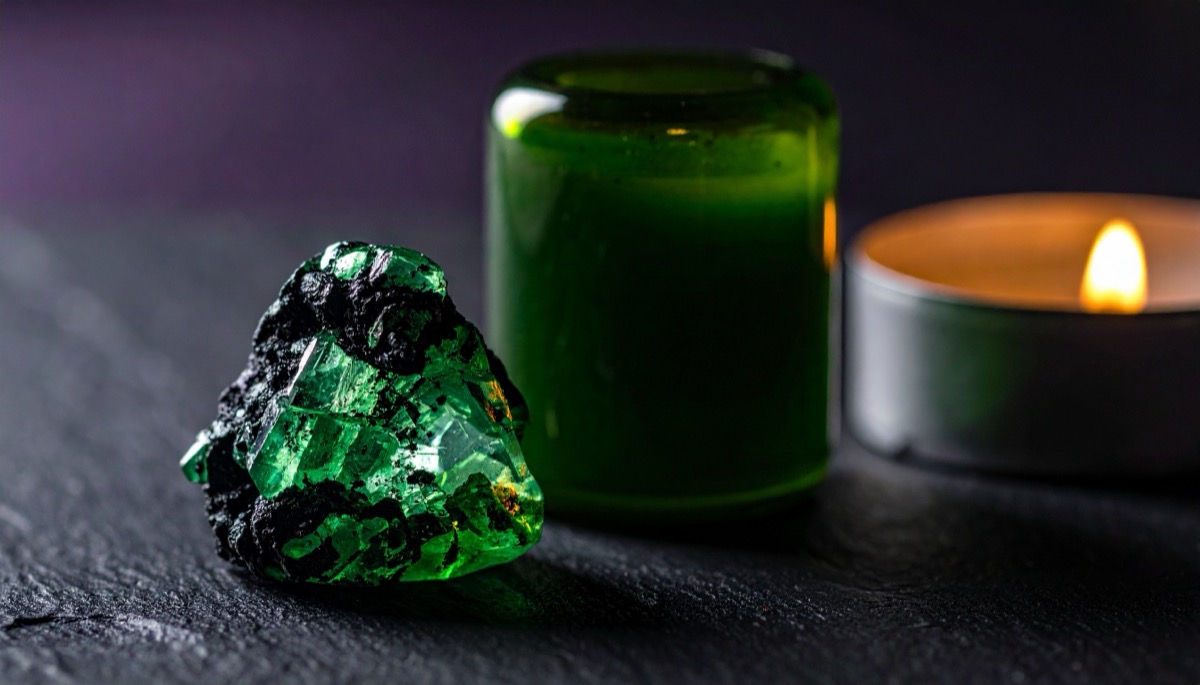
About fifteen million years ago a meteorite hit what is now southern Germany. The ground melted, and some of it was thrown as far as what is now the Czech Republic.
It cooled into green glass on the way down and it landed nowhere else on earth. Then it sat in sour soil long enough for its skin to be eaten into wrinkles.
That wrinkled skin is slow to fake, so the fakers skip it. Most cheap moldavite is a bottle melted into a mould, smooth where it should be wormy.
You wanted the one that fell out of the sky. There is nothing embarrassing about that. It is the best story any rock has.
Real vs fake moldavite comes down to texture and honesty about price. Real moldavite is a tektite with a wrinkled, etched, wormy surface and irregular internal bubbles. Most cheap pieces on eBay are green bottle glass: too smooth, too flawless, often with a mold seam and round bubbles. If it's cheap and perfect, it's glass.
Why fakes dominate the listings
Moldavite formed about 15 million years ago when a meteorite slammed into what's now Germany and flung molten material that cooled into green glassy tektite. It only fell across one small strip of the Czech Republic, so the actual supply is limited and shrinking as digs get mined out. Limited supply plus a WitchTok popularity spike equals rising prices, and rising prices always pull in fakes.
Counterfeiting moldavite is cheap. You melt green glass, press or mold it into a rough shape, and list it. That's why so much of what shows up under "moldavite" online, especially big flawless pieces at prices that seem too good, is manufactured glass. The people getting burned are usually beginners who paid real money for their first piece.
Real moldavite is worth learning to read precisely because the fakes are everywhere and the genuine article isn't cheap.
The texture tell (start here)
Surface texture is the single most useful thing, and it's hard to fake well.
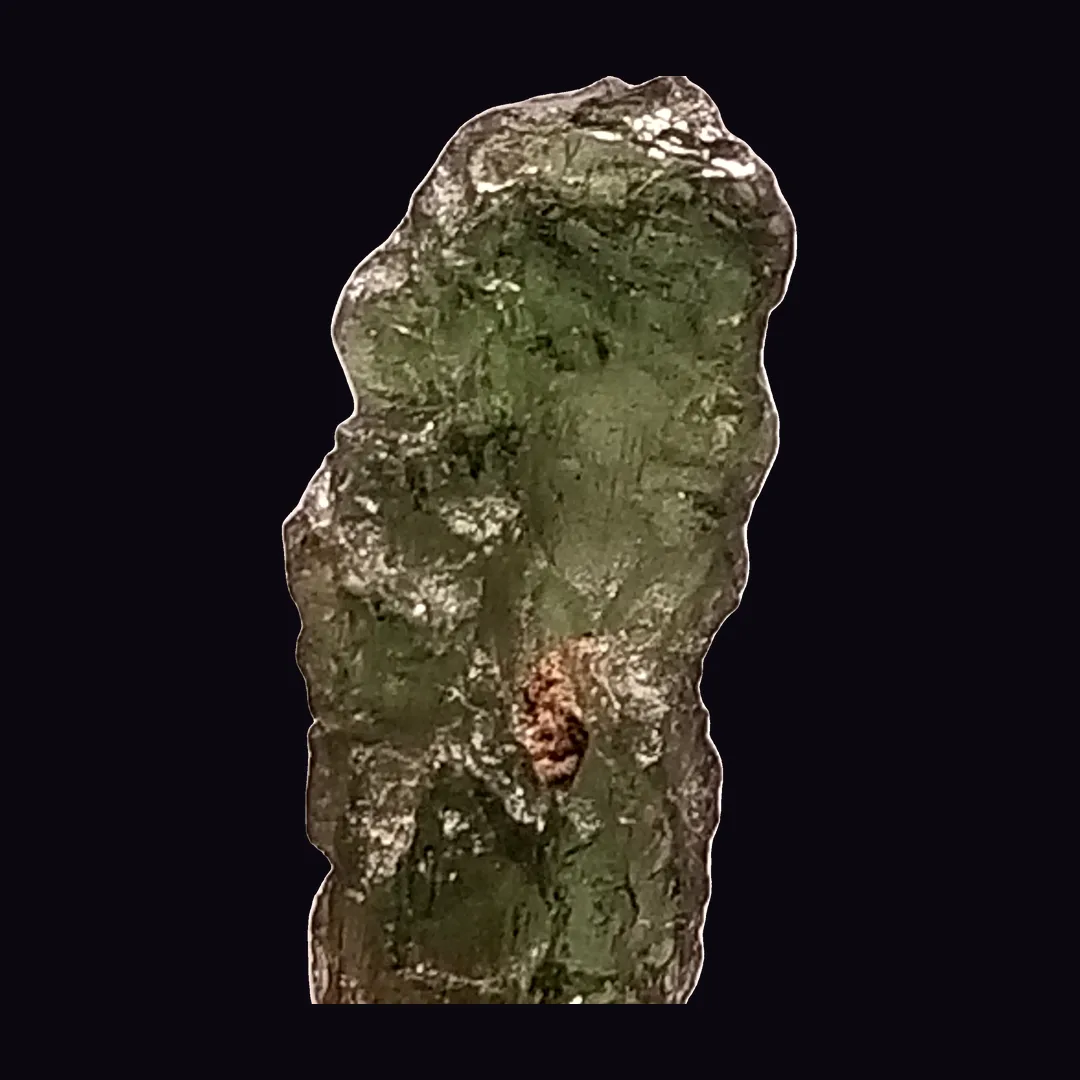
Real moldavite has a wrinkled, etched, wormy surface. Over millions of years, natural acids in the ground etched the tektite into folds, pits, and worm-like channels called sculpturing. Under magnification it looks intricate and irregular, never repeating. You can feel the roughness. It isn't slick.
Fake glass goes one of two ways. Either it's smooth and glossy like a melted bottle, which is an instant fail, or someone pressed a fake texture into the mold. Pressed texture looks too even and repetitive, and it lacks the fine etched detail of real sculpturing. When the "wrinkles" look stamped rather than eaten away, it's glass.
The mold-seam tell
This one catches a lot of fakes fast. Glass poured into a two-part mold leaves a faint seam line where the halves met, running around the piece. Real moldavite never has a seam because it was never molded. It cooled in freefall and got etched in the ground.
Run your fingertip and your eye around the whole piece looking for a straight ridge or a line where two surfaces meet a little too cleanly. Found a seam? It's manufactured. This is the same logic you'd use spotting molded glass posing as clear quartz.
Bubbles and colour inside
Hold the piece to a light. Real moldavite contains irregular bubbles and swirls, elongated and unevenly shaped, along with wispy inclusions called lechatelierite. The internal flow looks chaotic and natural.
Glass fakes tend to hold perfectly round bubbles, sometimes lots of them evenly sized, because that's what happens when molten glass cools in a mold. Neat round spheres are a factory tell.
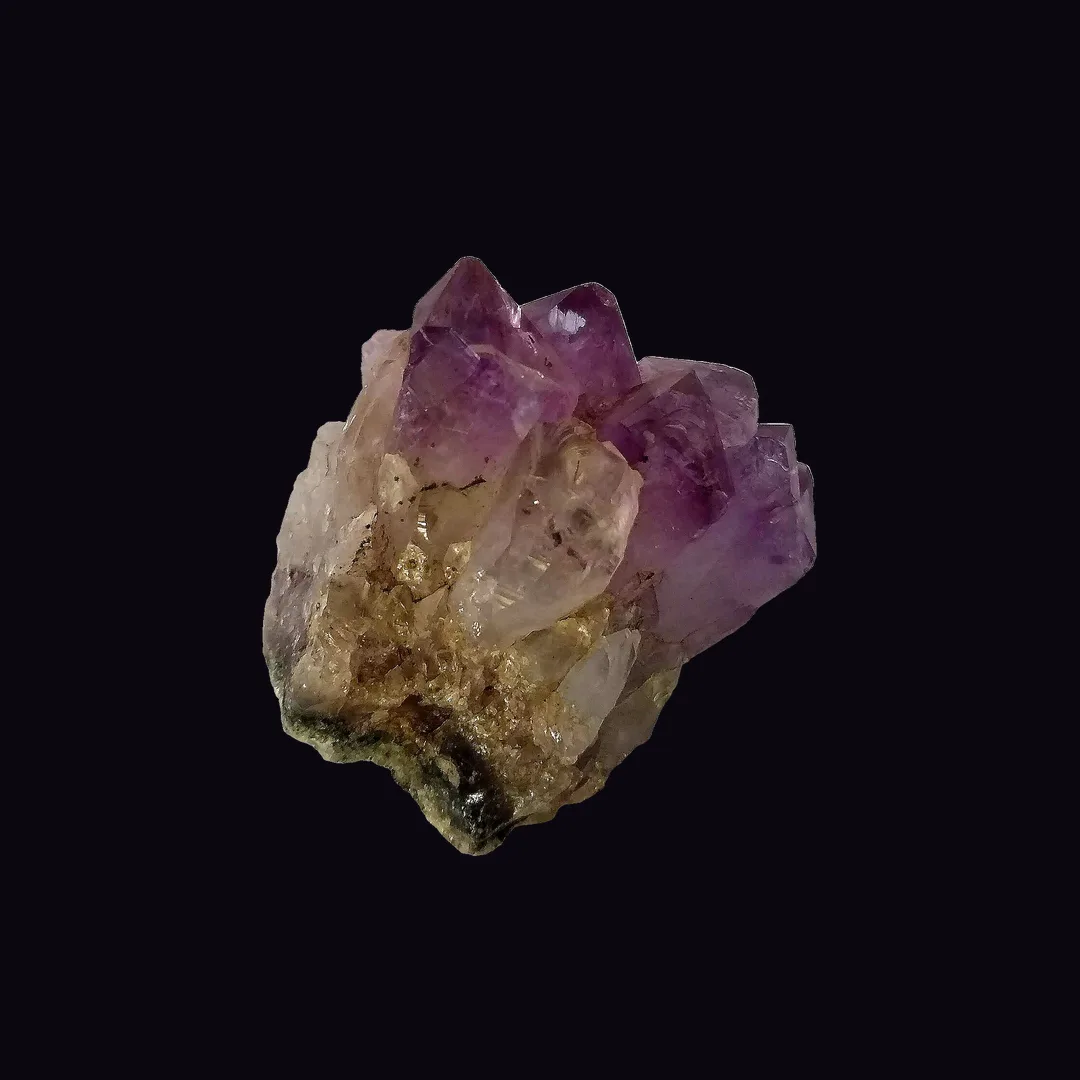
Colour matters too. Real moldavite is olive green to mossy, forest, or bottle green, sometimes with brown tones. It is not bright, not neon, not emerald, not glowing lime. If a piece looks like a green gummy bear or a highlighter, it's dyed glass. This is different from the deep uniform trap you see with dyed amethyst, but the instinct is the same: too vivid and too even means step back.
Real vs fake moldavite
| What you're checking | Real moldavite | Fake (green glass) |
|---|---|---|
| Surface texture | Wrinkled, etched, wormy, irregular | Smooth and glossy, or evenly pressed fake texture |
| Mold seam | None | Faint seam line around the piece |
| Internal bubbles | Irregular, elongated, swirled | Perfectly round, often evenly sized |
| Colour | Olive, mossy, forest green, some brown | Neon, emerald, lime, glowing, or dyed-looking |
| Weight and feel | Light, rough, etched to the touch | Slick, or unnaturally heavy dense glass |
| Price | Real money, scales with size | Suspiciously cheap for a large flawless piece |
The price reality
Real moldavite is not cheap, and that's the uncomfortable part. Because supply is genuinely limited, genuine pieces cost real money, and larger clean specimens climb fast. If a big flawless "moldavite" is priced like a handful of tumbled stones, the price is telling you it's glass before you even look at it.
That doesn't mean expensive equals real. Plenty of fakes are priced high to seem legit. But dirt-cheap almost always means fake. Buy from sellers who show macro shots of the sculpturing, who can speak to Czech origin, and who'll show the piece from every angle so you can hunt for a seam.
Faceted and "museum" moldavite
Two shapes deserve their own warning because they strip away your best test.
Faceted moldavite has been cut and polished into gem shapes, which removes the wrinkled sculpturing entirely. Without the surface texture, you're left reading colour and internal bubbles alone, and that's a much weaker hand. A huge share of faceted "moldavite" jewellery is green glass, precisely because cutting hides the one feature that would give the glass away. If a faceted piece is cheap and flawless, assume glass.
So-called museum-grade or Besednice "hedgehog" moldavite, the spiky highly-sculptured pieces, are the most prized and therefore the most faked. Prices here are high enough that forgers put real effort in, pressing convincing texture into glass. On these, macro photos of the etching and a trusted seller matter more than any single home test, because the fakes are built to beat a quick look.
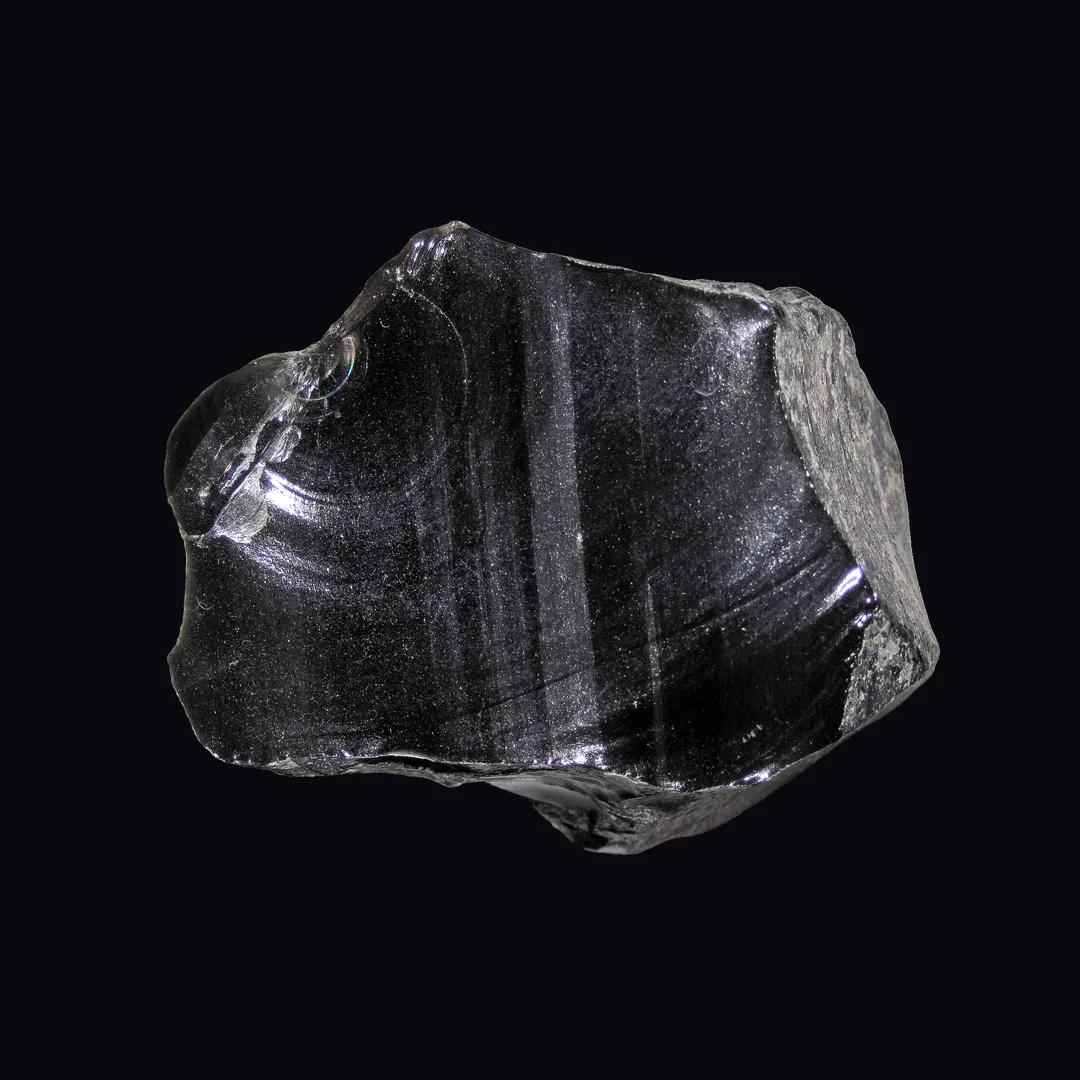
The takeaway: the more the shape hides the natural surface, or the more a piece is worth, the harder you should push on provenance and magnification. This is the same instinct you'd bring to any glassy dark stone, the way a polished black obsidian can hide its volcanic-glass tells once it's tumbled smooth.
Where the tests run out
The surface, seam, bubble, and colour checks catch the great majority of fakes, especially the lazy bottle-glass ones. But a careful faker who etches a texture and avoids obvious seams can get close, and a photo hides the fine detail your eye would catch in person. Certificates get forged too, so a slip of paper isn't proof.
Some genuine moldavite has also been faceted or shaped, which removes the natural texture you'd normally read, and that makes visual ID much harder. Faceted "moldavite" is a category to be extra careful with.
So the honest line: texture plus seam plus price gets you most of the way, but this stone is faked well enough that you shouldn't rely on one photo or one test. When you're spending real money, scan it, demand macro images of the sculpturing, and buy from someone who'll stand behind Czech origin. The etched, wormy, olive-green surface is the thing a factory struggles to fake, so that's where your eye should live.
The stones in this piece
Questions people ask
How can you tell real moldavite from fake?
Texture is the big one. Real moldavite has a wrinkled, etched, wormy surface from acid weathering, and it holds unevenly shaped bubbles and swirls inside. Fakes are green glass: smooth and glossy, or with a fake pressed texture, often with a mold seam and perfectly round bubbles. Real is olive to mossy green, never neon.
Why is most moldavite on eBay fake?
Real moldavite comes from one small area in the Czech Republic and supply is genuinely limited, so prices climbed and counterfeiters followed. Bottle glass costs almost nothing to melt and mold. The result is that a large share of cheap moldavite online, especially large flawless pieces at low prices, is manufactured green glass.
What does real moldavite feel and weigh like?
Real moldavite is glass by composition, so it's fairly light and its surface feels rough and etched, not slick. Fakes made from denser glass can feel heavier or unnaturally smooth. Weight alone won't decide it, but paired with surface texture and the mold-seam check it helps separate real tektite from a pressed fake.