Is Your Labradorite Real? The Flash Test
Identifying crystals · 6 min read · 17 August 2026
Tilt it once. Real labradorite flashes blue at one angle and goes dark at the next, and a soft glow from every side is glass. Here is the flash test.
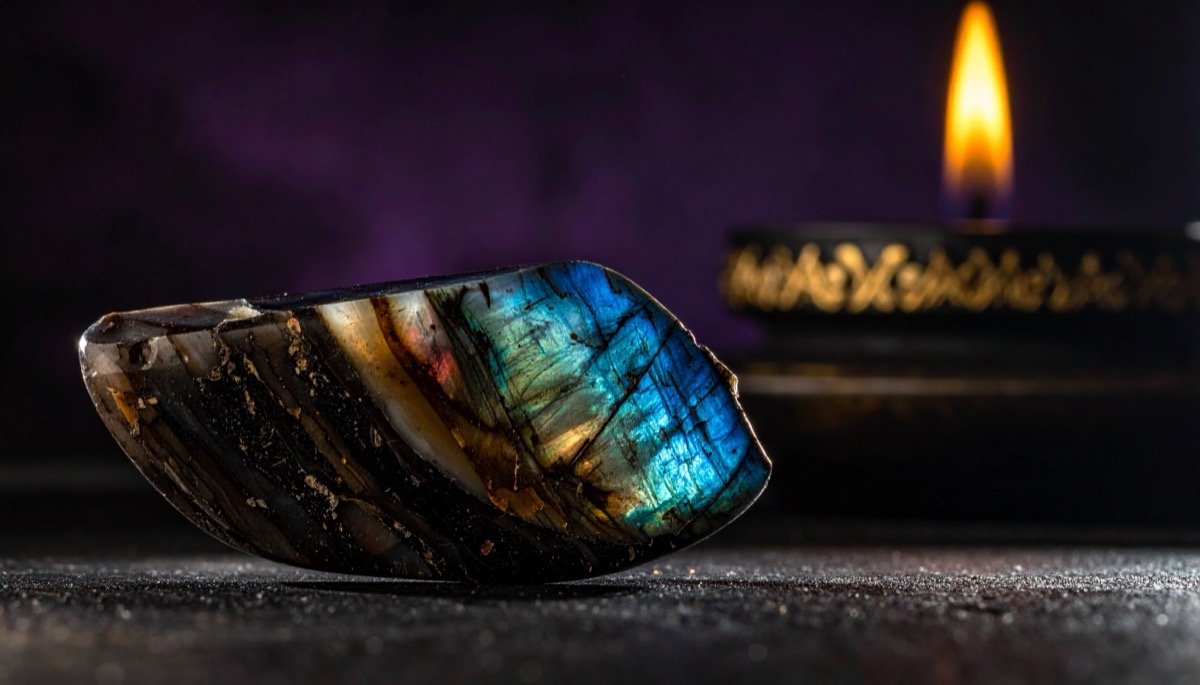
Labradorite cooled slowly, a long way underground. As it cooled it separated into layers thinner than a hair, stacked inside the stone.
Light goes in, hits those layers and comes back blue. Nobody added the colour. The stone earned it by cooling at the right speed.
That is why the flash lives at one angle only. A stone that glows softly from every direction never cooled underground. It was poured, or it was sprayed.
You have been tilting it at the window for days. Somebody handed you a label once and it turned out to be half true, and you have checked labels ever since.
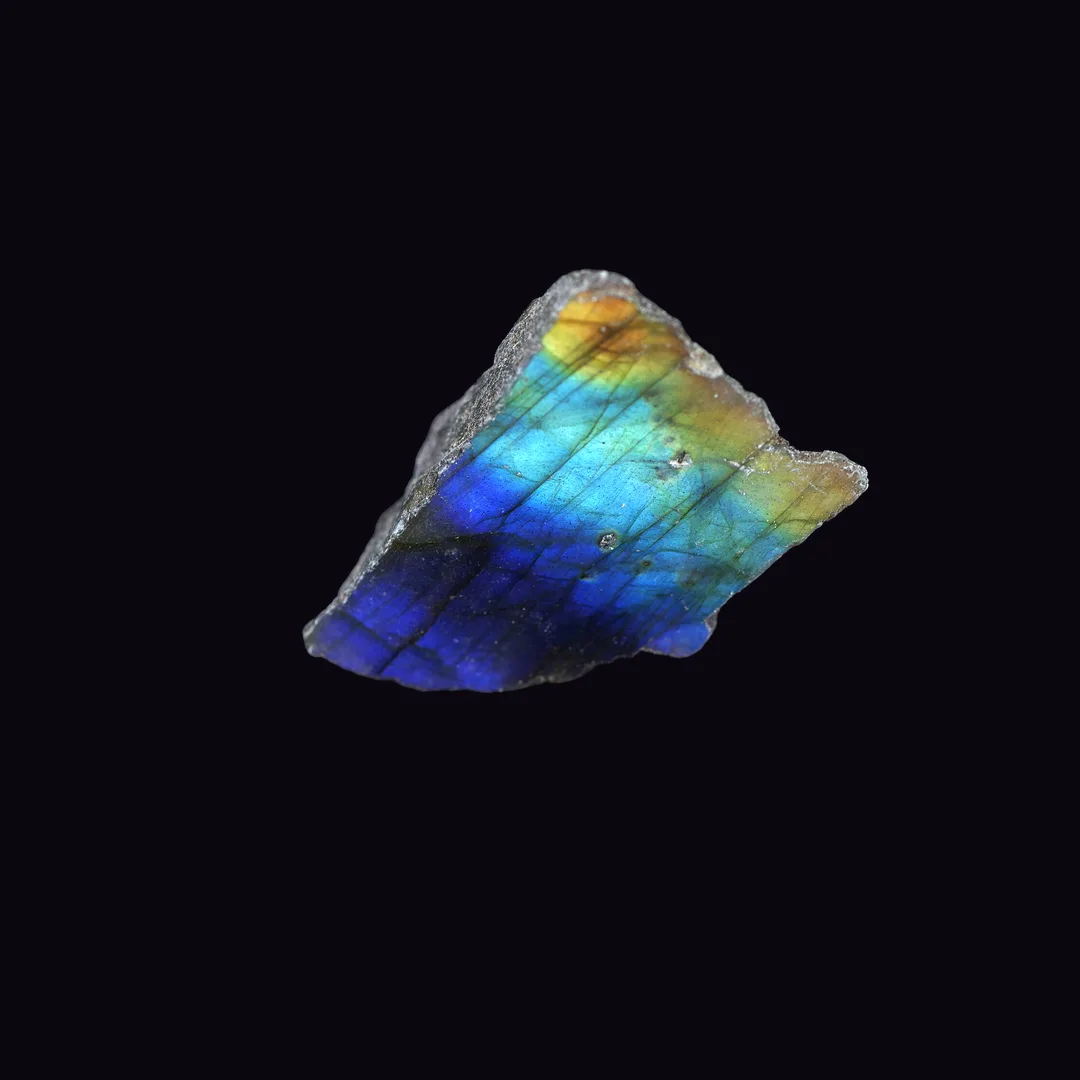
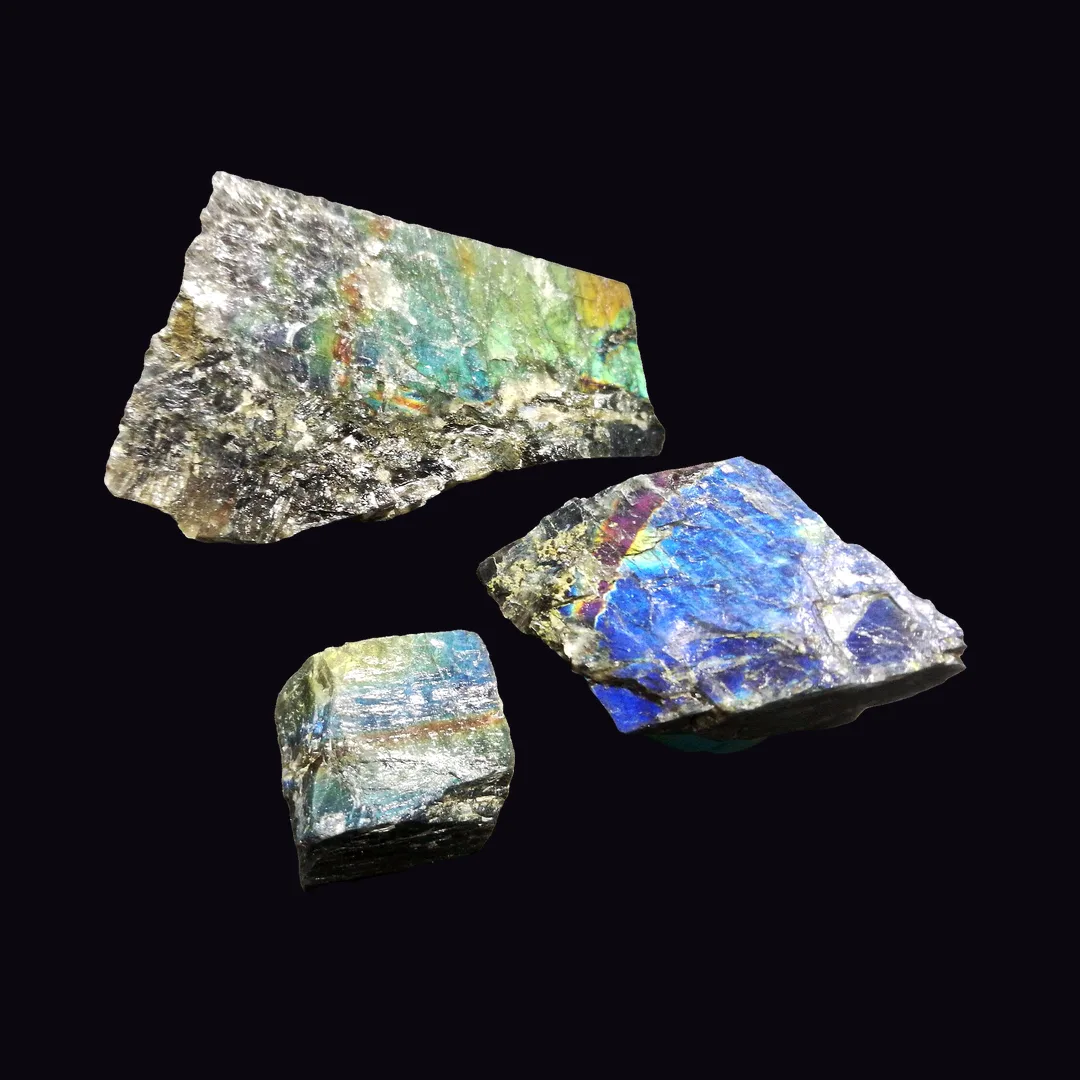
Is your labradorite real? The flash test settles it. Real labradorite has labradorescence, a metallic blue-to-gold sheen that ignites at one narrow tilt angle and vanishes at another, sitting in a plane inside the stone. Milky glow from every angle, or an oily surface rainbow, means glass or coated quartz.
What the flash actually is
The shimmer has a name: labradorescence. It happens because labradorite is a feldspar built from microscopic layers, and light bouncing between those internal layers splits into colour. The key detail is that the effect is directional. The flash sits in a flat plane inside the crystal, so it only lights up when that plane catches the light at the right angle. Turn the stone and the colour moves, flares, then goes dark. That switching on and off is the thing fakes struggle to copy.
Most labradorite flashes blue, sometimes green or gold. The premium grade that shows a full rainbow is called spectrolite, which is still labradorite, just the top tier for colour. Both are real. Neither should glow evenly from everywhere.
The flash test, step by step
This is your one decisive move and it takes twenty seconds.
- Find a single light source, a lamp or a window, not diffuse overhead light.
- Hold the stone flat and tilt it slowly, watching the surface.
- Rotate through the angle where the colour flares.
Real labradorite will ignite at one narrow angle and switch off as you keep tilting. The flash is metallic and sits below the surface, like it's coming from inside the plane of the stone. If the shimmer flares and vanishes as you rotate, you're holding the real thing.
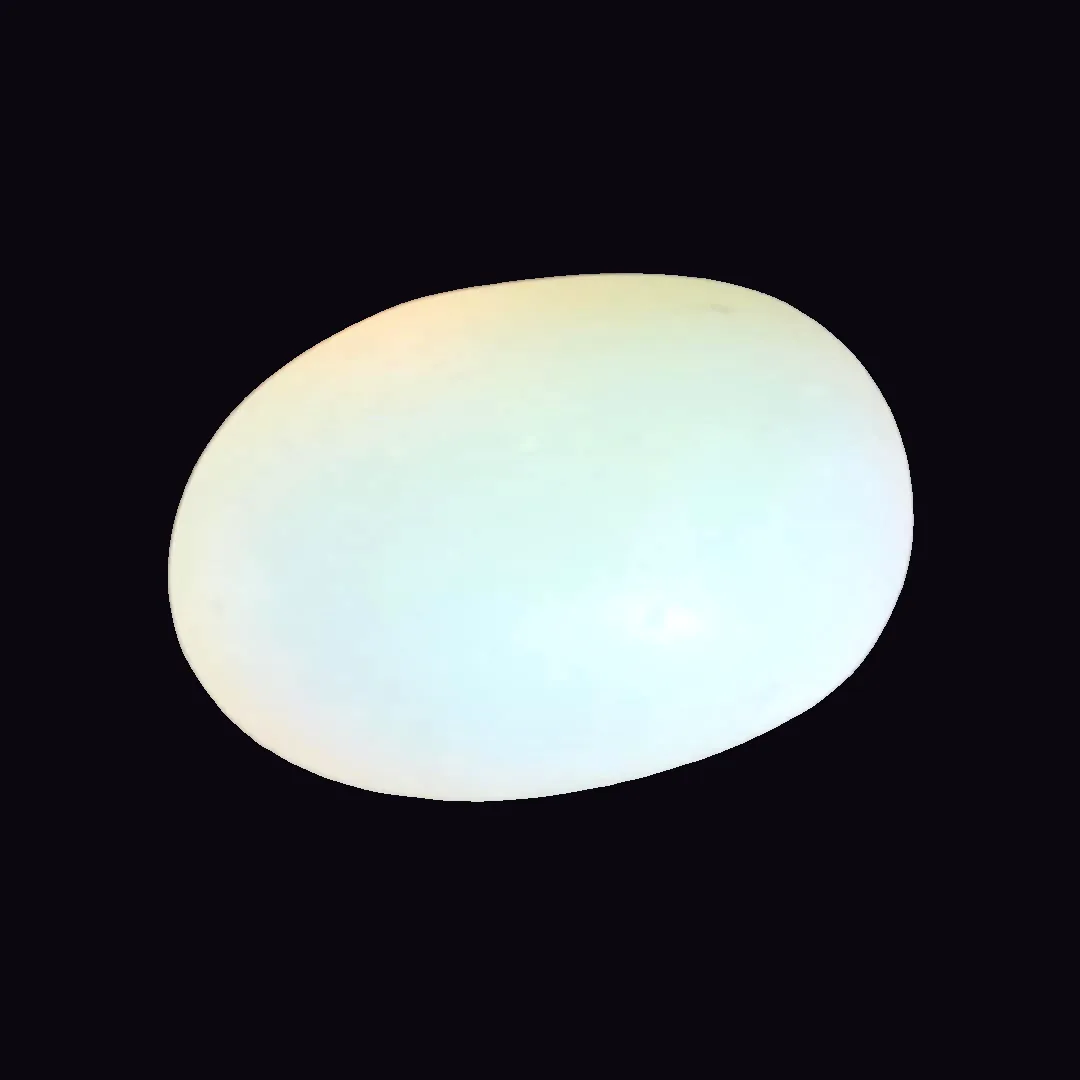
If instead the piece glows softly and evenly no matter how you turn it, that's not labradorescence. That's the all-over milky sheen of opalite glass. And if you see a rainbow film that floats on the surface and shifts like oil on water, that's a coating, not internal flash.
What it gets confused with
Three lookalikes cause almost all the mix-ups.
Opalite is man-made glass, milky white to pale blue, with a soft glow that comes from the whole body at once. It has no directional flash and no dark body colour underneath. Held to light it often looks faintly orange, and against dark it looks bluish, but it never switches on and off the way labradorite does.
Coated or "aura" quartz is real quartz with a thin metallic film bonded to the surface for an iridescent rainbow. The tell is that the colour lives on top, so it looks like a soap-bubble film and shifts as a surface rainbow rather than a flash buried in a plane. Look at the piece edge-on and you'll often see the colour is only skin-deep.
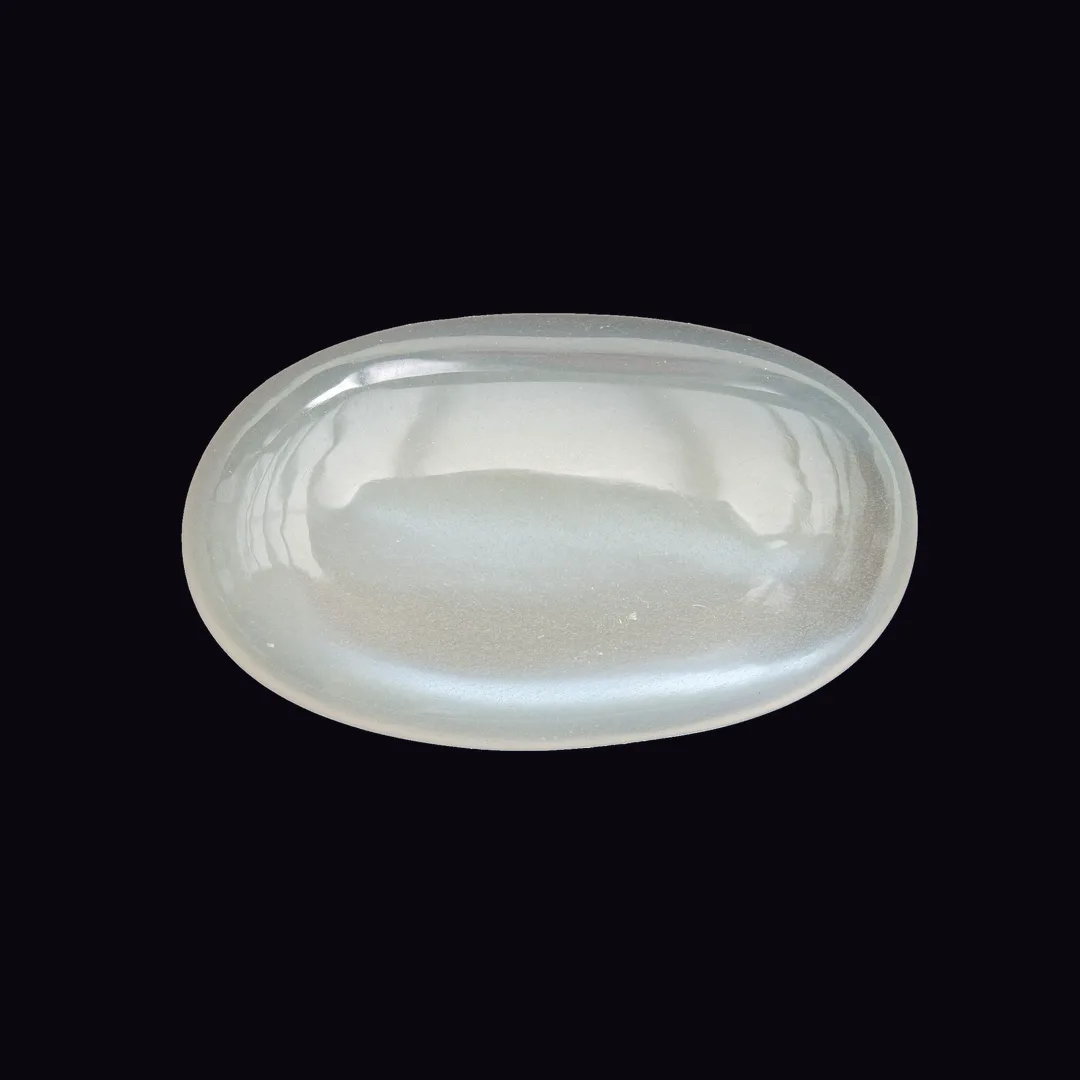
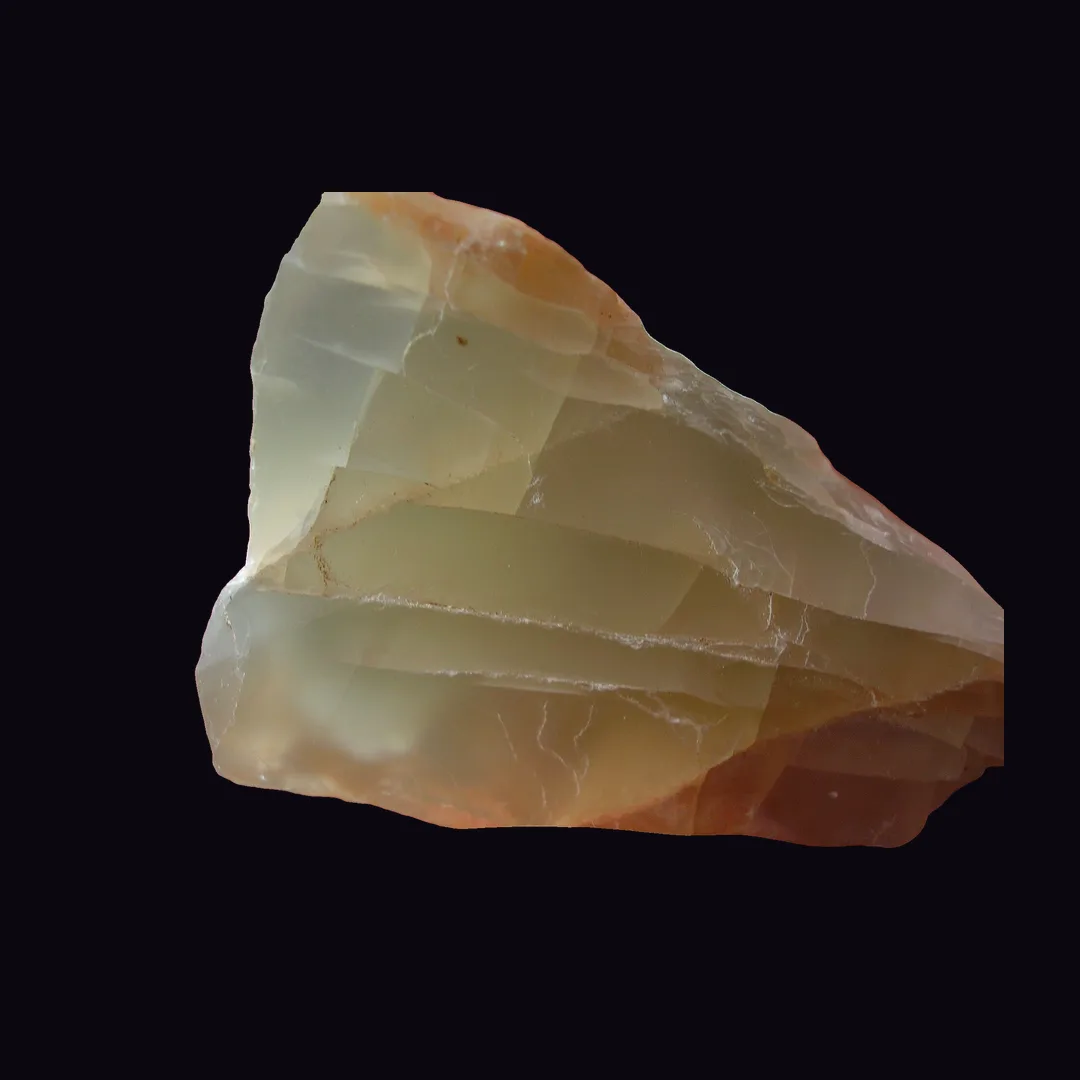
Rainbow moonstone is genuinely close, because it's also a feldspar. Rainbow moonstone shows a floating blue shimmer called adularescence that seems to hover over a milky, more translucent body, softer and cloudier than labradorite's sharp metallic flash. Ordinary moonstone does the same in white to blue. These are real stones, just different ones, and telling them apart is about that floating-cloud glow versus labradorite's harder, directional flare over a darker grey body.
Real vs fake labradorite
| What you're checking | Real labradorite | Opalite glass / coated fake |
|---|---|---|
| Flash behavior | Flares at one angle, goes dark at another | Even glow from every angle, or floating surface rainbow |
| Where the colour lives | In a plane inside the stone | All through the body evenly, or on the surface film |
| Body colour | Grey, smoky, dark base under the flash | Milky white to pale blue, translucent |
| Flash quality | Metallic, sharp, directional | Soft and diffuse, or oily and shifting |
| Bubbles | None | Opalite glass can hold round bubbles |
| Hardness | Around 6 to 6.5 Mohs | Glass is similar, coating scratches off |
| Price | Real money for strong flash | Cheap for a big even glow |
A couple of supporting checks
Body colour. Real labradorite has a grey, smoky, or dark base that the flash sits against. If the stone is milky and translucent all the way through with no darker body, lean toward opalite.
Bubbles and film. Hold it to light and look for round trapped bubbles, which mean glass, and look edge-on for a surface-only rainbow, which means a coating. Neither belongs in solid feldspar.
Too perfect and too cheap. A large, flawless, evenly glowing "labradorite" at a bargain price is usually opalite. Real strong-flash labradorite costs real money and its flash is never perfectly uniform.
Where the tests run out
The flash test catches nearly all opalite and coated fakes, because directional labradorescence is genuinely hard to fake and easy to spot once you know the tilt. But rainbow moonstone and labradorite are close cousins, so telling those two apart by eye is subtler, and a photo online flattens the flash into a single frozen angle that hides how it behaves when you move it. Dyed or heat-treated pieces exist too.
So the honest read: the flash test gets you roughly 80 percent of the way and reliably separates real labradorite from opalite glass, which is the fake you'll actually run into. The feldspar cousins are where a screen fails you. When it matters, scan it, and rotate the real piece under a single light in person to watch the flash switch on and off. A milky rock that glows the same from every angle isn't labradorite, no matter what the tag says.
The stones in this piece
Questions people ask
How do you tell real labradorite from fake?
Do the flash test. Tilt the stone slowly under a single light. Real labradorite shows labradorescence, a metallic blue or gold sheen that flares at one narrow angle and disappears as you rotate away, because the flash lives in a plane inside the stone. Opalite glass gives a soft milky glow from every angle, and coated quartz shows an oily surface rainbow that floats on top rather than inside.
Is opalite the same as labradorite?
No. Opalite is man-made glass, usually milky white to pale blue with a soft all-over glow. Labradorite is a natural feldspar with a directional metallic flash. They get confused because both shimmer, but opalite's glow comes from the whole body evenly, while labradorite's flash appears and vanishes as you tilt it. If the shimmer never switches off, it isn't labradorite.
What is spectrolite versus labradorite?
Spectrolite is a premium grade of labradorite, originally from Finland, that flashes across a full spectrum of colours rather than mostly blue. It's still labradorite, just the top tier for colour range. Ordinary labradorite usually flashes blue to green, sometimes gold. Both are real. Spectrolite simply commands a higher price for showing more of the rainbow.