Opalite Is Not a Crystal. It's Manufactured Glass
Identifying crystals · 5 min read · 17 August 2026
Opalite is glass, made in a furnace, and it is lovely anyway. Here is how to tell it from real opal and moonstone, and what the shop did not say.
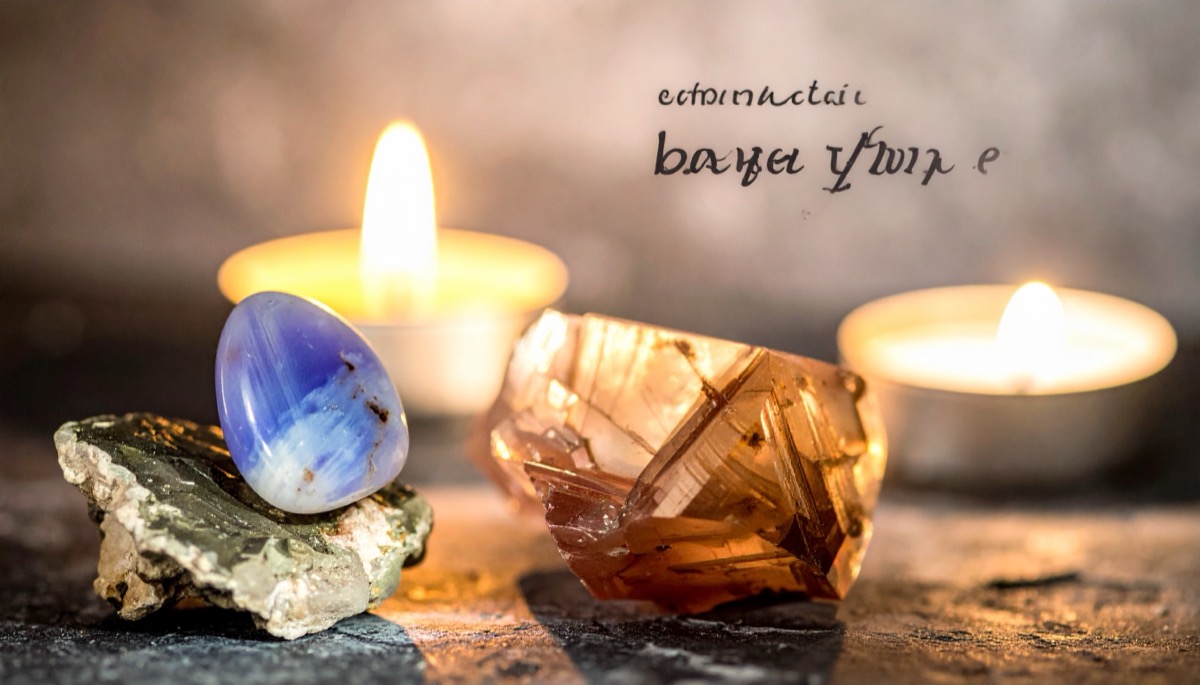
Hold it up to a window. Milky blue in front of the light, warm orange behind it. That glow is why you picked it up.
The glow was made in a furnace. Opalite is glass, melted with something added to scatter the light, and it has been made this way for a long time.
The glass is not the problem. The tag is. It gets sold beside real minerals, at real mineral prices, under names like sea opal.
You loved a thing you were told a story about. Everyone does that with everything. You were not stupid, you were sold to by somebody who knew more than you did.
Opalite is not a real crystal. It is manufactured opalescent glass, with no crystalline structure and no natural origin. It is made to look milky and glowing, and it is often mislabeled as sea opal, opal moonstone, or opalite quartz. Real or not, it is glass every time. That is not automatically a scam, but calling it a mineral is.
Keep it if you like it. Keep it knowing what it is.
What opalite actually is
Opalite is a type of opalescent glass, sometimes with a bit of added metal or resin to get the milky sheen. It is engineered to mimic the play of light in opal and the glow in moonstone, which is why it borrows their names. It has no mineral formula worth quoting, no Mohs hardness in the mineral sense (glass sits around 5.5), and no crystal lattice. It was poured, not grown.
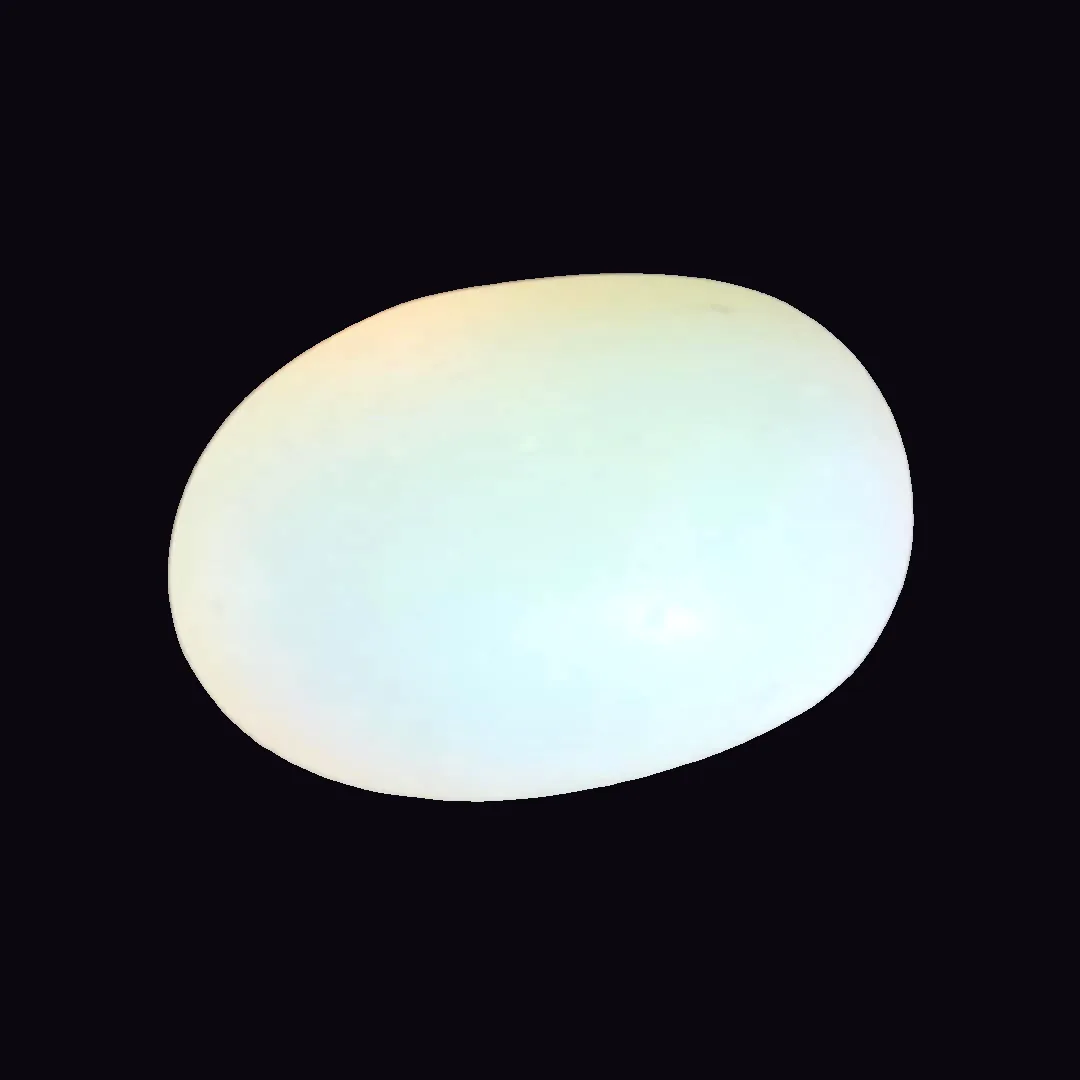
The tell is in how it handles light. Hold opalite up to a lamp and it glows a warm amber or orange. Look at it in reflected light and it goes milky blue. That two-faced glow, blue in front, orange behind, is the signature of this specific glass, and no natural stone does exactly that.
How to spot opalite
Backlight test. Amber or orange glow through the body, milky blue on the surface. That combination is opalite.
Bubbles. Like most manufactured glass, opalite often traps tiny round air bubbles. Shine a light in and look. Round bubbles do not happen in natural moonstone or opal.
Too perfect. Opalite is usually flawless, evenly coloured, and cheap. Real moonstone and real opal have irregularities, and real opal in particular is not cheap in any decent size.
No adularescence. Real moonstone shows a floating blue or white shimmer that slides across the stone as you tilt it. Opalite has a static glow, not that moving inner light.
Opalite vs the stones it imitates
| Feature | Opalite (glass) | Moonstone | Opal |
|---|---|---|---|
| Origin | Man-made glass | Natural mineral (feldspar) | Natural mineral (hydrated silica) |
| Backlight | Warm amber / orange glow | Cool, softer glow | Fiery colour flashes |
| Reflected light | Milky blue, static | Floating blue shimmer that moves | Rainbow play of colour |
| Bubbles | Often round bubbles | None | None |
| Crystalline? | No | Yes | No (amorphous, but natural) |
| Price | Very cheap | Modest to high | Modest to very high |
Is it bad to own opalite?
No. Opalite is a lovely bit of glass and it makes nice jewellery. The honesty line is simple: buy it knowing it is glass, pay glass prices, and do not expect it to carry the metaphysical history of a mineral that spent millions of years forming. The brand of this whole hobby falls apart the moment shops pretend manufactured glass is an ancient stone. It is not, and pretending otherwise is exactly the kind of thing that gets a crystal shop roasted online.
Note that "opalite" also gets used, confusingly, for a genuine natural material (common opal), so the name alone tells you nothing. You have to look at the piece.
The clear ones it gets shelved beside
Two more stones end up in the same tray as opalite and neither has anything in common with it. Selenite is gypsum, clear to translucent, and so soft that a fingernail marks it. Peel a sheet off along its cleavage and you get a thin flexible plate you can see straight through, which nothing else in the trade does. Opalite is glass and will never do that. Clear quartz is the other one, and hardness settles it. Quartz sits at 7 and scratches glass. Opalite is glass, so it does not scratch glass, it gets scratched. If a milky glow is the only thing you are going on, test the hardness instead.
When you cannot tell
Opalite, moonstone and opal genuinely confuse people, and mixed lots make it worse. If you have a milky, glowing stone and you are not sure which of the three you are holding, point your camera and Oraclite tells you what it is and whether it is real, reading the glow, the bubbles and the surface together instead of you guessing from one angle.
Opalite is pretty and cheap and totally fine to enjoy. Just know it for what it is: glass, not a crystal, and worth exactly what glass is worth.
The stones in this piece
Questions people ask
Is opalite a real crystal?
No. Opalite is manufactured glass, not a mineral and not a crystal. It has no crystalline structure and no natural origin. It is made to look milky and opalescent, and it is sometimes sold under names like sea opal, opal moonstone or opalite quartz, but it is glass every time.
How do you tell opalite from real moonstone or opal?
Backlight it. Opalite glows a warm amber or orange when light passes through it and looks milky blue in reflected light. Real moonstone shows a floating blue or white shimmer (adularescence) that moves as you tilt it, and real opal flashes multiple colours. Opalite also often has tiny round bubbles inside.
Is opalite worth anything?
Very little. It is mass-produced glass, so it is cheap and that is fine as long as you know what you are buying. The problem is only when it is sold as opal or moonstone at those stones' prices. Bought as decorative glass, opalite is honest. Sold as a rare mineral, it is a scam.