Black Obsidian vs Black Onyx: How to Tell Them Apart
Identifying crystals · 6 min read · 14 August 2026
One is volcanic glass. The other is grey agate soaked in sugar and acid until it went black. Backlight a thin edge and you will know which one you own.
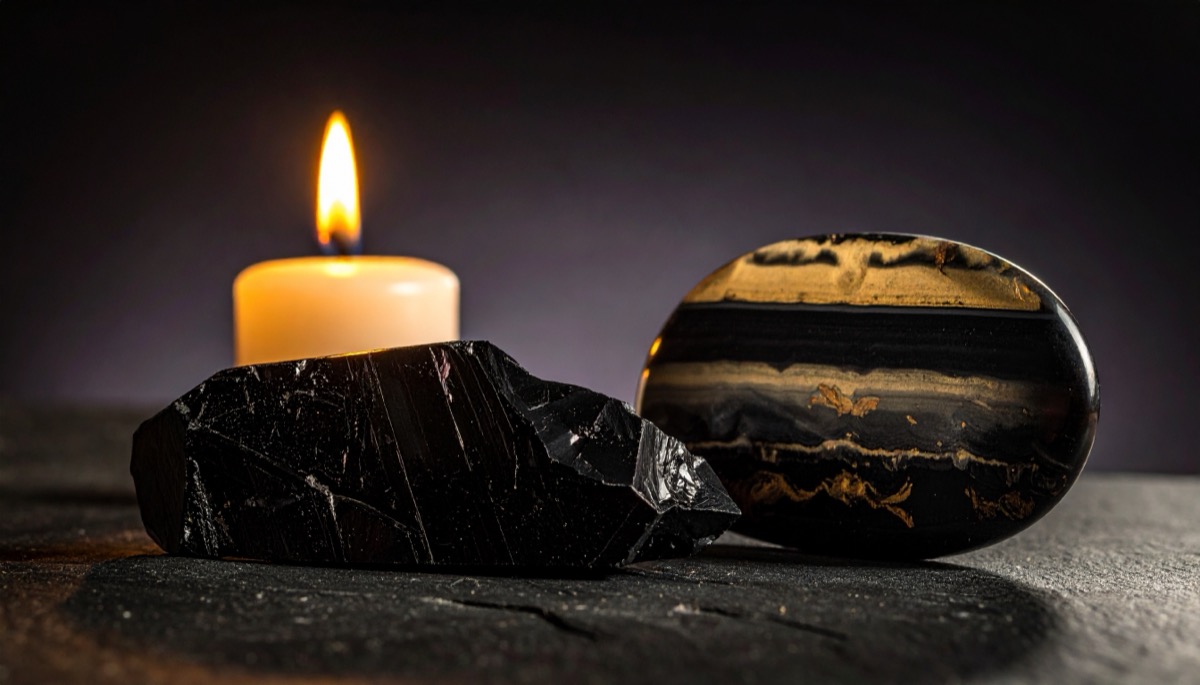
Most black onyx starts out as grey banded agate.
It soaks in a sugar solution for weeks, then goes into acid. The acid turns the trapped sugar to carbon, and the pale bands go black from the inside out. The trade has done it this way since the 1800s.
The shop labels it onyx and stops talking. Nothing on the tag says dyed.
You did not get tricked. You got told half of it. Somebody handed you a name and a price, and you had no reason to ask which one was doing the work.
Black obsidian and black onyx look similar in a shop but they're not the same material at all. Obsidian is natural volcanic glass with no crystal structure. Onyx is banded chalcedony, a quartz, and nearly all of it is grey agate dyed black. The fastest tell is a flashlight: obsidian glows brown at thin edges, onyx doesn't.
TL;DR: Obsidian is volcanic glass, softer (Mohs 5-6), glows translucent brown when backlit. Onyx is dyed banded agate, harder (Mohs 6.5-7), stays opaque. Backlight a thin edge to settle it.
Glass versus quartz
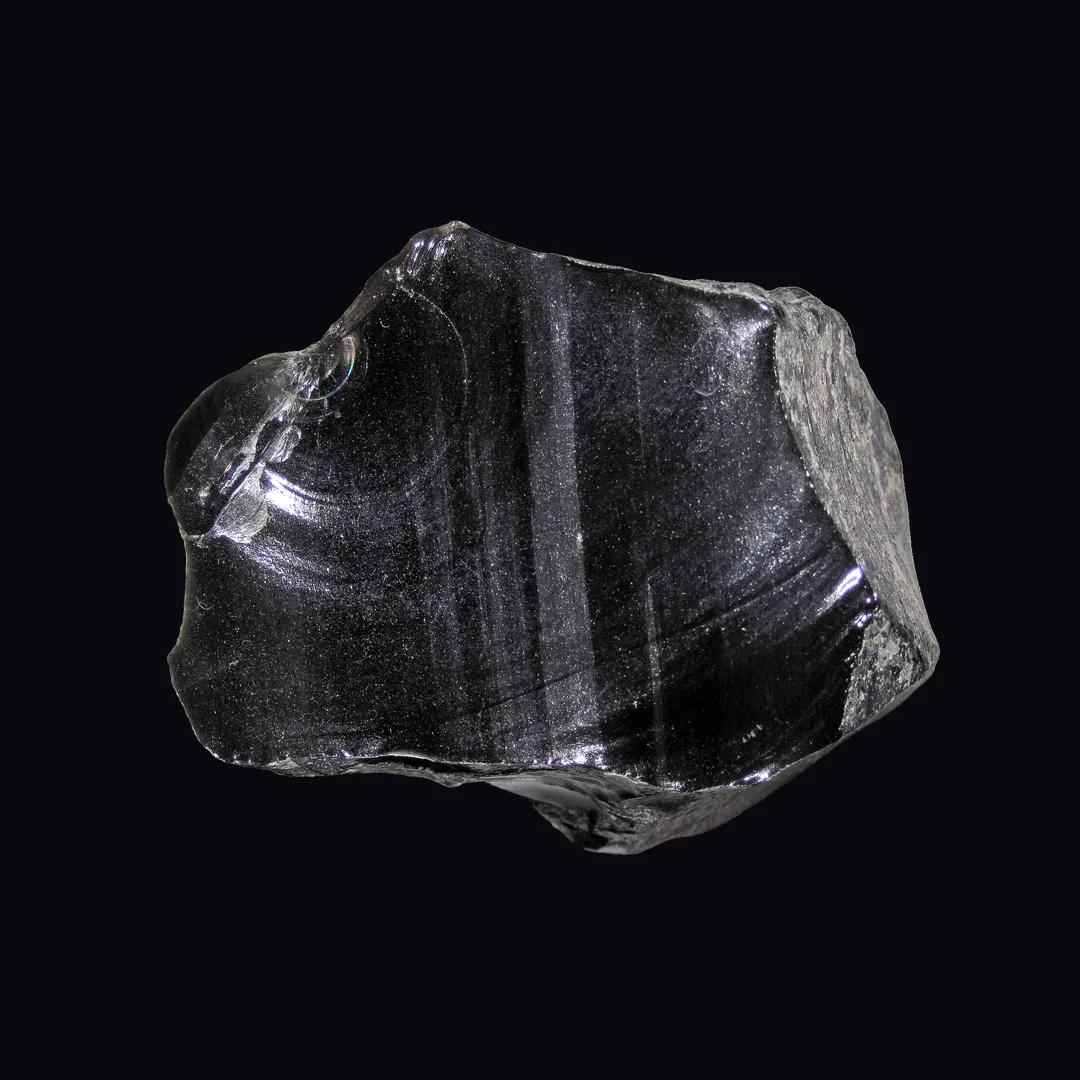
These two start from completely different places. Black obsidian is glass, literally. It forms when lava cools so fast that no crystals can grow, so it's amorphous, meaning it has no internal structure at all, no grain, no cleavage, nothing. That's why it breaks into those curved, shell-like, razor-sharp edges (conchoidal fracture) and takes a mirror-bright polish.
Black onyx is the opposite kind of material. It's chalcedony, a microcrystalline form of quartz, built from banded layers. In its natural state onyx is grey and white banded. The solid jet-black stuff you see everywhere is made by soaking grey agate in sugar then acid, which carbonizes into the porous bands and turns them black. It's a real Roman-era technique still used industrially, plus modern dyes. So the mineral is genuine quartz, but the pure black colour is applied, which is exactly why it looks so unnaturally even.
That difference in origin drives every test below.
Black obsidian vs black onyx side by side
| Attribute | Black Obsidian | Black Onyx |
|---|---|---|
| Material | Volcanic glass (amorphous) | Chalcedony (quartz), banded |
| Natural or treated | Natural, untreated | Almost always dyed grey agate |
| Hardness (Mohs) | 5 to 6 (softer) | 6.5 to 7 (harder) |
| Scratches glass? | Not confidently | Yes, confidently |
| Backlit thin edge | Glows translucent smoky brown | Opaque, or faint grey |
| Fracture | Curved, shell-like, razor sharp | Even, denser, no glassy swirl |
| Internal look | Occasional lava flow swirl banding | Dead-even black, rare ghost banding |
| Feel | Warms in the hand fast | Cool and dense |
The two tests that settle it
Backlight the edge. This is the single best move. Take a strong flashlight and press it against a thin edge or a chipped corner of the stone. Obsidian, being glass, transmits light and glows a translucent smoky brown-grey at the edges. Onyx stays opaque, or at most shows a faint grey glow at the very thinnest spots. If a thin edge lights up brown, it's obsidian. This one test does most of the job.
Scratch test. Onyx is quartz-hard, Mohs 6.5 to 7, so it scratches a glass bottle confidently and a steel knife won't mark it. Obsidian is softer, Mohs 5 to 6, so it won't scratch glass with confidence and a clear quartz pebble will actually scratch the obsidian. If your black stone scratches glass easily, lean onyx. If it gets scratched by quartz, lean obsidian. Do this on a hidden spot near the base.
Bonus: the feel and the fracture. Obsidian warms up in your hand faster than onyx and its broken edges are curved and glass-sharp with fine ripple lines radiating from the impact point. Onyx feels cooler and denser and doesn't show that glassy swirl. Obsidian sometimes has visible flow banding from the lava. Onyx's dyed black is usually dead-even with maybe a faint ghost of the old grey agate stripes.
Don't confuse either with jet or black tourmaline
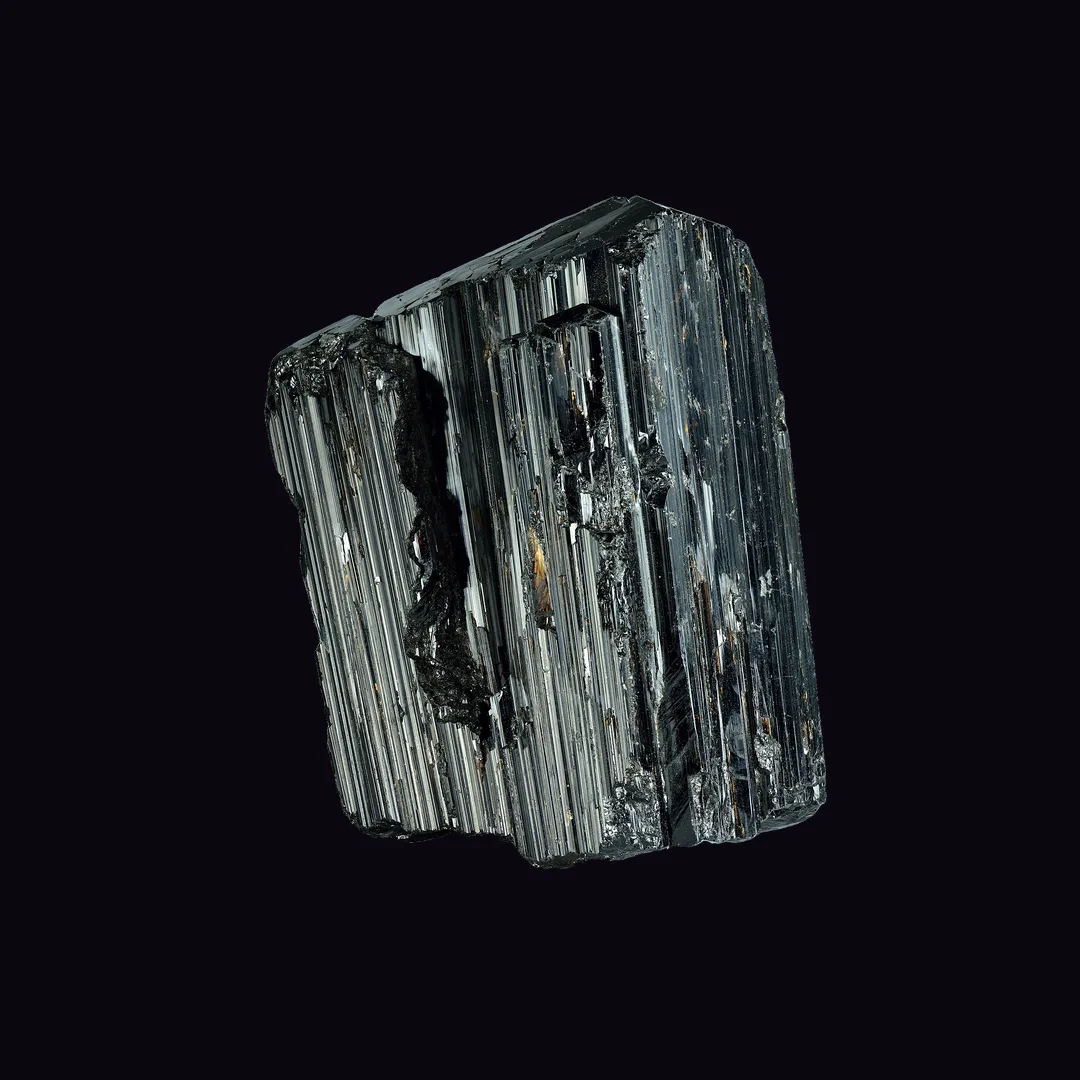
While you're testing, rule out the other black stones people mix in. Jet is far lighter, warm to the touch, much softer, and leaves a brown streak if you drag it on unglazed tile. Both obsidian and onyx are heavier and leave a white or no streak. Black tourmaline is a true crystal with lengthwise striations and often a rod-like shape, so it looks grooved rather than glassy or dyed-even. If your stone has parallel grooves running down its length, it's probably tourmaline, not either of these two.
There's also plain black glass sold as obsidian. The tells are mold seams, perfectly round trapped bubbles under a loupe, and an unnaturally uniform shape. Real obsidian has irregular flat or stretched bubbles, not neat spheres.
What the two are used for
This matters to a lot of people more than the geology, so it's worth naming. In practice black obsidian gets reached for in shadow work, cord-cutting, and hard grounding, the stuff that's meant to show you what you'd rather not look at. It has a reputation as blunt and fast, which tracks with it being raw volcanic glass. Black onyx leans toward boundaries, self-control, and grief, a steadier and more contained feel. None of that is a medical claim or a guarantee, it's the tradition people work within, and you're free to take it or leave it. The point for identification is simply that owning the wrong one means you're not working with the stone you thought you were.
It also changes what to do with a chipped piece. Obsidian's conchoidal fracture makes genuinely sharp edges, sharp enough that ancient cultures knapped it into blades, so a freshly broken obsidian shard can cut you. A chipped onyx edge is far less vicious. Handle a cracked obsidian piece with that in mind.
The rest of the family
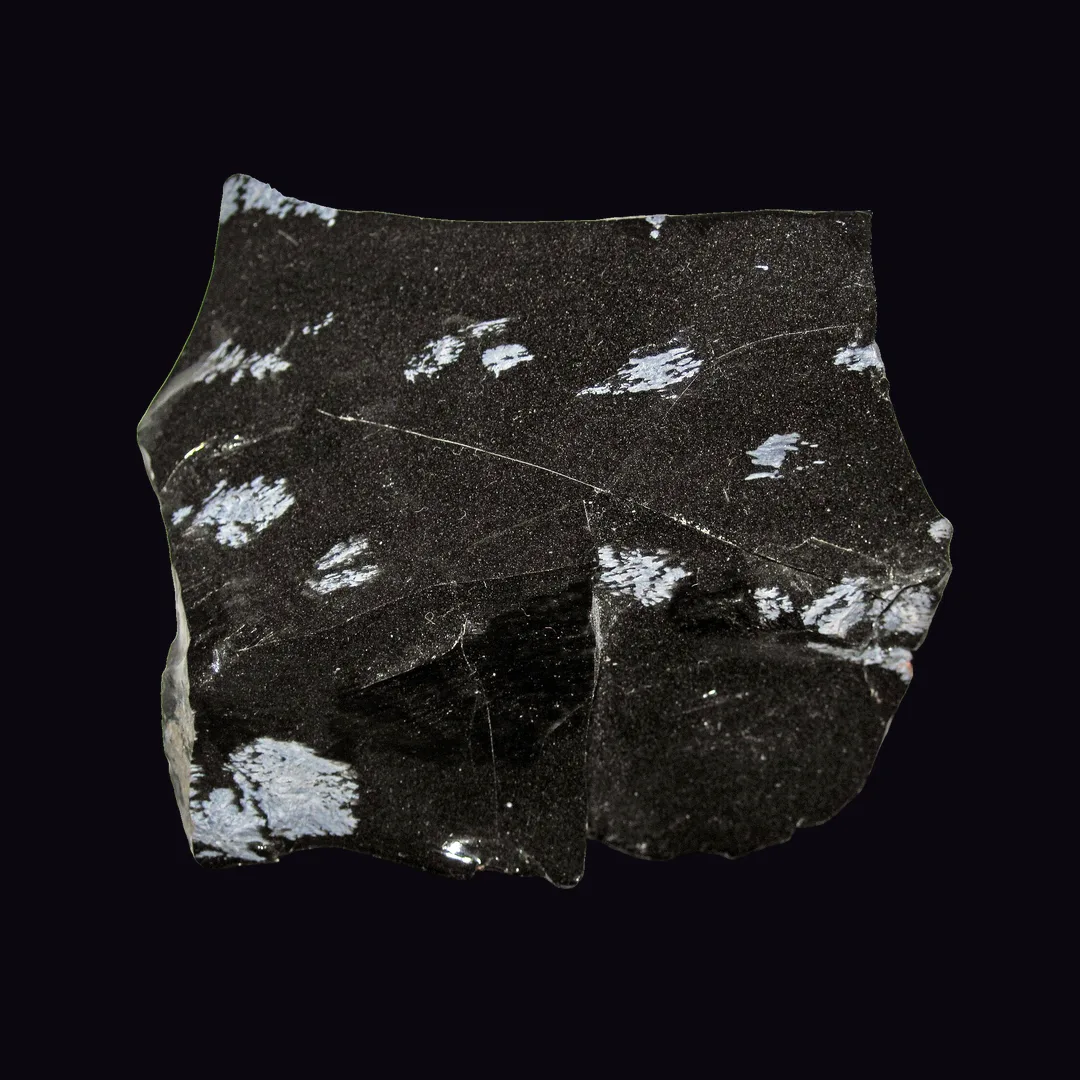
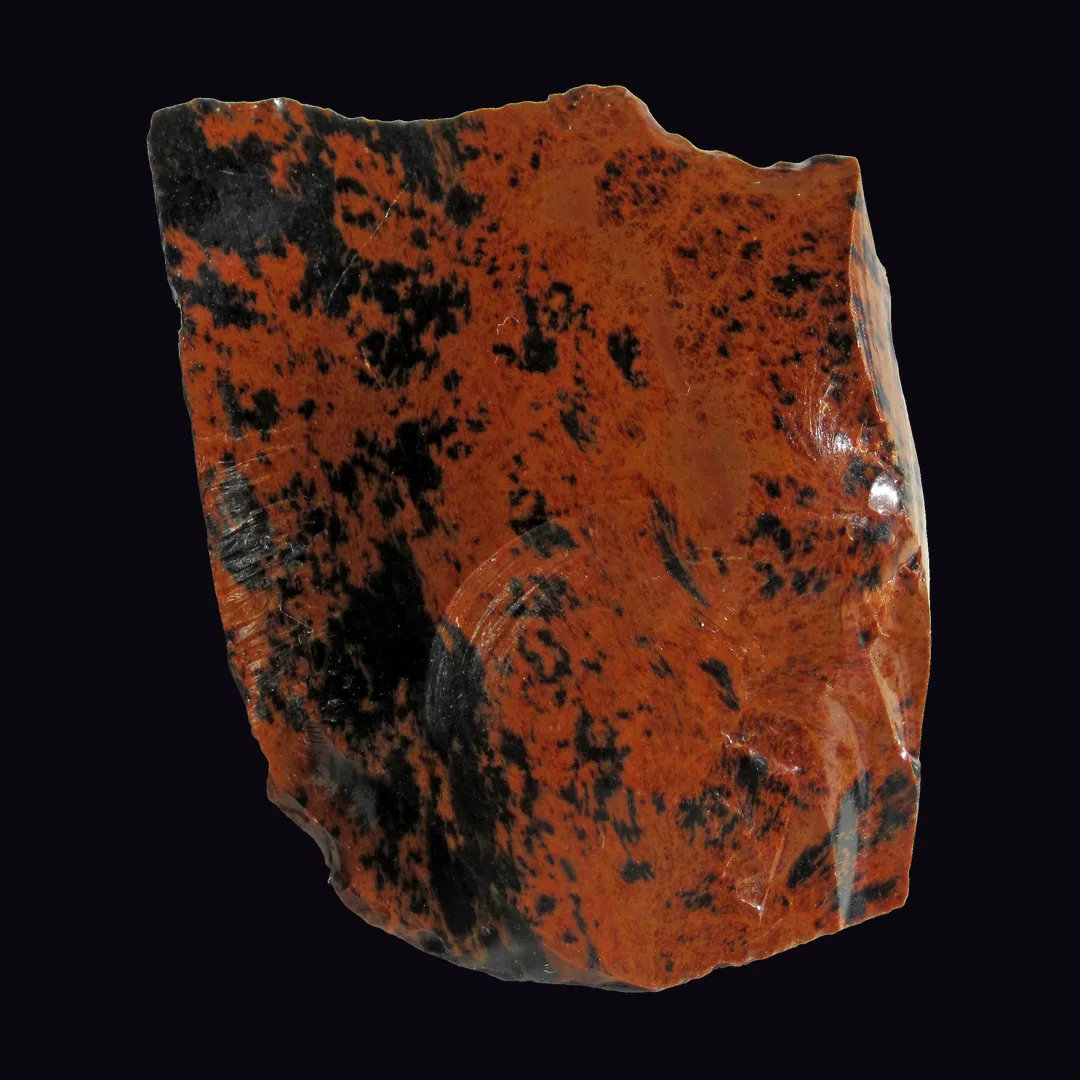
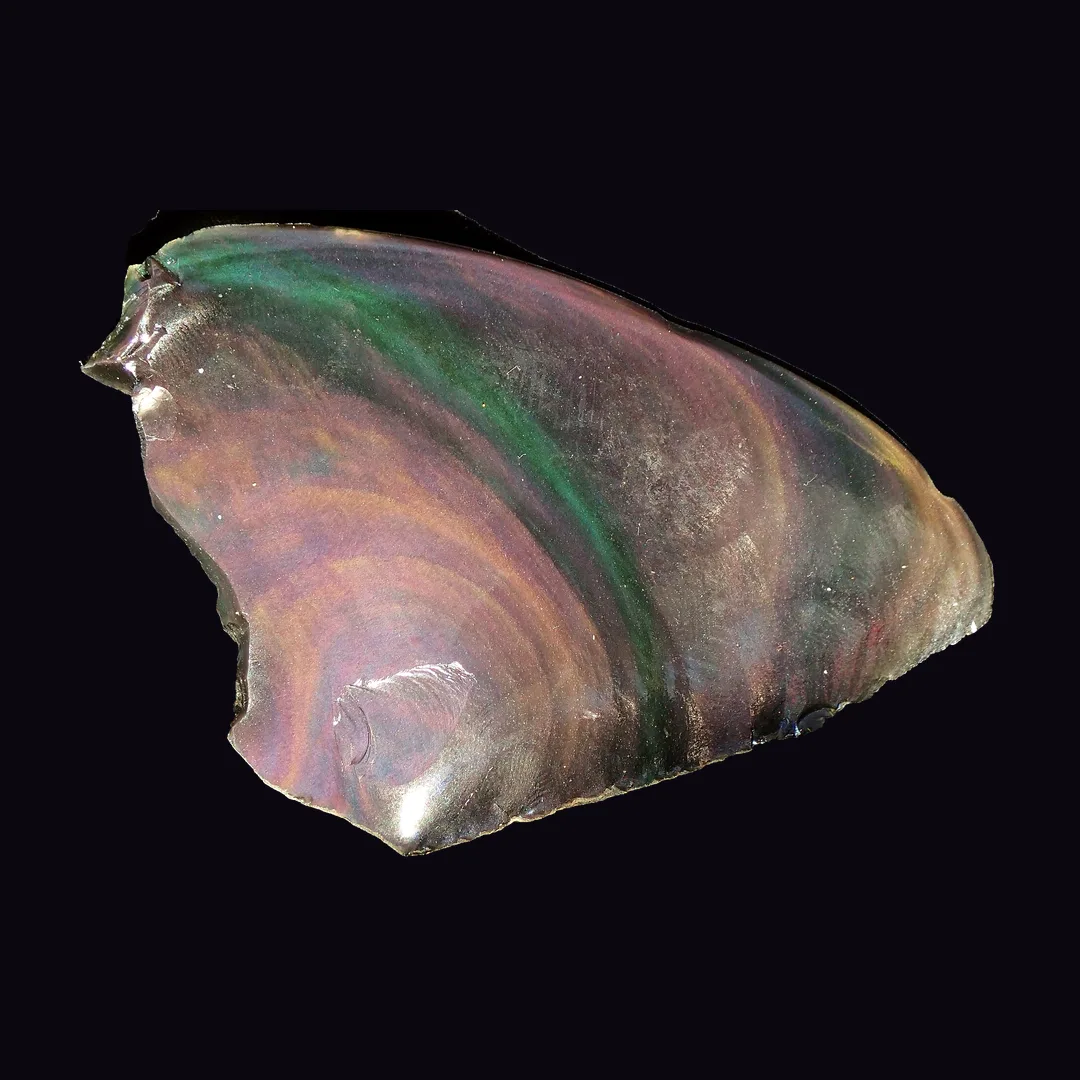
Obsidian comes in more than plain black, and every version answers the same backlight test. Snowflake obsidian carries soft feathery white patches, which are the glass slowly beginning to crystallise. Mahogany obsidian is clouded red-brown with iron, and a thin edge held to a lamp glows red where red jasper stays flat and opaque. Rainbow obsidian hides flat layers of tiny magnetite rods, so under one bright point of light the green and magenta arrive at one angle and leave at the next. A coated fake shows colour from every angle instead, broken edges included.
Onyx has a relative too. Sardonyx is the same chalcedony in flat parallel red-brown and white bands, and most of it was dyed or heated to sharpen those stripes.
Which one is which, practically
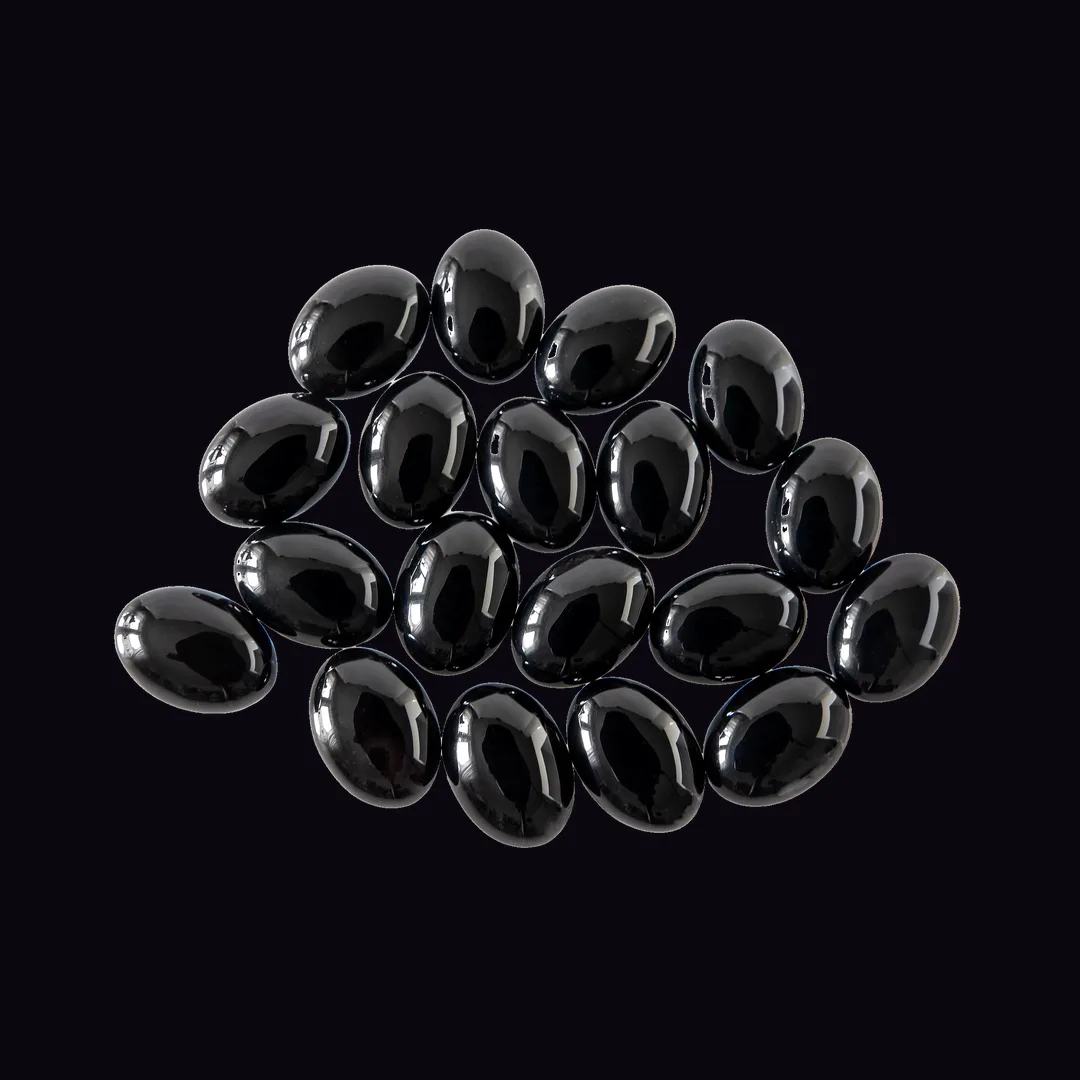
If it's a smooth polished cabochon, a bead strand, or jewellery with a dead-even glossy black and it scratches glass, it's most likely dyed onyx. If it's a rough shard, an arrowhead, a mirror, or a chunky polished piece that glows brown at the edges and feels warm fast, it's obsidian.
Neither is a scam. Dyed onyx is genuine chalcedony and the colour is stable. Obsidian is exactly what it claims to be, natural volcanic glass. You just want to know which one you're holding, especially since they carry different reputations in ritual work, obsidian for shadow work and onyx for boundaries and grief.
The backlight and scratch tests get you most of the way at home. If the light in the shop is bad or the piece is too thick to backlight, scan it to be sure before you commit.
The stones in this piece

Questions people ask
What's the difference between black obsidian and black onyx?
Black obsidian is natural volcanic glass, formed when lava cooled too fast to crystallize, so it has no internal structure. Black onyx is banded chalcedony, a form of quartz, and almost all of it is grey agate dyed black. Obsidian is softer and glassier with razor-sharp curved fractures. Onyx is harder, denser, and usually a dead-even dyed black.
How do I tell obsidian from onyx at home?
Backlight a thin edge with a strong flashlight. Obsidian glows a translucent smoky brown at the edges. Onyx stays opaque or shows a faint grey. Then try a scratch: onyx is Mohs 6.5 to 7 and will scratch glass confidently, while obsidian is softer at 5 to 6 and a quartz pebble will scratch it. Obsidian also warms in your hand faster.
Is black onyx dyed?
Almost always, yes. Nearly all commercial black onyx is grey agate soaked in a sugar solution then treated with acid to carbonize the sugar in the porous bands and turn it solid black, a technique that dates back to Roman times. Modern dyes are also common. The mineral itself is genuine chalcedony. The pure black colour is applied, which is why it looks so dead-even.