Black Crystal ID: Obsidian vs Tourmaline vs Onyx vs Jet
Identifying crystals · 6 min read · 14 August 2026
Put your black stones on white paper and they stop matching. Shine, streak and weight tell obsidian from tourmaline, onyx, jet and hematite in minutes.
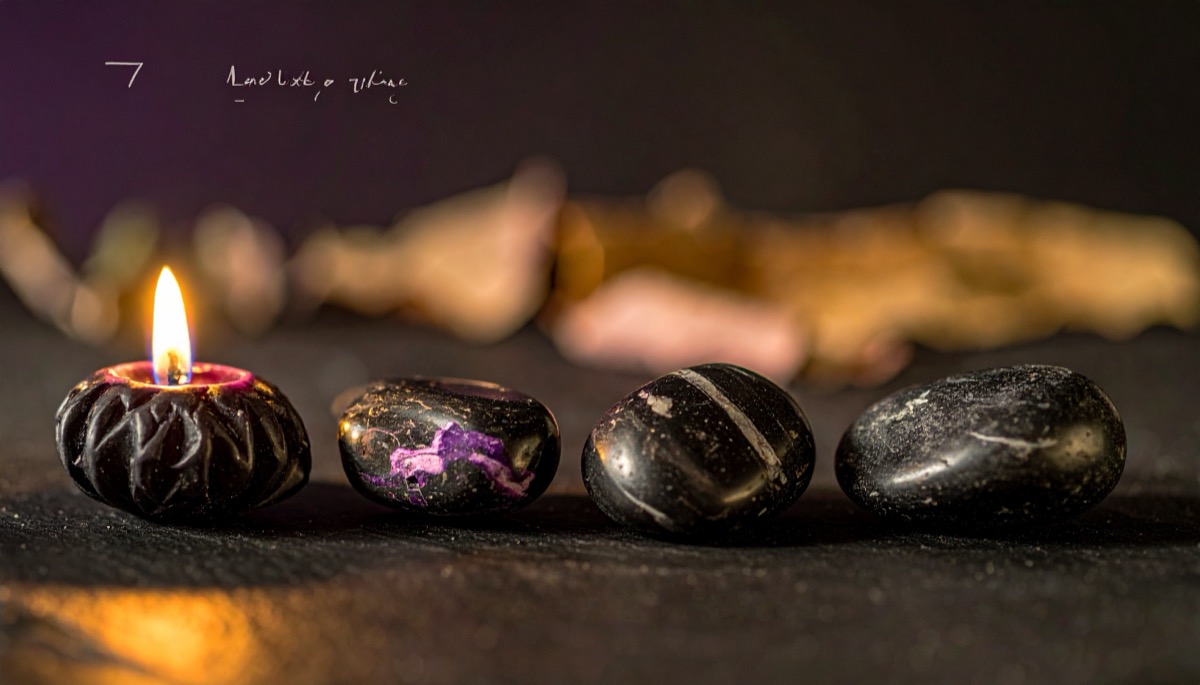
Put every black stone you own on a white sheet of paper under a lamp.
They stop matching straight away. One throws a wet-looking shine. One has fine ridges running down it like a bundle of straws.
One of them is so light it feels hollow. That is not a flaw. That is a different rock entirely, sold under the same mood as the others.
You already sensed they were not the same. You just did not trust yourself against a printed label. Somebody corrected you in front of people once, and you have deferred to the sticker ever since.
Black crystal identification comes down to four cheap tests: luster, streak, weight, and how the stone breaks. Obsidian is glassy and chips in curves. Black tourmaline has lengthwise ridges. Onyx is smooth and banded. Jet is light and warm. Hematite is metallic and leaves a red-brown streak. Run those four and most black stones sort themselves out.
Why black stones fool everyone
Polished up, a lot of black stones look identical: same dark tumble, same shine, no obvious colour to go on. Colour is usually your first ID tool, and with black stones it's off the table. So you switch to physical properties that don't care about colour, and the good news is those tests are simple and you can do them at home.
The five you'll actually be deciding between are black obsidian, black tourmaline, black onyx, jet, and hematite. Learn how each one behaves and the pile stops being a mystery.
The four tests that decide it
Luster. How the surface reflects light. Glassy (obsidian), metallic and mirror-like (hematite), waxy to dull (jet), or smooth-glossy (onyx, tourmaline). Metallic shine basically means hematite.
Streak. Drag the stone across an unglazed ceramic tile or the rough back of a bathroom tile. The powder colour is the streak, and it can differ wildly from the stone's surface. Hematite's tell is a red-brown streak even though the stone looks black or silver. Most of the others streak white, grey, or nothing.
Weight. Heft the stone against its size. Hematite feels surprisingly heavy because it's iron oxide. Jet feels surprisingly light because it's basically fossilized wood. That heavy-versus-light gap is one of the fastest sorts.
Fracture. How it breaks or chips. Obsidian shows conchoidal fracture, smooth curved chip marks like a broken bottle, because it's volcanic glass. The others break more unevenly.
The five black stones, one by one
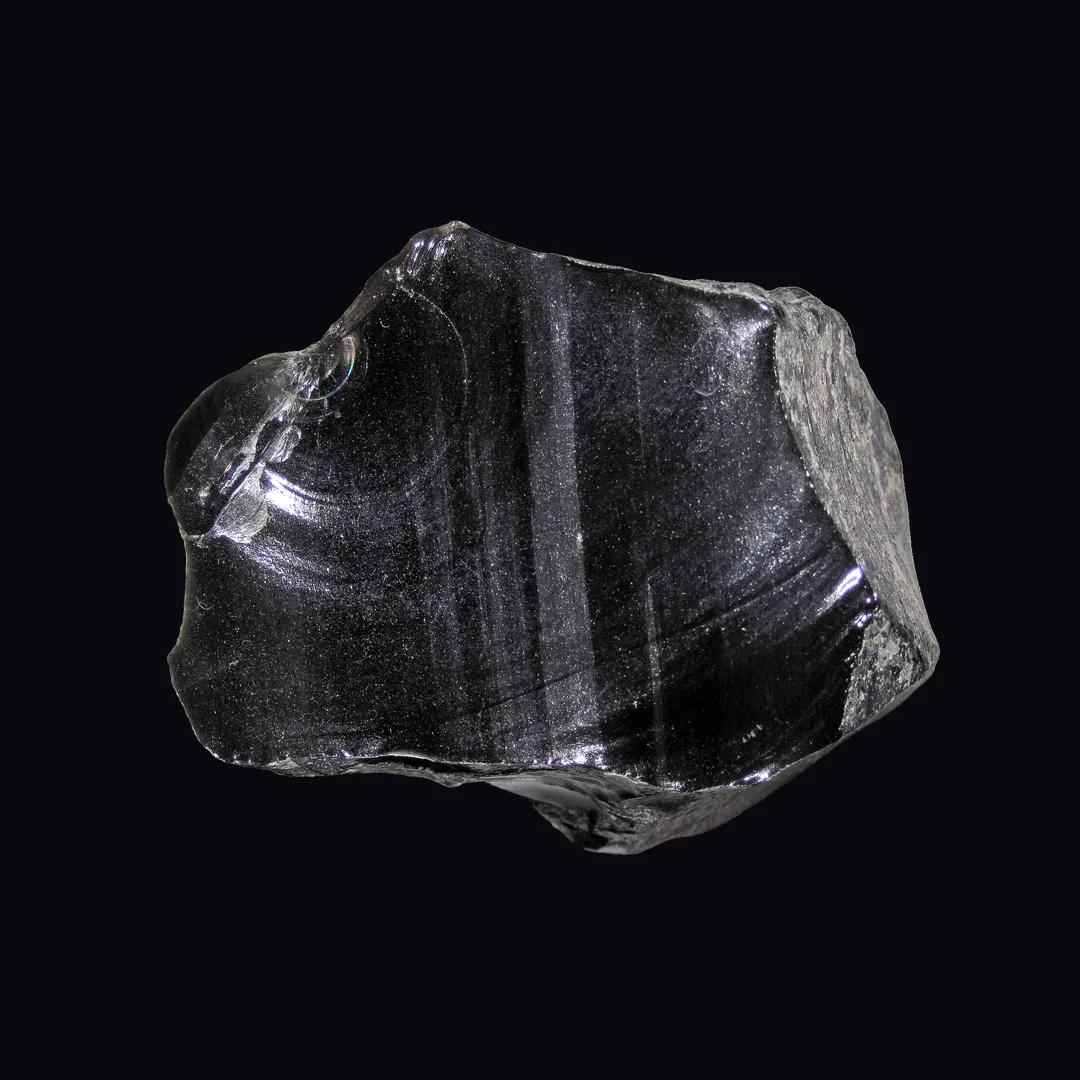
Black obsidian is volcanic glass. Glassy luster, often slightly translucent at thin edges when you hold it to light, and the signature is conchoidal fracture: curved, shell-like chips. It can have tiny gas bubbles inside. It streaks white. If it's glassy and chips in curves, you're done.
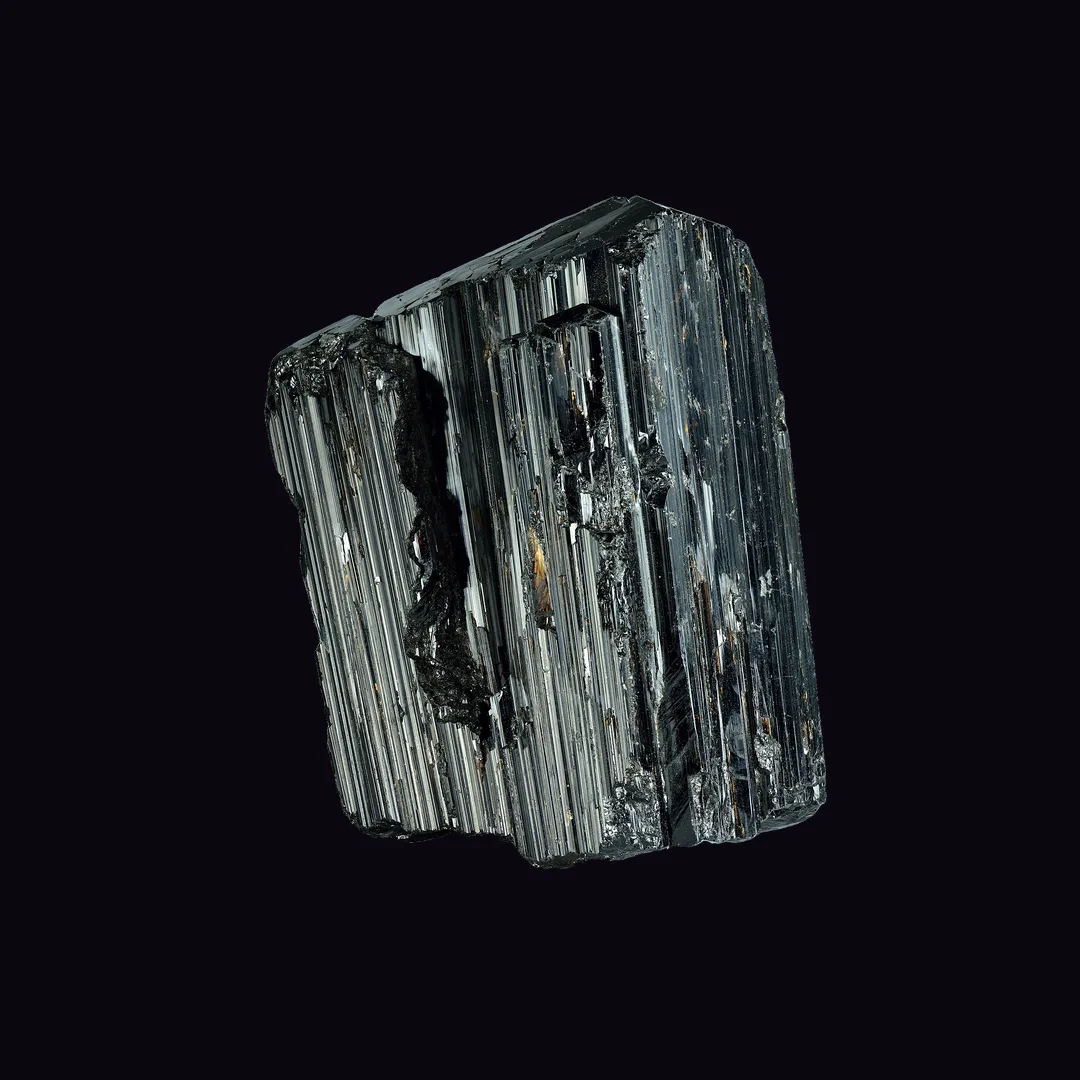
Black tourmaline (schorl) is a true crystal, and its giveaway is striations: fine parallel ridges running lengthwise down the crystal, like grooves in a column. Even a tumbled piece often keeps faint lengthwise lines. It breaks unevenly, not in glassy curves, and streaks white to grey. Ridges down the length equal tourmaline.
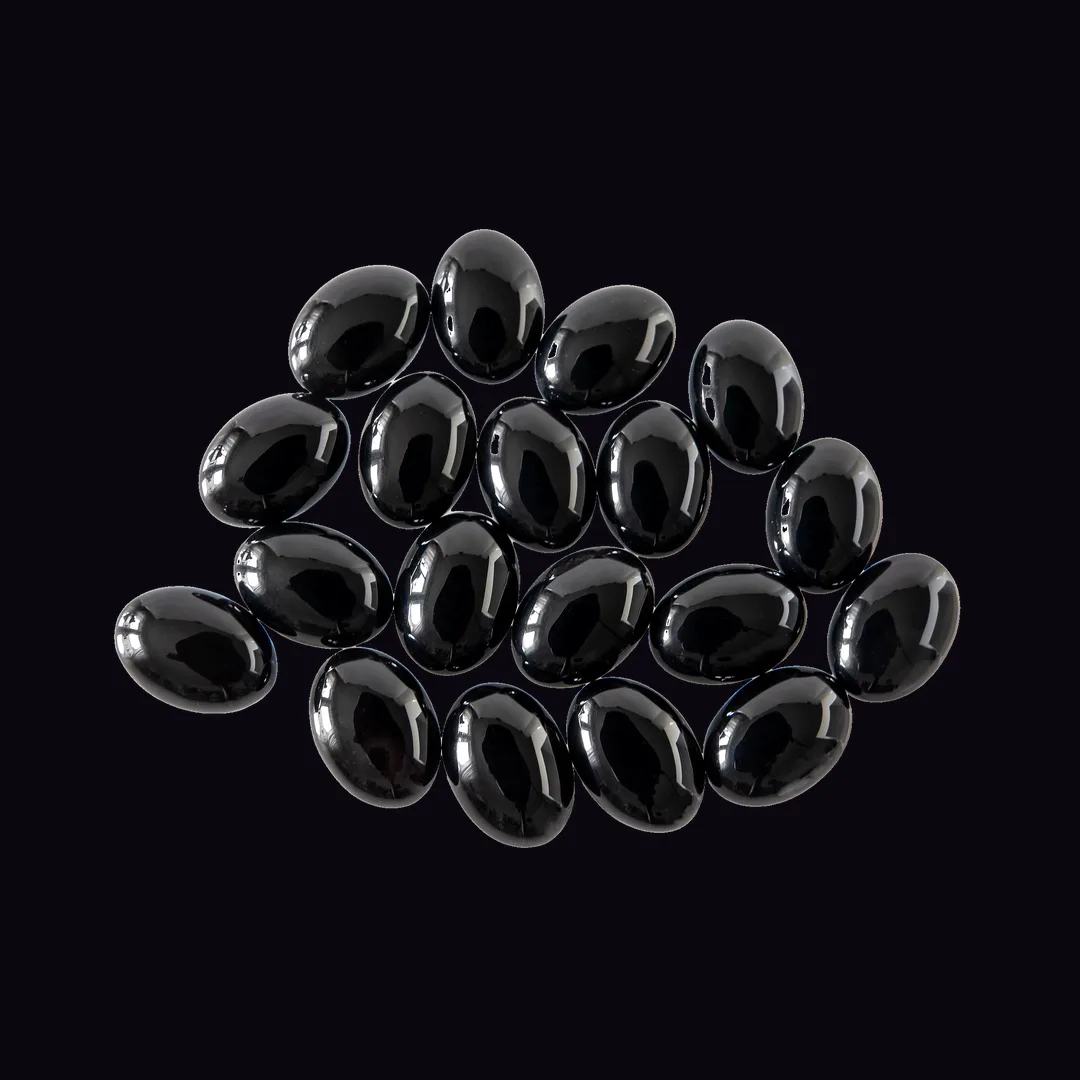
Black onyx is banded chalcedony, and most solid-black onyx on the market is dyed. Smooth waxy-to-glassy surface, very uniform, no striations, no conchoidal chipping. Held to strong light a thin edge may glow faintly. If it's evenly black, smooth, and featureless with no ridges and no curved chips, lean onyx.
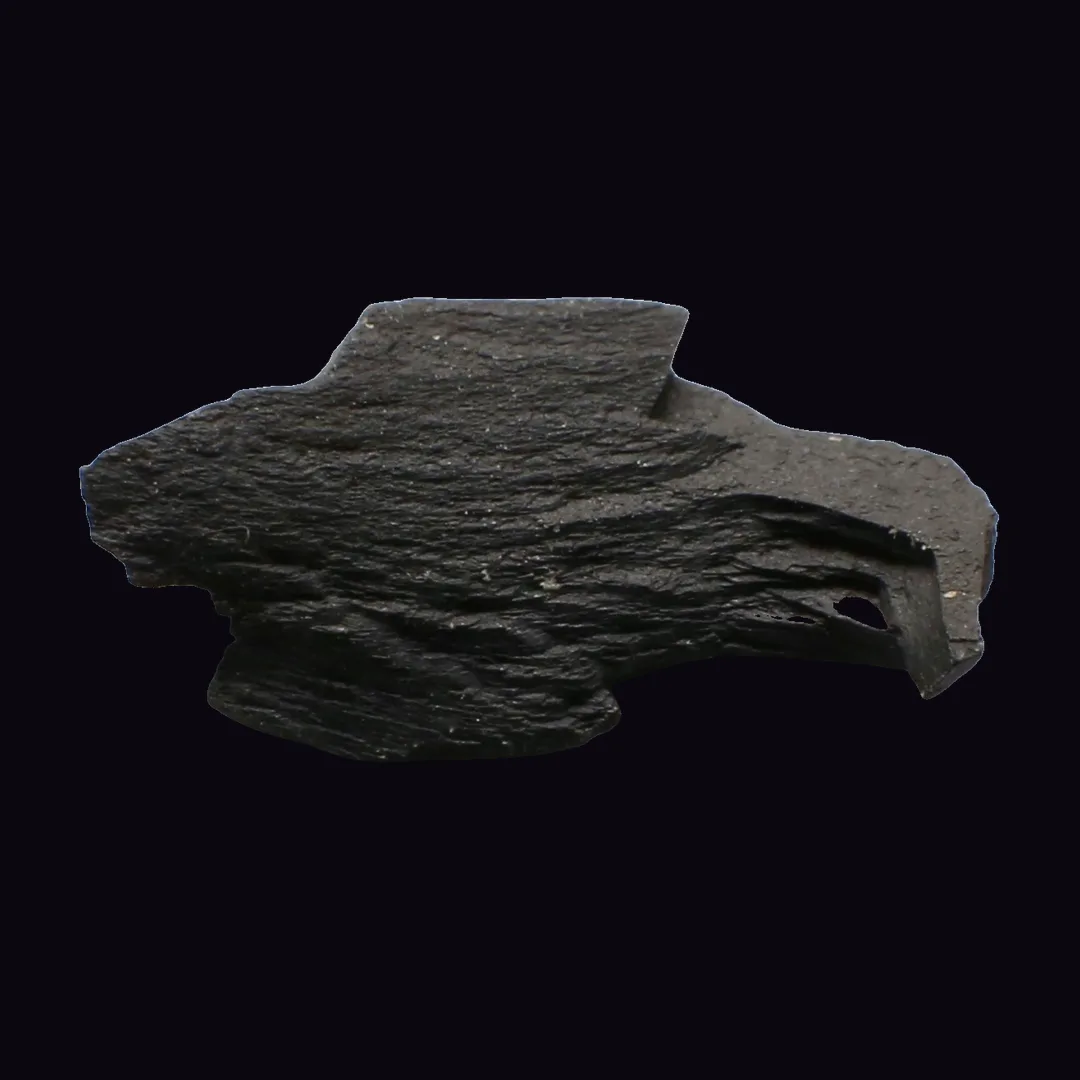
Jet is fossilized wood, essentially a form of coal. It's light, warm to the touch, and slightly soft, with a waxy to dull luster. It can leave a brown streak and, rubbed, may smell faintly of coal. That lightness is the tell. Nothing else on this list feels that airy.
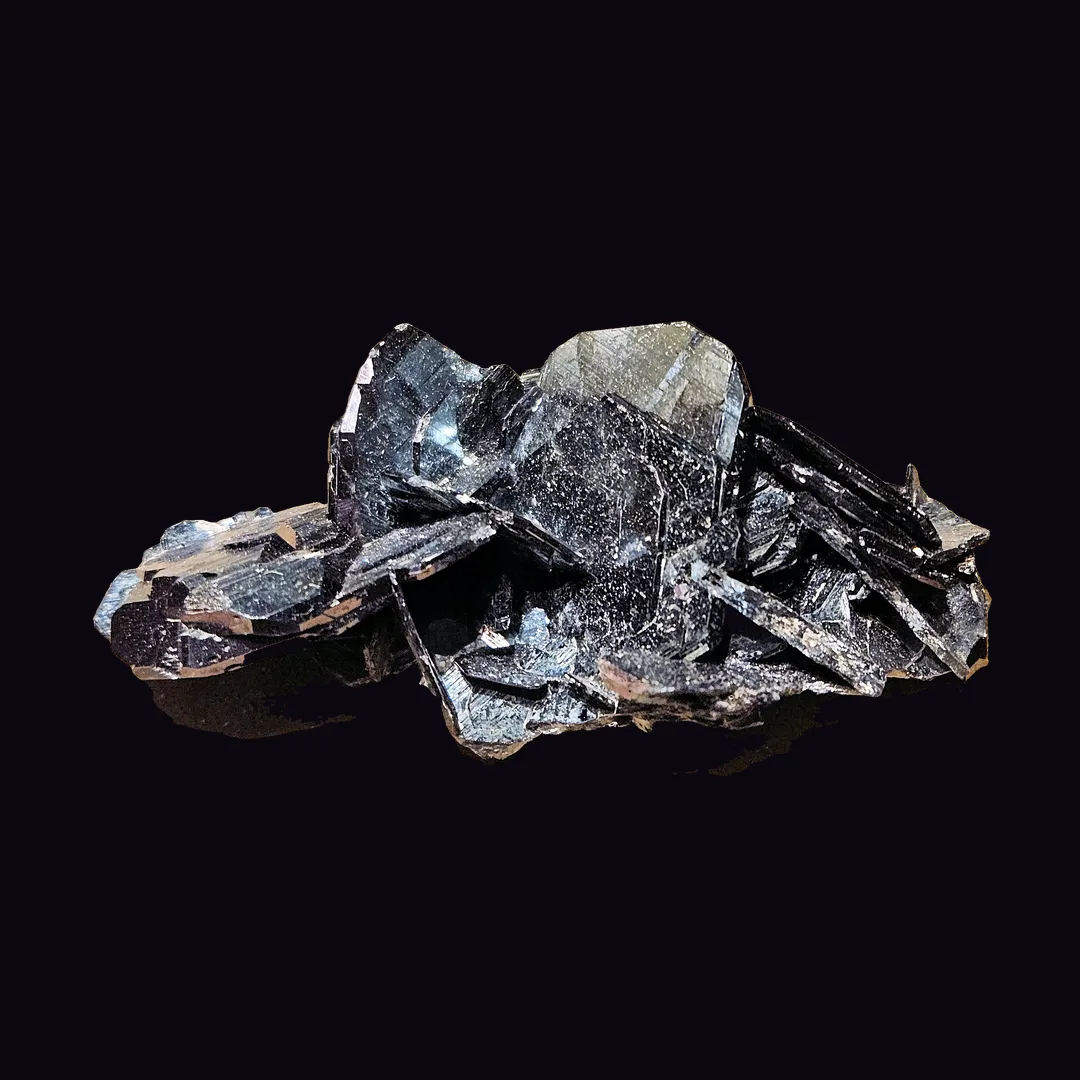
Hematite is iron oxide and it's unmistakable once you know it: metallic, mirror-bright luster, heavy in the hand, and a red-brown streak. The streak is the clincher because the stone looks silver-black but powders rusty red. Weight plus metallic shine plus red streak equals hematite, every time.
Black crystal decision table
| Stone | Luster | Streak | Weight (for size) | Fracture / surface tell |
|---|---|---|---|---|
| Black obsidian | Glassy | White | Medium | Conchoidal, curved chip marks. May have bubbles |
| Black tourmaline | Glassy to vitreous | White to grey | Medium | Lengthwise striations (ridges). Uneven break |
| Black onyx | Waxy to glassy | White | Medium | Smooth, uniform, often dyed. No ridges or curved chips |
| Jet | Waxy to dull | Brown | Light | Lightweight, warm, slightly soft. Coal smell when rubbed |
| Hematite | Metallic | Red-brown | Heavy | Mirror sheen. Red streak is the giveaway |
A fast walk-through
Pick up the mystery stone and go in order.
First, is it metallic and heavy? Streak it. Red-brown powder means hematite, and you're finished. Second, does it feel weirdly light and warm? That's jet. Third, does it have ridges running down its length? Tourmaline. Fourth, is it glassy with curved chip marks or tiny bubbles? Obsidian. What's left, smooth and uniformly black with none of those tells, is most likely dyed onyx.
That sequence resolves the great majority of black stones without any special gear beyond a ceramic tile.
The two mix-ups people make most
Two pairings trip up almost everyone, so it's worth drilling them.
Obsidian versus onyx. These are the ones people swap constantly because both can look like a smooth glossy black tumble. The split is fracture and origin. Obsidian is volcanic glass, so it chips in curved conchoidal marks and may hide tiny gas bubbles, and thin edges can glow slightly when backlit. Onyx is banded chalcedony, more uniform, with no conchoidal chipping and no bubbles. If you can catch a curved chip or a bubble, it's obsidian. If it's featureless and evenly black, it's probably dyed onyx.
Hematite versus everything else. Hematite is the easiest to confirm and the one people forget to test, because a polished piece can read as just another dark stone until you weigh it and streak it. The instant you feel the unexpected heft and see the red-brown powder on a tile, the guessing ends. Make hematite your first ruling-out step for any heavy, shiny black stone, and you'll save yourself from overthinking the rest.
Five is not the whole list
Here are the ones that hide inside it. Magnetite reads as heavy metallic black, exactly like hematite, until you bring a magnet close and it jumps. Its streak is black, never red, so the tile settles it too. Nuummite looks like a plain black pebble under a lamp. Tilt it and straight gold and bronze streaks flash across the surface and vanish again. It comes from around Nuuk in Greenland. Polished pieces are safe to hold, but never dry grind the raw rock.
Obsidian also arrives patterned. Snowflake obsidian carries feathery white patches. Mahogany obsidian glows red-brown through a thin edge. Rainbow obsidian stays flat black until one bright light catches it at the right angle.
Where the tests get shaky
A few honest caveats. Fully polished tumbles can hide the very features you need: tumbling smooths away tourmaline's striations and obsidian's fracture, leaving you leaning on weight and streak alone. Streak-testing also scratches the stone, so do it on a hidden spot or an unpolished edge.
Some pairs stay genuinely close. Dyed onyx and a very smooth obsidian can look alike until you catch a conchoidal chip or a gas bubble in the obsidian. Dense black glass fakes exist too, and glass can mimic obsidian closely since obsidian is itself a natural glass. And there are more black stones than these five (black spinel, black kyanite, shungite, jasper), so a stone that fits none of the profiles above might just be off this list.
So the four tests get you most of the way, especially on rough or lightly polished pieces, and they'll separate these five cleanly. When a piece is heavily polished or you're about to pay for it, scan it and cross-check the streak and weight rather than trusting the shine alone. Black stones lie with their surface. They tell the truth in how they break, what they weigh, and the colour they leave behind.
The stones in this piece
 Black ObsidianRead the entry
 Black TourmalineRead the entry
 Black OnyxRead the entry
 JetRead the entry
 HematiteRead the entry
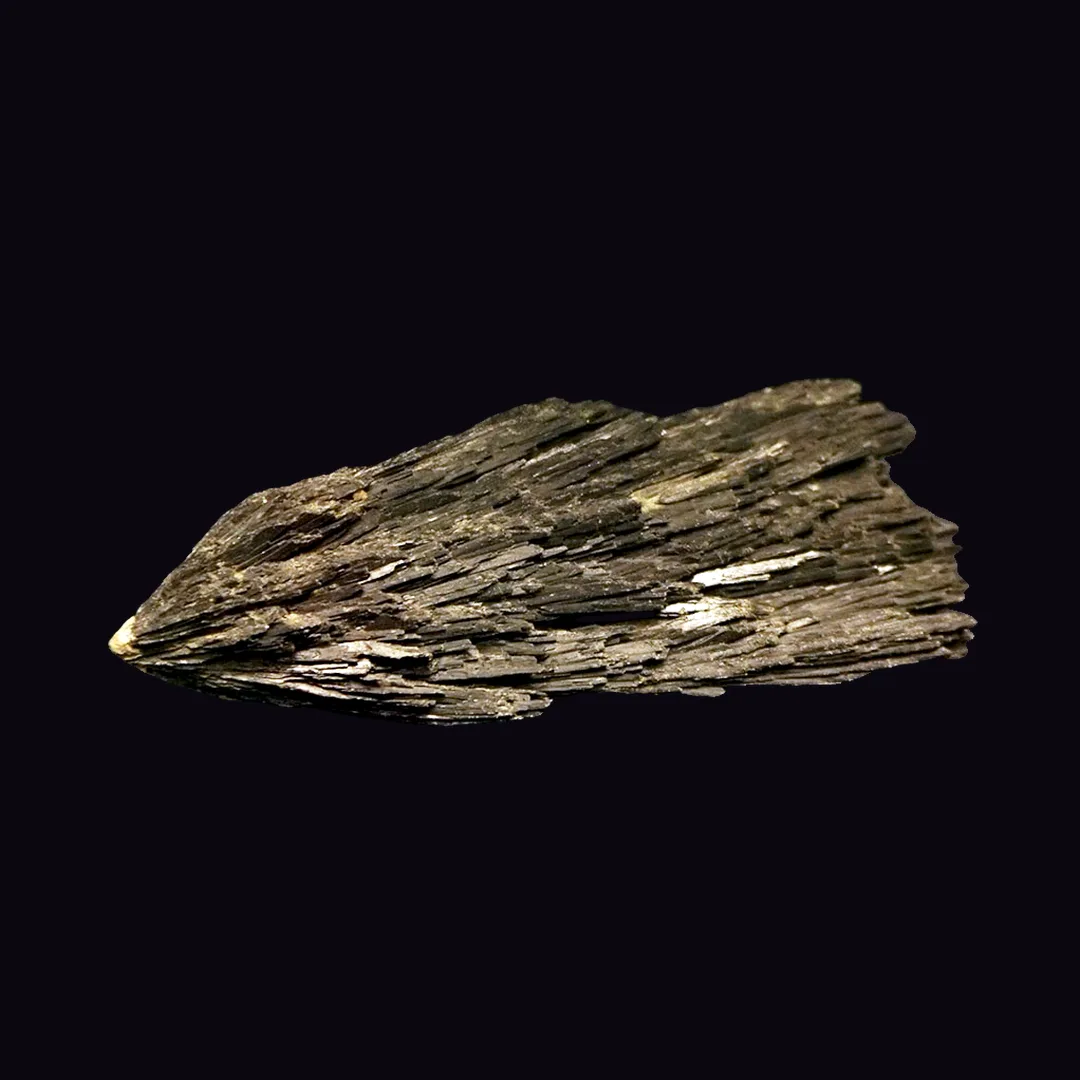 Black KyaniteRead the entry
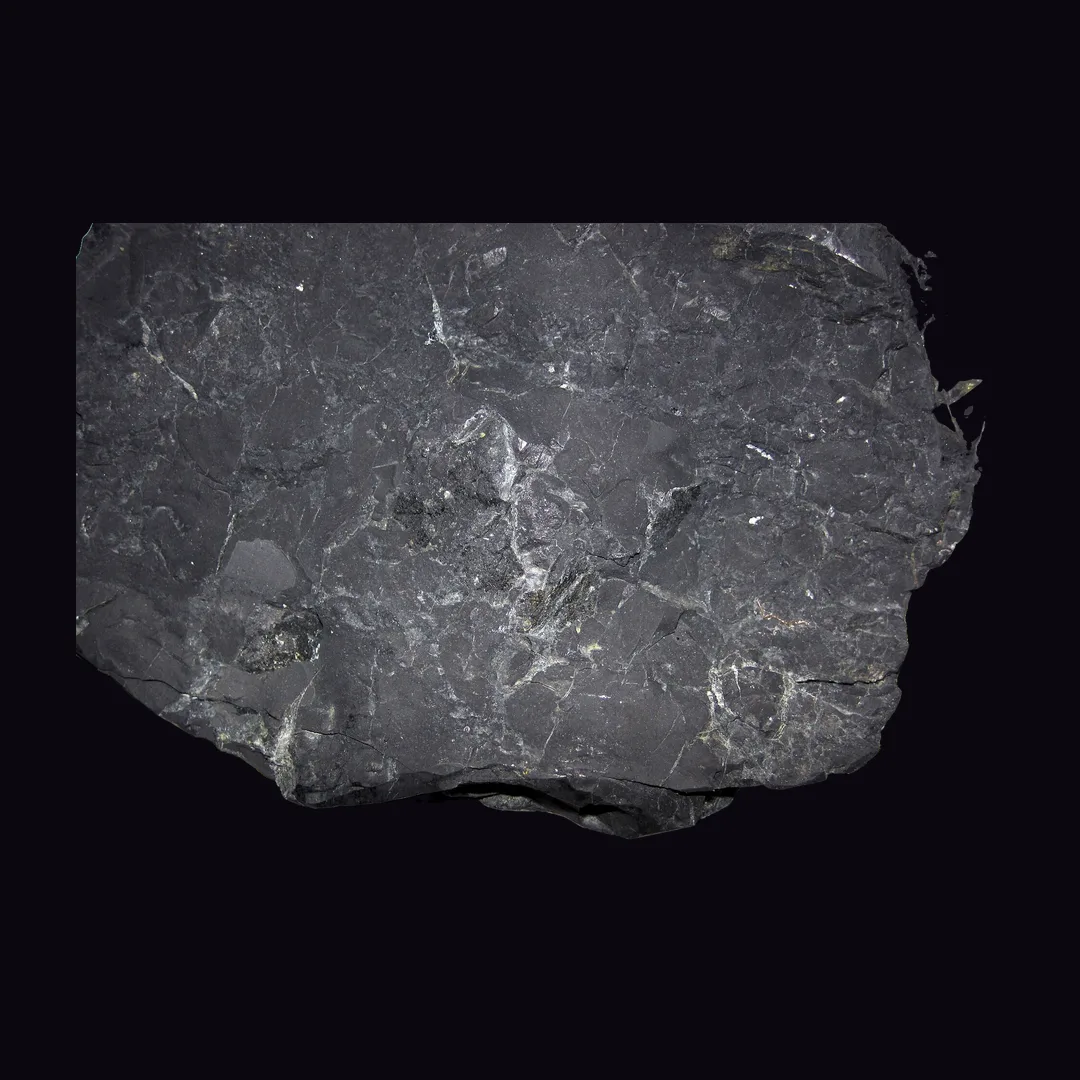 ShungiteRead the entry
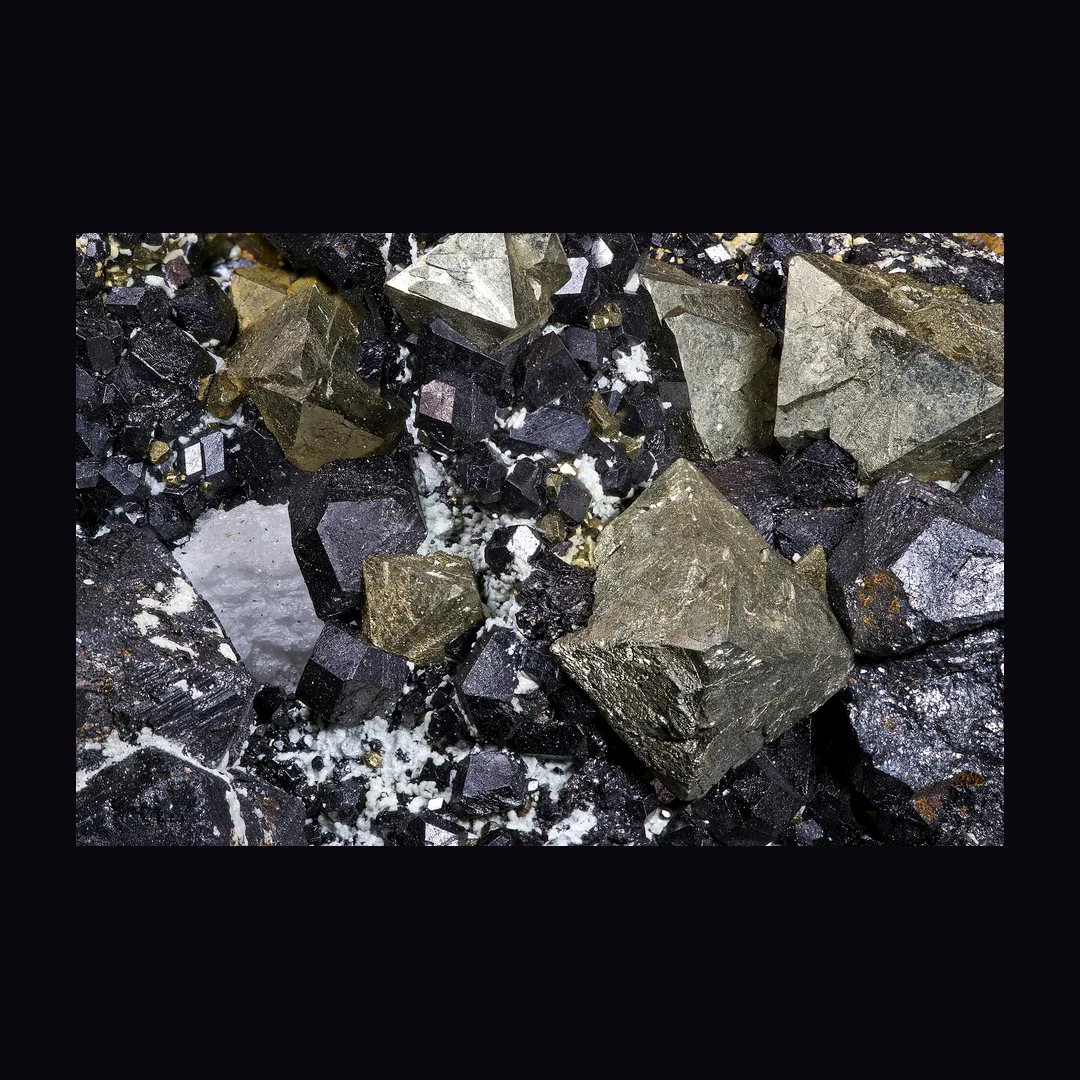 MagnetiteRead the entry
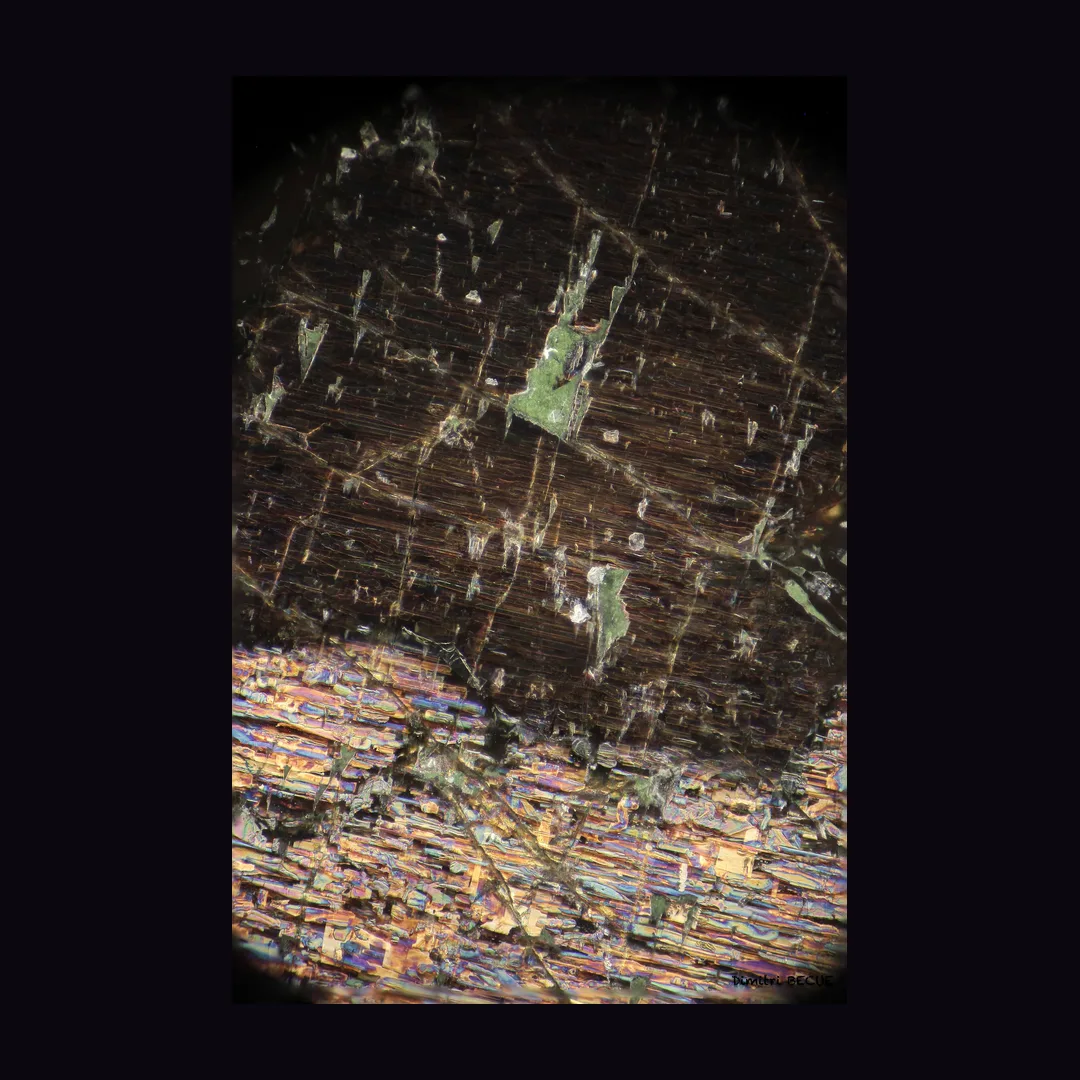 NuummiteRead the entry
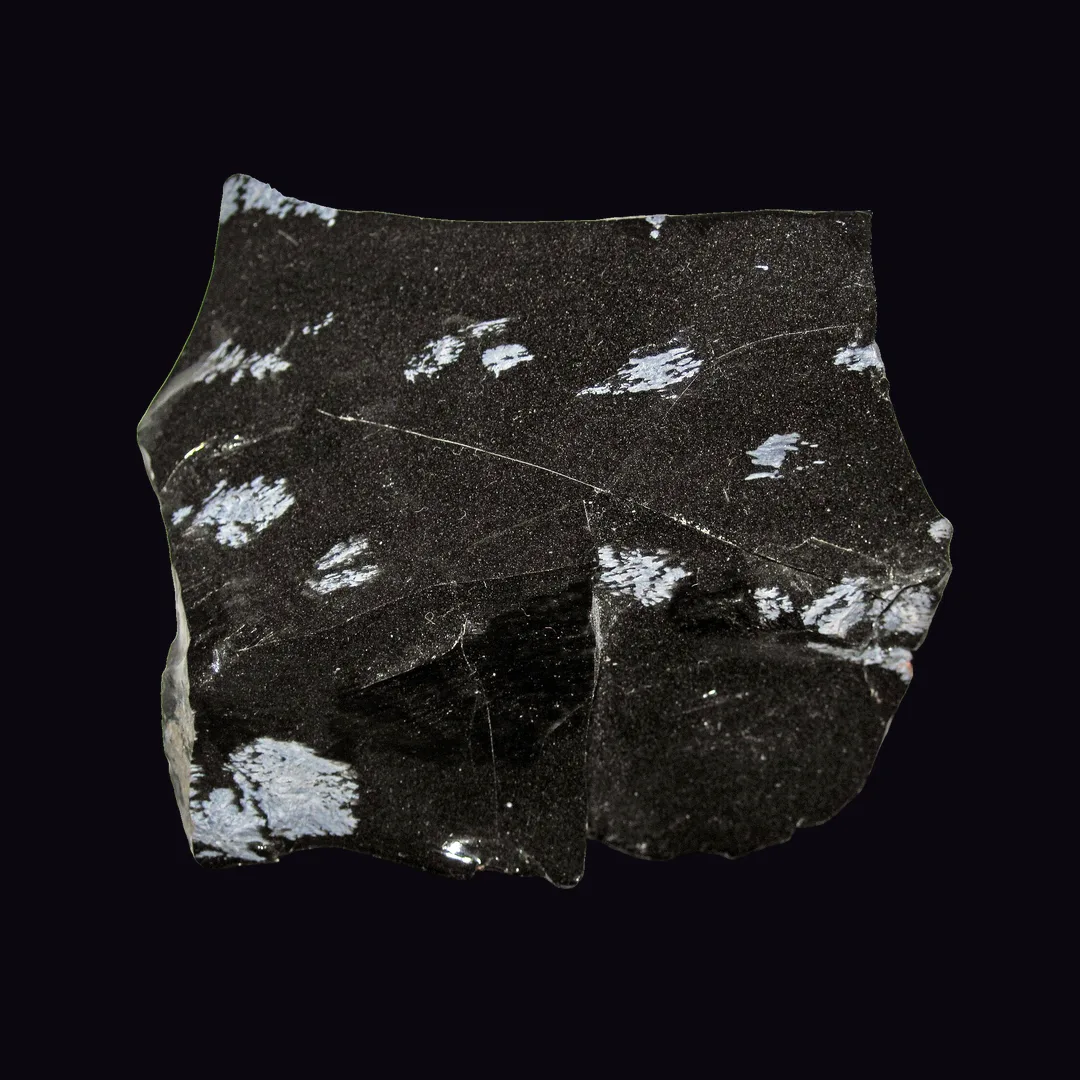 Snowflake ObsidianRead the entry
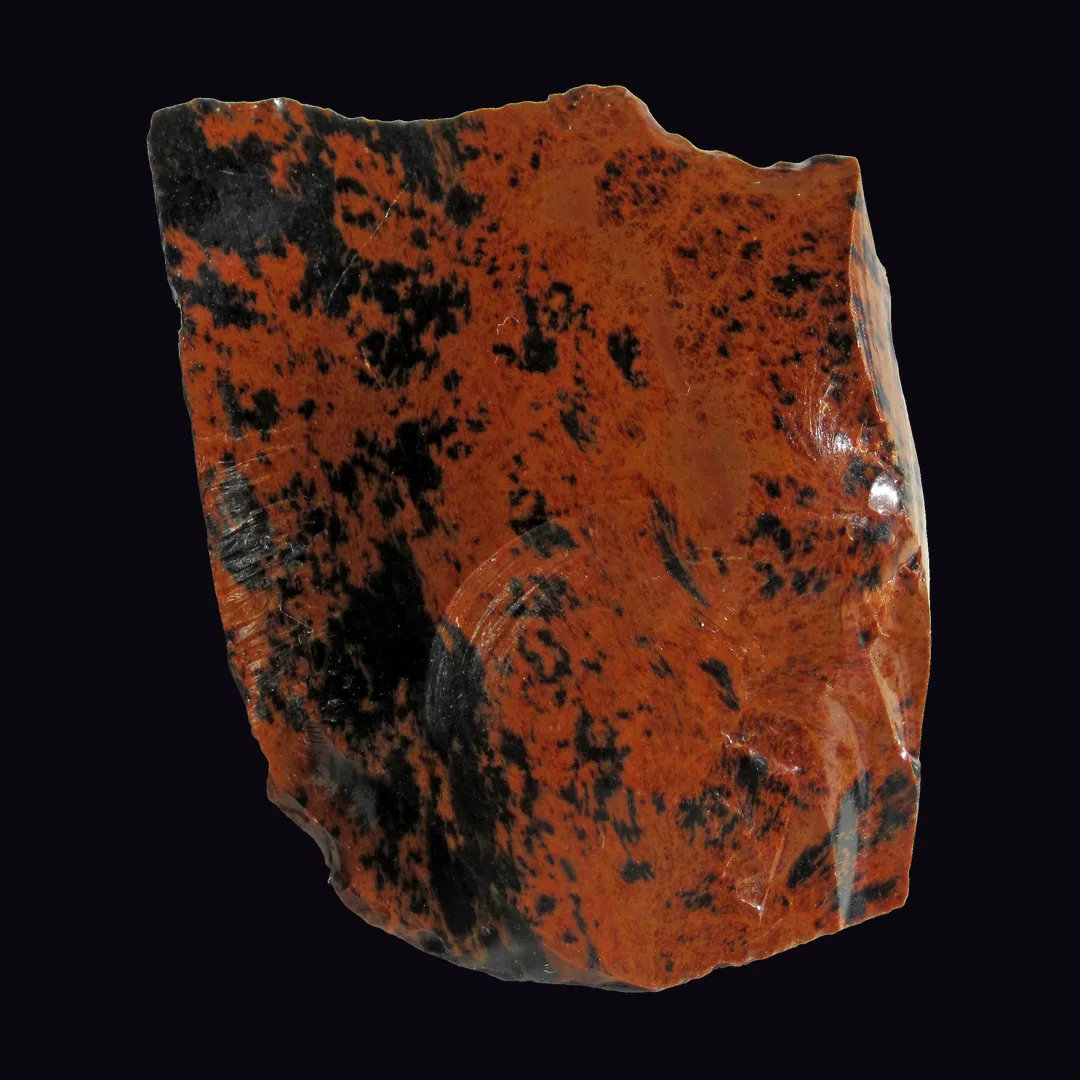 Mahogany ObsidianRead the entry
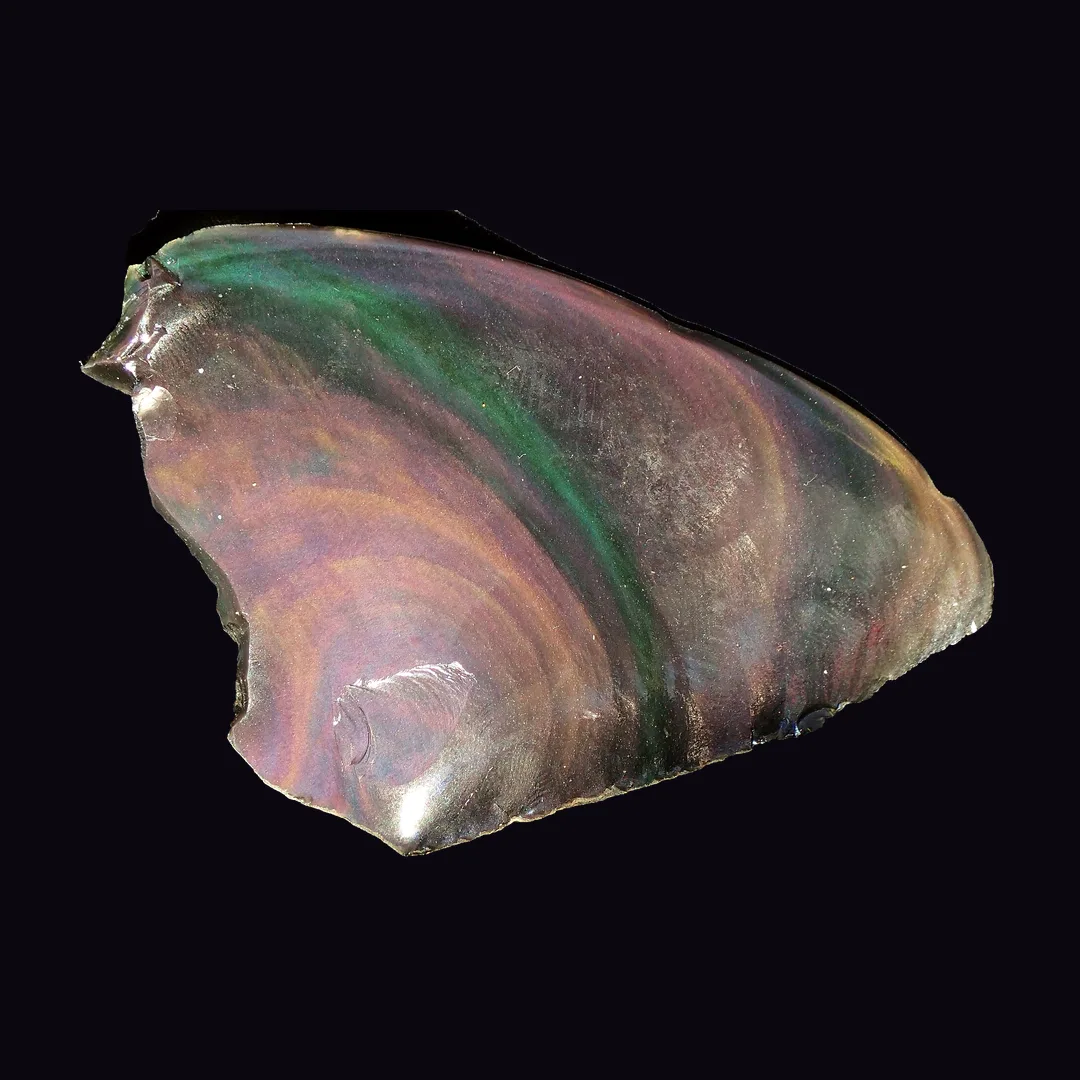 Rainbow ObsidianRead the entry
Questions people ask
How do you identify a black crystal?
Check four things: luster, streak, weight, and how it breaks. Obsidian is glassy with curved conchoidal fractures. Black tourmaline has lengthwise ridges. Onyx is smooth and banded. Jet is lightweight and warm. Hematite is metallic and leaves a red-brown streak. Those four tests separate almost every common black stone.
What is the difference between black obsidian and black tourmaline?
Obsidian is volcanic glass: smooth, glassy, and it breaks in curved conchoidal chips like a broken bottle. Black tourmaline is a crystal with long parallel striations, or ridges, running down its length, and it breaks unevenly. If it's glassy and shiny with no ridges, it's obsidian. If it has lengthwise grooves, it's tourmaline.
Is black onyx the same as obsidian?
No. Onyx is a banded variety of chalcedony, often dyed solid black, with a waxy to glassy smooth surface and no volcanic glass structure. Obsidian is natural volcanic glass with conchoidal fracture. Onyx is usually more uniform and evenly polished, while obsidian may show curved chip marks and occasional gas bubbles.