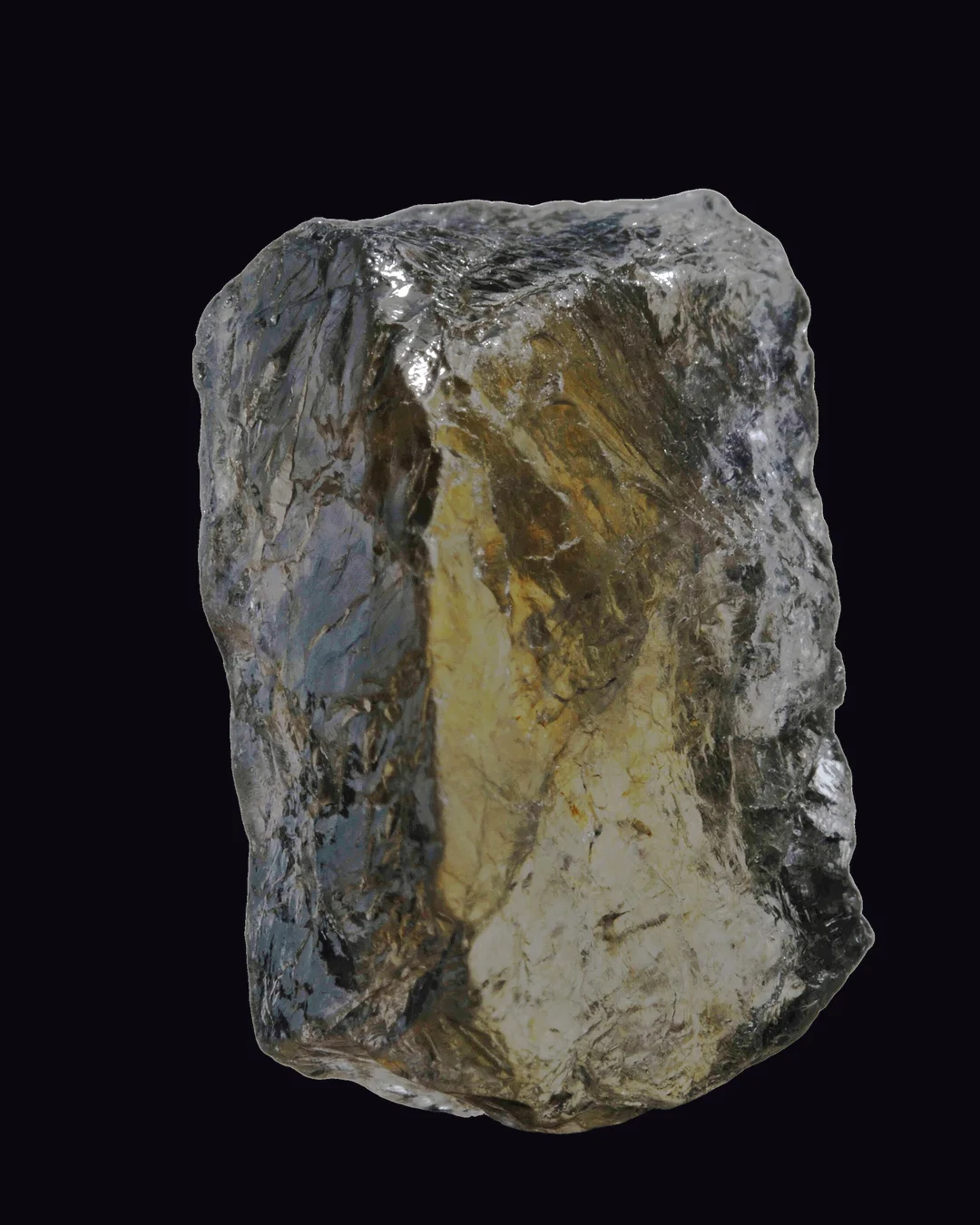
Iolite
Cordierite
Old seabed mud got buried under a mountain and cooked until it came out as a different mineral. Turn it under one lamp. Violet blue from this side, smoky grey from the next, nearly clear from the third. Blue glass cannot do that. That is the test, and it is free. Tanzanite shifts too, but it never goes to clear grey. Norse sailors may have used thin slices of it to find the sun through cloud. The story is argued over, so hold it loosely. You have lost your bearings and you are still answering questions like you have them. You keep saying fine to people who would have stayed. The fog is real. You are not making it up. Who told you that being lost was the same as failing?
People carry it for intuition, clarity and communication. Tradition attaches it to the element air, the third-eye, throat chakra, Saturn. It is most often given to Sagittarius, Libra, Taurus. It measures 7-7.5 on the Mohs scale.
Seen · you don't have this one yet
Common·Uncommon·Rare·Arcane
What it is confused with
Tanzanite, sapphire, amethyst, blue quartz, sodalite, blue glass
The whole identification is strong trichroism, meaning it shows three different colours depending on which way you look through it. Turn the stone and it shifts from violet-blue, through smoky grey-yellow, to nearly colourless. The change is dramatic and visible to the naked eye, and no other blue stone at this price does it. The colour is a soft inky violet-blue, never the vivid blue of sapphire or the green-blue of aquamarine. It runs transparent to translucent, with a glassy to slightly greasy shine, and it scratches glass readily.
How to tell
Turn it slowly under a single light. Iolite goes from blue to grey-yellow to almost clear across its three axes. Tanzanite shifts between blue, violet and burgundy, but never to a colourless grey, and it is softer at 6.5. Amethyst shows no such change.
Essentially never treated. Another gem sold exactly as it was found.
The full mineral facts
Hardness, formula, and how the rock is put together.
Hardness
7-7.5 Mohs
Formula
(Mg,Fe)2Al4Si5O18
Family
silicate
How it forms
Mud and clay on an old seafloor were buried deep under a mountain belt and cooked hot enough to rearrange into a new mineral, cordierite.
Where it comes from
India, Sri Lanka, Madagascar, Tanzania, Brazil, Myanmar, Norway
What it means
The moon is in Gemini today, so this is the Gemini read.
Somebody asked what is going on with you and got the entertaining version.
It is hard, but it has one direction that wants to split. A knock in the wrong place and it parts cleanly, which is why it stays out of ultrasonic cleaners.
The rest of it is straight. Untreated cordierite, cooked out of seafloor mud under a mountain, showing three different colours depending on the angle.
Gemini, you are a different colour depending on where somebody stands, and you never stand still to check.
Being quick kept people around you when you were young, and being plain did not. So the flat true sentence started to feel like a risk.
Somebody asked what is going on with you and got the entertaining version. The real one was three words and slightly grey.
Three angles. Three colours. All of them it.
That is today's sky, not your chart. Add your birth details and this stone gets read against your own.
Read it for my chart →You know what this one would do for you. You just don't have it.
Iolite for every sign
AriesYou have abandoned two things at the point where they were about to hold.
Mud on an old seafloor got buried under a mountain belt and cooked until the atoms rearranged into something else. What came out is cordierite, which the trade calls iolite.
Nobody treats it. It is one of the few stones sold exactly as it was found.
Aries, people only ever get one side of you and you have decided that is their fault.
You were praised for how fast you got going long before anybody praised you for finishing. So speed became your reputation and then quietly became your standard.
Now a slow patch reads as a wrong turn. You have abandoned two things at the point where they were about to hold.
That mud took a mountain and a very long time. Nothing about it was quick.
TaurusYou raised the price of your trust and never lowered it.
Hold it under one lamp and turn it slowly. Violet blue from this side, smoky grey from the next, nearly clear from the third. Blue glass cannot do that.
The test is free and it takes four seconds. Tanzanite changes too, but it never goes to clear grey, and it is softer.
Taurus, you stopped trusting anything shiny and cheap, and somebody taught you that.
You bought a story once with your own money and found out afterwards what you had actually paid for. You did not make a fuss. You raised the price of your trust and never lowered it.
Now good things queue outside for months, and one or two of them stopped queuing.
Turn it under a lamp. Nobody has to tell you what you are holding.
GeminiSomebody asked what is going on with you and got the entertaining version.
It is hard, but it has one direction that wants to split. A knock in the wrong place and it parts cleanly, which is why it stays out of ultrasonic cleaners.
The rest of it is straight. Untreated cordierite, cooked out of seafloor mud under a mountain, showing three different colours depending on the angle.
Gemini, you are a different colour depending on where somebody stands, and you never stand still to check.
Being quick kept people around you when you were young, and being plain did not. So the flat true sentence started to feel like a risk.
Somebody asked what is going on with you and got the entertaining version. The real one was three words and slightly grey.
Three angles. Three colours. All of them it.
CancerYou keep saying fine to people who would have stayed.
Under the name it is cordierite, which used to be mud on a seafloor. Buried under a mountain belt and cooked, it came out a different mineral entirely.
The colour is not one colour. Violet blue, smoky grey and almost clear, depending on which way you hold it, and nobody added any of them.
Cancer, you got buried under something at fifteen and came out a different person entirely.
Somebody at home needed steadying before you were old enough to be steady, and you did it, and it was never once discussed.
You have lost your bearings lately and you are still answering questions as though you have them. You keep saying fine to people who would have stayed.
The fog is real. You are not making it up.
LeoYou have three different answers about yourself and no idea which one is true.
It gets set beside tanzanite, sapphire and blue glass and priced against all three. It is none of them, and the three-way colour change proves it in four seconds.
Nothing was done to it to help it sell. Untreated cordierite, out of cooked seafloor mud.
Leo, you keep getting compared to people you were never trying to be.
Being the bright one bought your place somewhere early, and you have kept paying long after anybody was charging. Nobody hands that job back.
By the end of a night you know exactly how everybody else is doing. You have three different answers about yourself and no idea which one is true.
Turn yourself under the lamp for a second.
VirgoYou were the competent one before you had a vote on it.
Clay and mud on an old seafloor were buried, pressed and heated under a growing mountain until they became a new mineral. That is the whole story of iolite.
It reaches you untreated, which is more than almost anything else in that display case can say.
Virgo, you turned into somebody new under all that and nobody marked the date.
You were the competent one before you had a vote on it. Competent children get given more to carry, never more help carrying it.
So you clear every small solvable thing at speed, and the one unfixable thing sits in the corner getting older.
It has a direction that splits. Everything does.
LibraYou learned to give whichever answer kept the house calm.
Put it on the table by a single lamp and move your head, not the stone. It goes blue, then smoky grey, then nearly colourless, and all three are the same rock.
Blue glass holds one colour from every angle. That is how you tell in four seconds, and it costs nothing.
Libra, you show a different colour to every person in the room and cannot remember which one is yours.
When you were young one honest sentence could change a whole evening for a whole house. You learned to give whichever answer kept the house calm.
Now you can spend an hour being agreeable and go home without having said one true thing you wanted.
Say the true one. Ruin nothing.
ScorpioYou have spent years being the only one who knows what got cut.
It takes daily wear and it takes water, but it has one plane that will split if you knock it hard enough. Hard is not the same as unbreakable.
Everything else about it is plain. Untreated cordierite, cooked out of seafloor mud, showing three colours because that is simply what it does.
Scorpio, you have three sides and you decided at some point that only one was allowed out.
You were young and you were telling the truth, and you watched a room go careful around you. After that you sent out a version with two of the three colours removed.
People are comfortable with her. You have spent years being the only one who knows what got cut.
This one shows all three or none.
SagittariusYou also learned to hold every story loosely, including the good ones about yourself.
Take the lore off and it is cordierite, a mineral made from cooked seafloor mud under a mountain. Hard, untreated, and it changes colour with the angle.
Norse sailors may have used thin slices of it to find the sun through cloud. That story is argued over, so hold it loosely.
Sagittarius, everything under you got buried and cooked, and you turned into somebody new without telling anyone.
Adults spent your childhood listing what you could not do and being wrong nearly every time. So you stopped taking careful people seriously at all.
It has shown you things most people only hear about. You also learned to hold every story loosely, including the good ones about yourself. That has cost you more than you say.
The Norse story might not be true. This rock still is.
CapricornSomebody handed you the responsible job before you were old enough to say no.
Jewellers set it beside tanzanite and price it low, because tanzanite has the better name. Same tray, different story.
Iolite is untreated cordierite, cooked out of seafloor mud under a mountain. Nothing was added to make it worth anything.
Capricorn, you watched somebody with a better story get the thing you had done the work for.
Somebody handed you the responsible job before you were old enough to say no. Everybody around you got lighter the moment you took it.
Rest goes down as waste. So do the years you spent keeping other people upright, because there is nothing at the end of them to show anybody.
Nobody watched this get made either.
AquariusYou cannot say what has actually been wrong with you since March.
Mud that sat on a seafloor was buried under a mountain belt and heated until it rearranged itself into cordierite. It came out of that with three colours in it.
No treatment, no dye, no heat in a workshop afterwards. The changing colour is the mineral itself.
Aquarius, people say you are different depending on who they ask, and all of them are looking at the same you.
You were made to feel odd somewhere early, and you got through it by moving half a pace out and studying the room. That was a good solution at eleven.
You can read a stranger's whole situation from one sentence. You cannot say what has actually been wrong with you since March.
Turn yourself. See what comes up.
PiscesYou have lost your bearings and you are still telling people you are fine.
Turn it slowly under one lamp in a dark room. It goes violet blue, then smoky grey, then nearly clear, and nothing was done to it to make that happen.
It is untreated cordierite, cooked out of old seafloor mud. Blue glass shows one colour from every angle, which is how you catch a fake.
Pisces, you are a different colour from every side and people argue about which one is real.
Whatever anybody near you is carrying arrives in you complete, and it always has, and as a child you assumed everybody was built that way.
Nobody corrected you, so you never learned where you stop. You have lost your bearings and you are still telling people you are fine.
Who told you that being lost was the same as failing?
Correspondences
What tradition attaches to this stone. Folklore, not chemistry.
Element
air
Planet
Saturn
Chakra
third-eye, throat
Signs
sagittarius, libra, taurus, virgo
What tradition says
In crystal lore, iolite is linked with finding your bearings and with seeing clearly through confusion. That comes from the Viking sunstone tradition, though the archaeological case for it is debated.
Care
- Water is fine. Dry it afterwards.
- Hard, but it has one distinct cleavage direction, so an impact can split it. Warm soapy water is fine. Keep it away from ultrasonic cleaners and from knocks.
Common questions
What does iolite mean?
Iolite is carried for intuition, clarity and communication. Old seabed mud got buried under a mountain and cooked until it came out as a different mineral. Tradition links it to the third-eye, throat chakra.
Is iolite real or fake?
Iolite is not faked often, but it is still worth checking. Turn it slowly under a single light. Iolite goes from blue to grey-yellow to almost clear across its three axes. Essentially never treated.
Can iolite go in water?
A short rinse is fine for iolite, then dry it.
Uncommon · violet-blue, grey-blue, smoky indigo, near-colourless from one angle
Where this leads
This stone belongs to
Related crystals
FOR ENTERTAINMENT AND REFLECTION. NOT MEDICAL, PSYCHOLOGICAL, FINANCIAL OR LEGAL ADVICE. How this works